
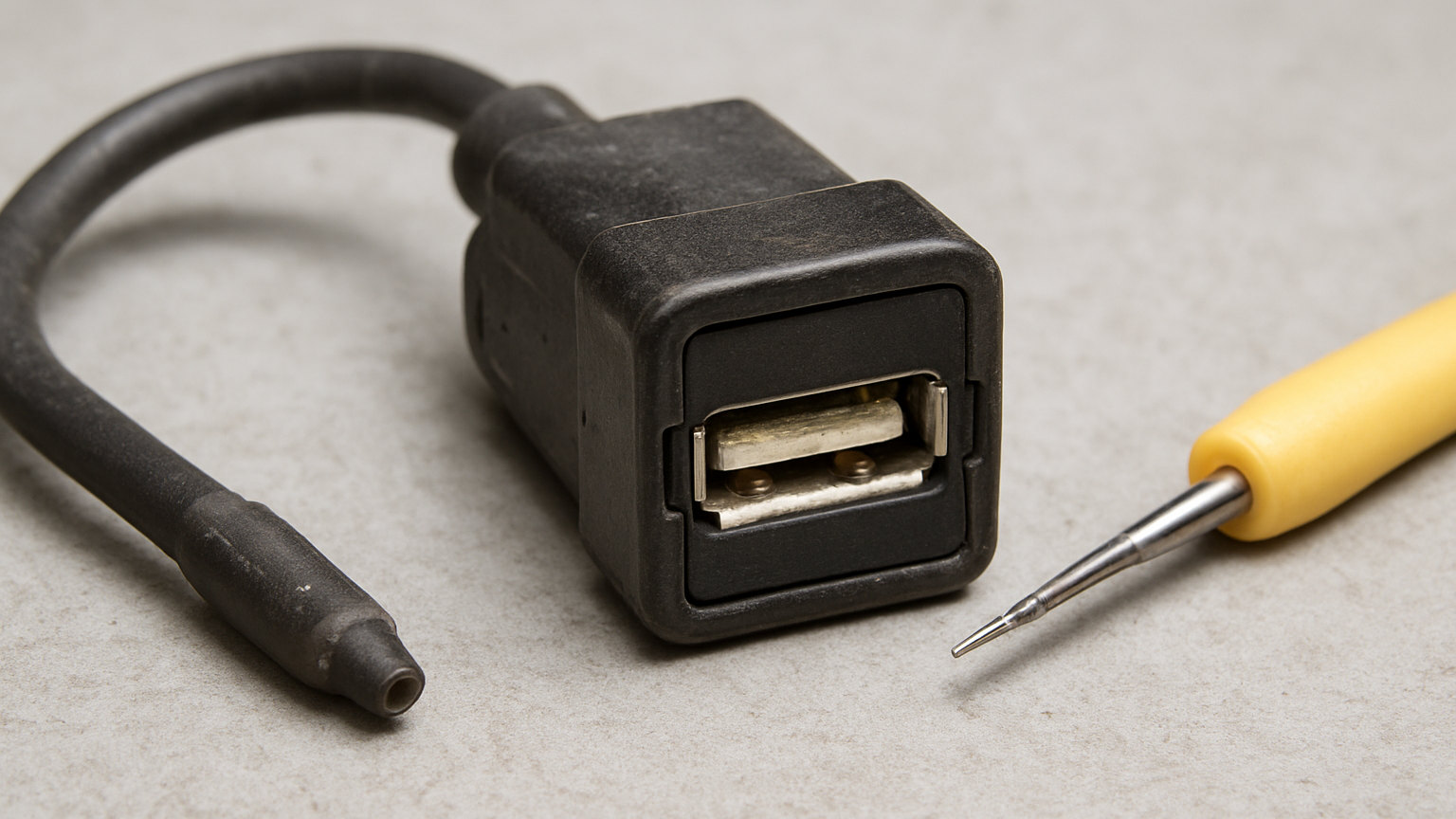
A phone that charges slowly or not at all from a car USB port is frequently reporting a design limitation rather than a fault. Ports fitted for media connection are often specified for data first and charging second, delivering a modest current that a modern phone running navigation will consume faster than it receives. Recognising that saves chasing a problem that does not exist.
Why do some ports charge slowly?
Because they were specified to a low current standard, sometimes half an amp, at a time when phones were smaller and less demanding. A phone running a bright screen, navigation and projection can easily consume more than that, so the battery falls despite being plugged in. It is the port working exactly as designed rather than failing.
How do you tell a data port from a charging one?
Many cars mark them, with a battery symbol indicating a charge only port and a different symbol for data. Where they are unmarked, the port that supports smartphone projection is the data one and any additional ports are usually higher current charging outlets. The handbook states it, and it is worth checking rather than assuming they are identical.
Is a cigarette lighter adapter better?
Frequently, and it is the practical solution on an older car. A quality adapter in the twelve volt socket delivers considerably more current than a legacy USB port, and modern ones support fast charging standards. The socket itself is usually fused generously, so it can supply what the adapter needs.
Does the cable matter?
Considerably. Thin conductors in a cheap cable produce a voltage drop that limits charging current regardless of what the port can supply, and long cables make it worse. A cable that charges quickly at home and slowly in the car is worth swapping as a test, since it costs nothing and it is a common explanation.
Could the port be dirty?
Very often, and it is easily fixed. Pocket lint and dust compact into the socket over years, preventing the plug seating fully so the contacts do not meet properly. Carefully removing it with a wooden cocktail stick, with the ignition off, frequently restores a connection that seemed to be failing. It is worth doing before assuming anything electrical.
What if it has stopped entirely?
Check the fuse, since USB ports are usually on a shared circuit with other accessories and a fuse is the cheapest explanation. If several sockets have stopped together, that points firmly at a fuse or a relay rather than at individual ports. A single dead port with others working suggests the port or its wiring.
Can a port be replaced?
Usually, and the difficulty depends entirely on where it is. A port in a centre console tray is often accessible with a trim panel removed. One integrated into a module or an armrest may require more dismantling. Aftermarket replacements exist for many vehicles and are considerably cheaper than dealer parts.
Does charging while using projection help?
Not necessarily, since a wired projection connection uses the data port with its lower current, and the phone is working hard at the same time. On a long journey this produces a phone that arrives with less charge than it started with. Using a separate high current port for charging and wireless projection for the connection avoids the conflict entirely.
Can you upgrade the port?
On many cars, yes. Aftermarket replacement panels with higher current ports are available for popular models, and they fit the existing aperture. Alternatively a quality adapter in the twelve volt socket delivers more current for less effort. What matters either way is that the supply circuit can provide it, so checking the fuse rating before fitting something substantially more demanding is sensible.
It is also worth checking whether the socket is switched or permanently live, since a charger left plugged into a permanent supply contributes to a parasitic drain over a long stand.


