
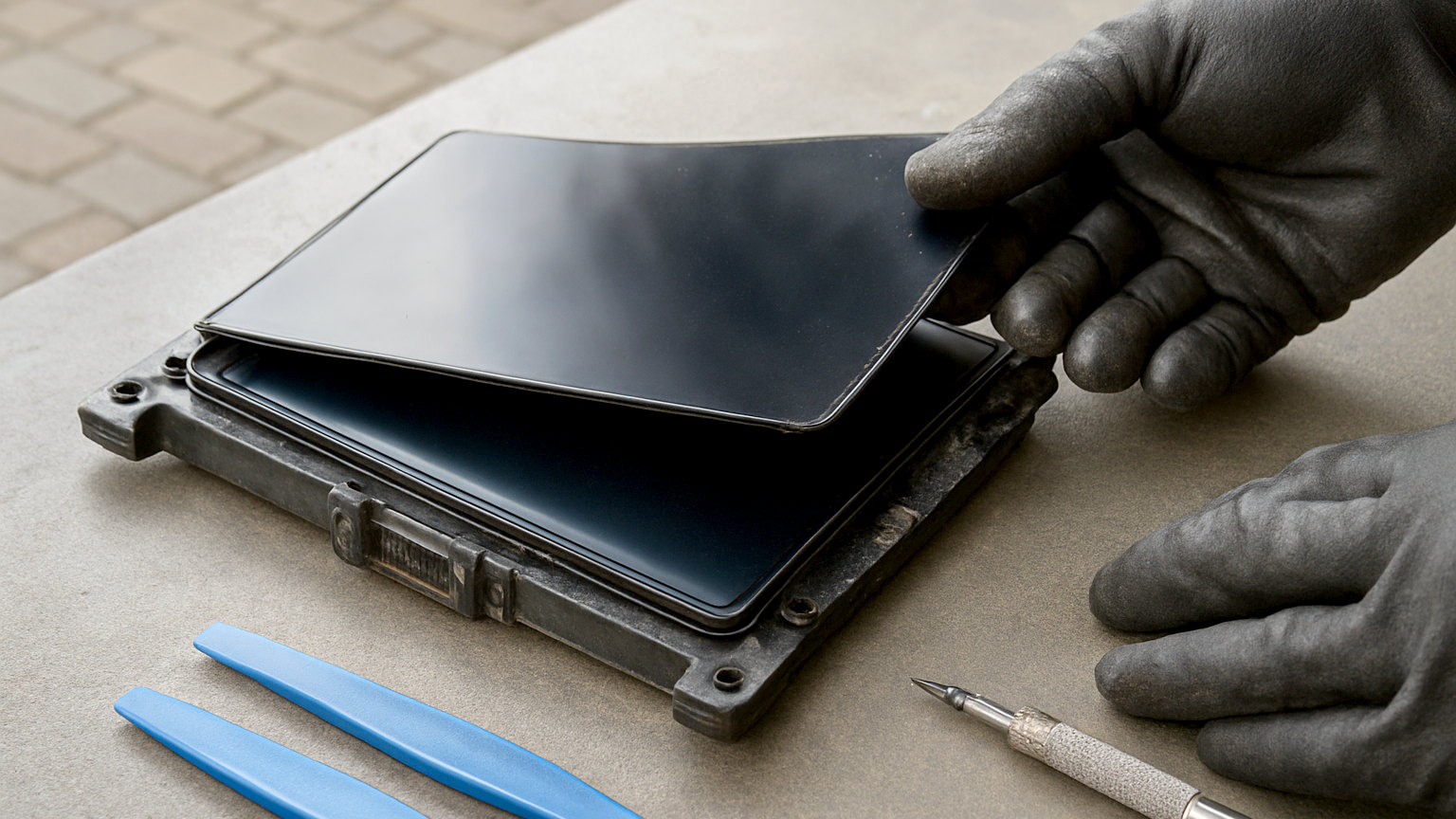
A touchscreen that ignores your input, responds in the wrong place, or presses things on its own is one of the more infuriating faults in a modern car, particularly where climate and audio controls have been moved onto it. The pattern of misbehaviour is genuinely diagnostic, and it usually distinguishes a software problem from a physical failure of the touch layer.
What does ghost touching mean?
The screen registering presses that nobody made, so menus open on their own or settings change unprompted. It almost always indicates a failing digitiser, the transparent touch sensitive layer bonded over the display. Moisture, heat cycling or delamination causes it to detect phantom contacts, and it tends to worsen steadily rather than coming and going randomly.
Why would one area stop working?
Because the digitiser has failed in a region rather than entirely, which is common where a particular part of the screen is pressed constantly. A dead strip along one edge or a patch in the middle points firmly at the touch layer rather than at software. Software faults do not usually respect physical geography in that way.
Can it be recalibrated?
On some systems, and it is worth trying. Resistive screens, more common on older vehicles, sometimes have a calibration routine that corrects an offset between where you press and where the system registers. Capacitive screens, which most modern cars use, generally have no user calibration, so a misaligned response usually means hardware.
Do gloves affect it?
With a capacitive screen, considerably, since it detects the electrical properties of your finger rather than pressure. Ordinary gloves simply do not register. That is entirely normal rather than a fault, and it catches people out in winter. Touchscreen compatible gloves work, and so does using the physical controls where the car still has them.
What about screen protectors?
A poorly fitted or overly thick protector can reduce sensitivity noticeably, and trapped air bubbles cause dead spots. If a protector was fitted shortly before the problems began, removing it is a free test. Anti glare films in particular are sometimes thicker than the screen was designed to work through.
Is delamination visible?
Usually. Look at the screen at an angle in daylight rather than head on, and bubbling, cloudiness or a rainbow effect around the edges indicates the layers separating. That is a physical failure and no amount of resetting will improve it. It is also progressive, so a small area of bubbling generally grows over the following months.
Can moisture cause it?
Certainly, and it is worth considering on a car with a known water leak. Damp reaching the connectors behind the screen or working into the edges of the digitiser produces erratic behaviour that comes and goes with the weather. A touchscreen fault on a car with damp carpets is not a coincidence worth ignoring.
Is repair possible?
Frequently. Independent specialists replace digitisers and screens on many common head units, and it costs substantially less than a complete replacement unit from a dealer. They usually work on a send in basis. Given how expensive integrated infotainment units have become, that route is worth investigating before accepting the first quote.
What should you try first?
A soft reset, since a software crash can leave the touch layer unresponsive. Remove any screen protector. Clean the screen properly with a suitable cloth, since a build up of grease genuinely reduces sensitivity. And check for a software update. Those four are free, and if the fault survives them the digitiser is the likely answer.
Are physical controls worth keeping?
Where a car still has them, they become genuinely valuable when a touchscreen fails, since the steering wheel buttons and any rotary controller usually continue working independently. On a car being bought, the presence of physical climate and volume controls is worth weighing, precisely because a screen failure then removes far less. It is one of the few areas where older designs have aged well.


