
Radio reception that has deteriorated over months rather than failing suddenly is usually reporting the aerial system rather than the radio. Between the aerial and the head unit sit a connector, often an amplifier, and a length of cable, and a fault anywhere along that chain reduces signal strength without affecting anything else the system does.
Where is the aerial?
On modern cars, frequently not where you expect. A roof mounted mast or shark fin is obvious, and many vehicles use elements printed into the rear screen or the side windows instead, sometimes combined with the heated screen elements. Knowing which your car has determines where to look, and the handbook usually says.
What is an aerial amplifier?
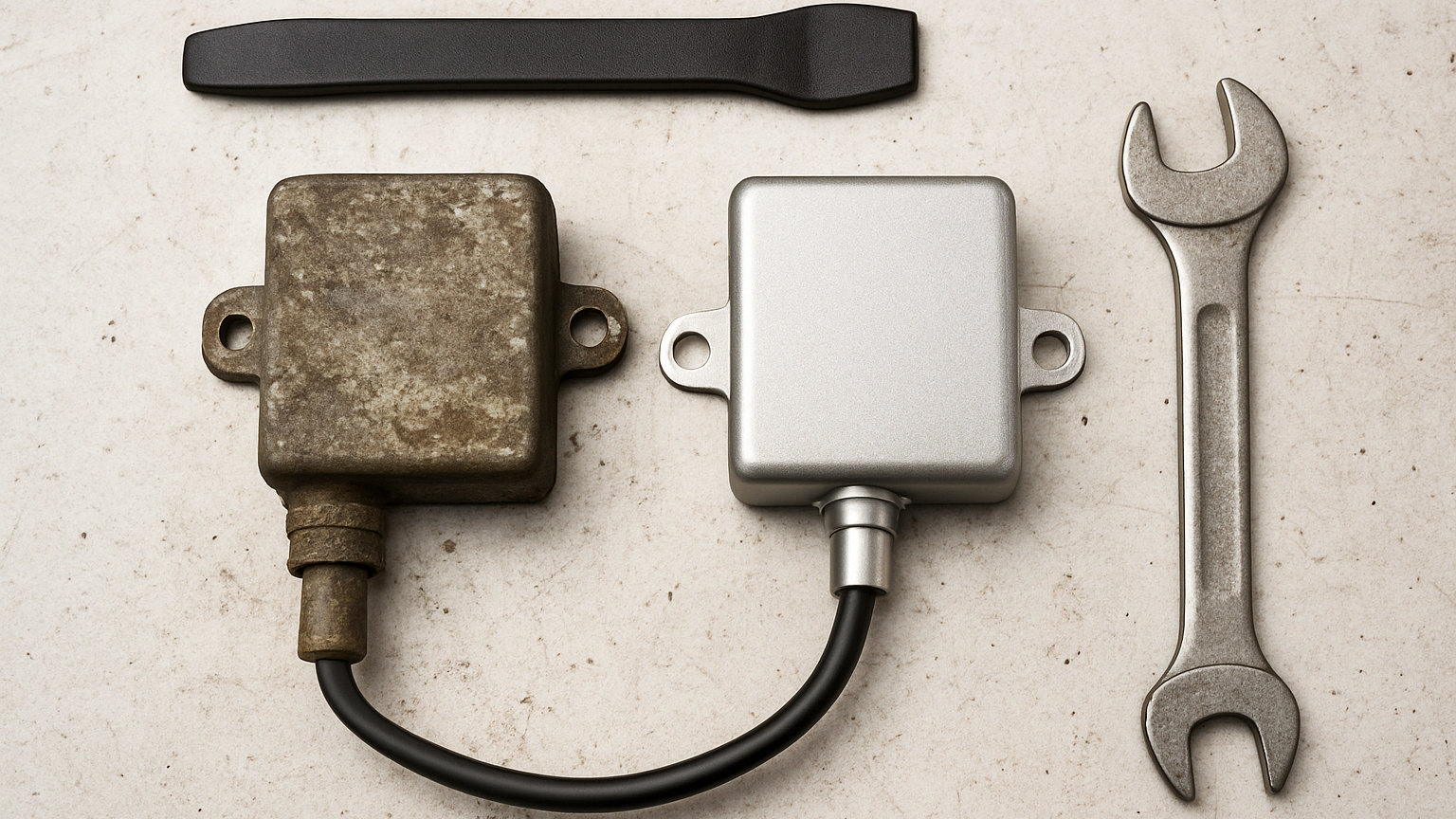
A small powered amplifier fitted close to the aerial, compensating for the weak signal a short aerial collects and the loss along the cable. It is powered from the head unit, and when it fails reception drops dramatically while the radio itself continues to work perfectly. It is a common failure on cars using a screen printed aerial.
Why does a new windscreen affect it?
Because on cars with an aerial element in the glass, a replacement screen has to be connected properly to the amplifier and the loom. A connector left unplugged or a screen supplied without the element produces exactly this symptom. Reception that deteriorated immediately after a screen replacement has an obvious explanation worth raising with the fitter.
Can the roof aerial corrode?
Frequently. The base contains the connection between the mast and the cable, and water working past a perished seal corrodes it. The same leak often produces water inside the headlining. Removing the base, cleaning the connection and refitting with fresh sealant addresses both problems at once, which makes it worth doing properly.
Is the mast itself important?
Yes, and it is frequently damaged by car washes or replaced with a short stubby aerial for appearance. A shorter mast collects less signal, which is a genuine trade off rather than a fault. If reception worsened after fitting a shorter aerial, that is the explanation, and reverting to the original length restores it.
Could the connection be loose?
Very often, particularly behind the head unit where the aerial plug can work loose during other work. If reception deteriorated after a stereo change, a dashboard repair or any trim removal, an unseated aerial connector is the first thing to check. It is free to correct and it is a common oversight.
Does interference play a part?
Sometimes. Aftermarket LED bulbs, dash cameras, phone chargers and inverters all generate radio noise, and a cheap unshielded accessory can noticeably degrade reception. Unplugging accessories one at a time while listening to a weak station identifies the culprit quickly, and switching to a better quality item usually resolves it.
What should you check first?
Whether the aerial mast is secure and undamaged, whether reception changed after any work on the car, and whether an accessory was added around the same time. Then have the aerial connection at the head unit checked. Those steps cover the common causes, and a genuinely failed amplifier is usually diagnosed by elimination.
Is it worth fixing?
Where the cause is a loose connector or a corroded aerial base, certainly, since both are cheap and the second is usually letting water in as well. A failed amplifier is a modest part on most cars. What is rarely worth doing is replacing a head unit because of poor reception, since the fault is almost never there and the expense is considerable.
If a new head unit has recently been fitted and reception is poor, the aerial adapter supplied with it is a far more likely explanation than the unit itself, and a better quality adapter frequently transforms it.
Powered adapters are required on cars with an amplified aerial, and fitting a passive one instead is a very common oversight during a stereo upgrade.


