
Digital radio behaves quite differently from FM when the signal weakens, and understanding why explains most complaints about it. FM degrades gracefully, adding hiss and losing stereo before it eventually disappears. Digital either decodes the data correctly or it does not, so a marginal signal produces stuttering and then silence rather than a gradual decline.
Why does it cut out completely?
Because the transmission is a stream of data, and the receiver either has enough of it to reconstruct the audio or it does not. As the signal weakens, errors accumulate until the decoder gives up, producing the characteristic burbling and then nothing at all. There is no equivalent of a hissy but listenable FM station.
Does coverage vary?
Considerably, and it is worse than FM in many rural areas. National and local multiplexes have different coverage footprints, so one station can disappear while another continues perfectly. Coverage maps are published and worth looking at if a particular route always causes problems, since the answer may simply be that the transmitter does not reach there.
Is the aerial different?
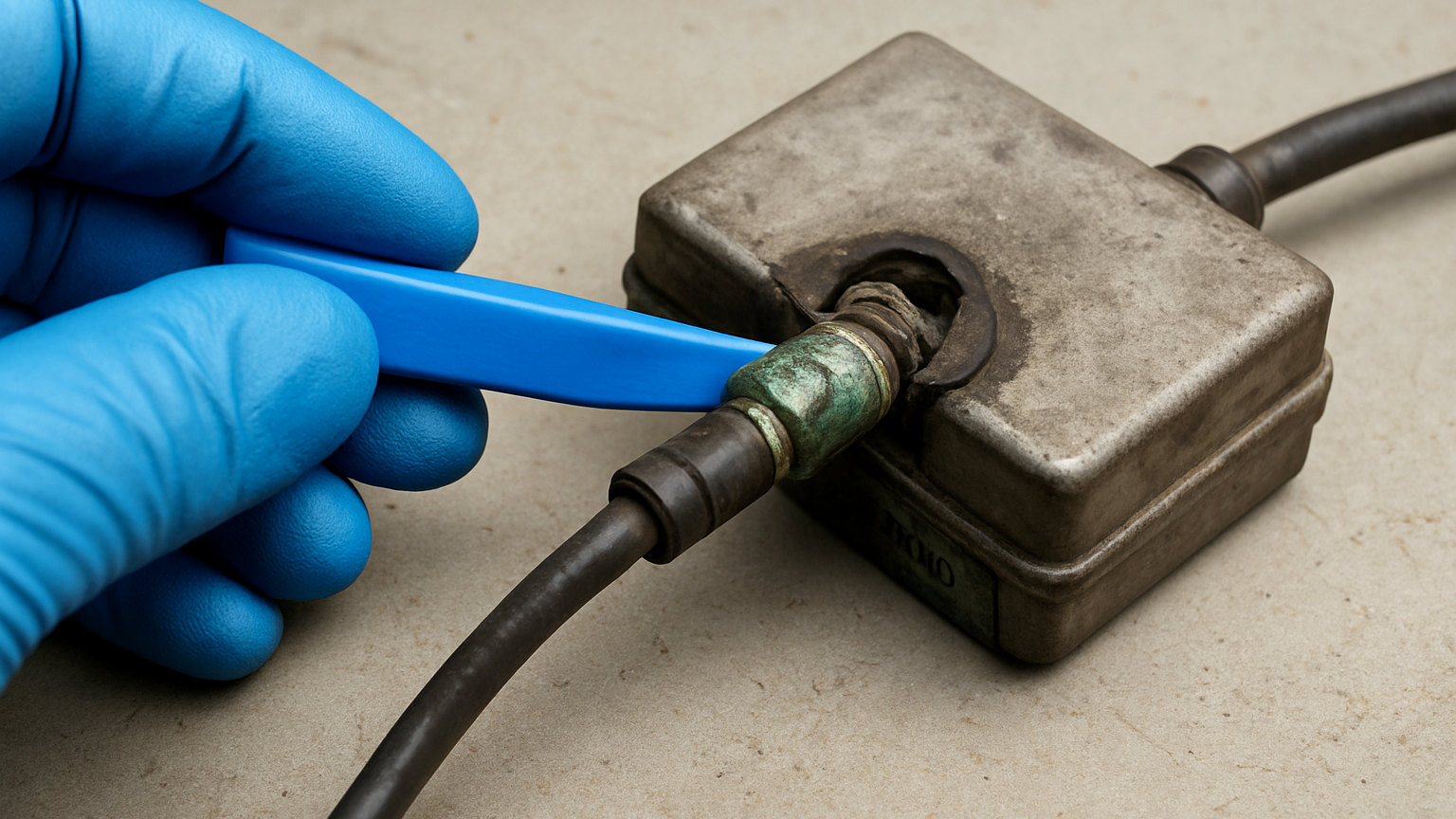
Yes, and this matters. Digital radio uses a different frequency band from FM, so an aerial optimised for one is not ideal for the other. Cars fitted with digital radio from new have an appropriate aerial. Retrofitted systems frequently use a cheap adhesive film aerial on the windscreen, which is a compromise and the usual reason a retrofit performs poorly.
Can reception be improved?
On a retrofit, considerably, by fitting a proper aerial rather than a film one. On a factory system, checking the aerial connection and its amplifier is the practical route. Beyond that, service following features that switch automatically to FM when the digital signal is lost make a real difference to how usable the radio feels on a long journey.
What is service following?
A setting that allows the radio to switch to the same station on FM, or on another multiplex, when the current signal fails. It is usually enabled by default and it is worth checking, since a system with it switched off will simply go silent where one with it enabled continues playing. It is among the more useful settings most people never look at.
Why does it drop out under bridges?
Because the signal is blocked, and unlike FM there is no graceful degradation to mask a brief interruption. Digital reception is also affected by multipath, where the signal arrives by several routes, which is why it can be worse in towns with tall buildings than in open country despite the transmitter being closer.
Does it use more of anything?
Nothing the driver notices. There is no data cost, since it is broadcast rather than streamed over a mobile network. That distinction matters, since internet radio through a phone does use data and can be expensive abroad, whereas digital radio is free to receive wherever it is broadcast.
Is a retrofit worth it?
On a car without it, frequently, and the quality of the installation determines the result more than the unit does. A properly fitted aerial matters far more than the specification of the receiver. A cheap kit with a film aerial stuck to the screen will disappoint, and it is the most common reason people conclude that digital radio simply does not work well.
Will FM be switched off?
It has been discussed for many years and no date has been confirmed, so a car without digital radio remains perfectly usable. Any eventual change would be announced well in advance. In the meantime, most drivers who fit a retrofit do so for the additional stations rather than out of concern that analogue broadcasting is about to end.
Many stations now broadcast on both, so a car with FM only loses some variety rather than the ability to receive anything at all, and internet radio through a phone covers most of the gap.


