
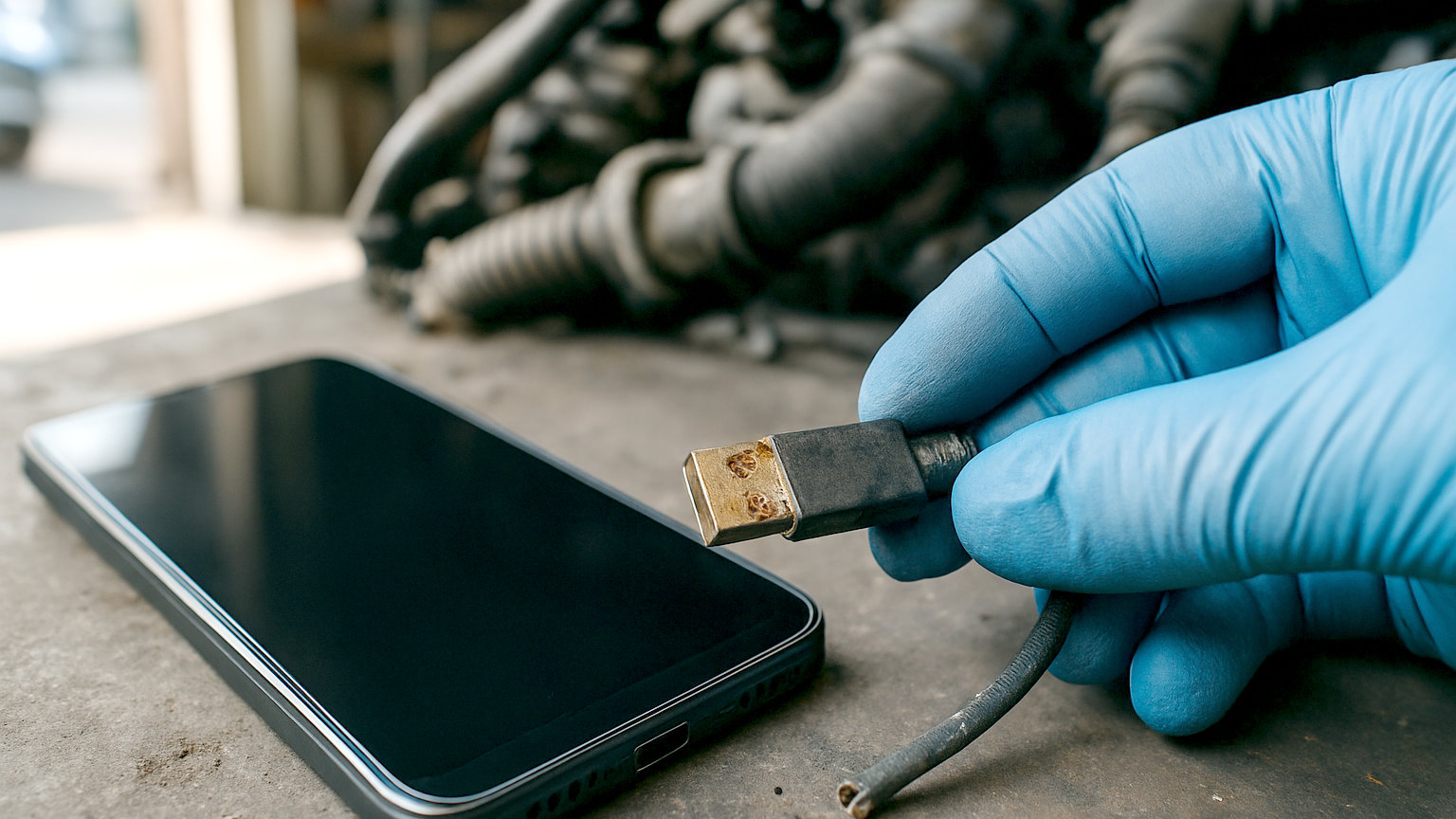
Smartphone projection systems drop out more often than almost any other feature in a modern car, and the causes divide cleanly between wired and wireless connections. Wired failures are overwhelmingly about the cable and the port. Wireless failures are about radio interference and software versions. Knowing which type you have narrows the problem immediately.
Why does the cable matter so much?
Because it is carrying data as well as charging current, and many cables sold cheaply are charge only or have inadequate data conductors. A cable that charges perfectly can still fail to sustain a projection connection. Using the manufacturer cable, or a certified one, resolves a very large proportion of intermittent disconnections at trivial cost.
Does cable length matter?
It does. Long cables suffer more signal degradation, and a two metre lead coiled in the centre console is more likely to drop out than a short one. Cables also fail internally where they flex, typically just behind the connector, so a lead that works only when held at a particular angle has broken conductors rather than a software problem.
Could the port be worn?
Frequently, particularly on a car where the same connector is plugged and unplugged daily. The port loosens, and the connection becomes intermittent with vehicle vibration. Dust and lint pack into the socket as well, which prevents the plug seating fully. Carefully cleaning a port with a wooden cocktail stick, with the ignition off, is worth trying.
Do phone cases cause problems?
Thick cases prevent a cable seating fully, which produces a marginal connection that works until the car goes over a bump. It is a common and easily overlooked cause. Trying the connection with the case removed is a free test that occasionally identifies the whole problem.
Why does wireless drop out?
Because wireless projection uses Bluetooth to establish the connection and then a direct wireless network to carry the data, and that network shares crowded radio space. Other devices, phone hotspots and even a passenger phone searching for networks can interfere. Wireless is also more sensitive to phone software versions than a wired connection.
Does a phone update break it?
Regularly, and it is one of the most common reasons a system that worked for a year suddenly stops. Phones update far more often than cars, so compatibility drifts. Deleting the pairing on both the phone and the car and setting it up again from scratch resolves most of these, and checking for a car software update addresses the rest.
Can battery saving settings interfere?
Certainly. Aggressive power management on a phone can suspend the background processes that projection relies on, particularly on Android where manufacturers apply their own restrictions. Excluding the relevant apps from battery optimisation, and allowing them to run in the background, resolves a meaningful number of drop out complaints.
What should you try in order?
A different certified cable first, since it is the most likely cause and the cheapest to test. Then clean the port and remove the phone case. Then delete and recreate the pairing. Then check for software updates on both the phone and the car. Only if all four fail is it worth suspecting the head unit itself.
Is wireless better than wired?
More convenient and generally less reliable, which is the honest summary. Wireless removes the cable, which is the single most common failure point, and introduces radio interference and a heavier dependence on software versions. It also charges the phone more slowly or not at all, so on a long journey a wired connection to a separate charging port is frequently the more practical arrangement.
Some cars support both, in which case using wireless for short trips and plugging in for longer journeys gets the best of each without any real compromise beyond remembering which cable is which.
Where a car offers only one, the choice has been made for you and the sensible response is to optimise what you have rather than seek a retrofit.


