
Heating and demisting faults have a habit of announcing themselves on the first genuinely cold morning, which is the least convenient moment to discover them. Almost everything that goes wrong in winter can be found in twenty minutes in October, and most of it is cheap to put right at that point compared with an emergency booking in December.
How do you check the antifreeze?
With an inexpensive tester that measures the freezing point of the coolant, available from any accessory shop. Coolant diluted by repeated topping up with plain water loses both its freezing protection and its corrosion inhibitors, and a system that freezes can crack a cylinder block. Testing takes two minutes on a cold engine and it is worth doing annually.
Does the heater actually work?
Worth confirming deliberately rather than assuming, since many people barely use it through summer. Check that hot air arrives within a reasonable time, that it comes from the vents you select, and that both sides produce the same temperature on a dual zone system. Any of those failing is far easier to arrange in autumn than in a cold snap.
What about the demisters?
Test the front screen setting, the heated rear window and any heated windscreen or mirrors. A heated rear window with one uncleared stripe is easy to repair and impossible to ignore once frost arrives. Demisting is a safety function rather than a comfort one, since a screen you cannot clear means a car you cannot safely drive.
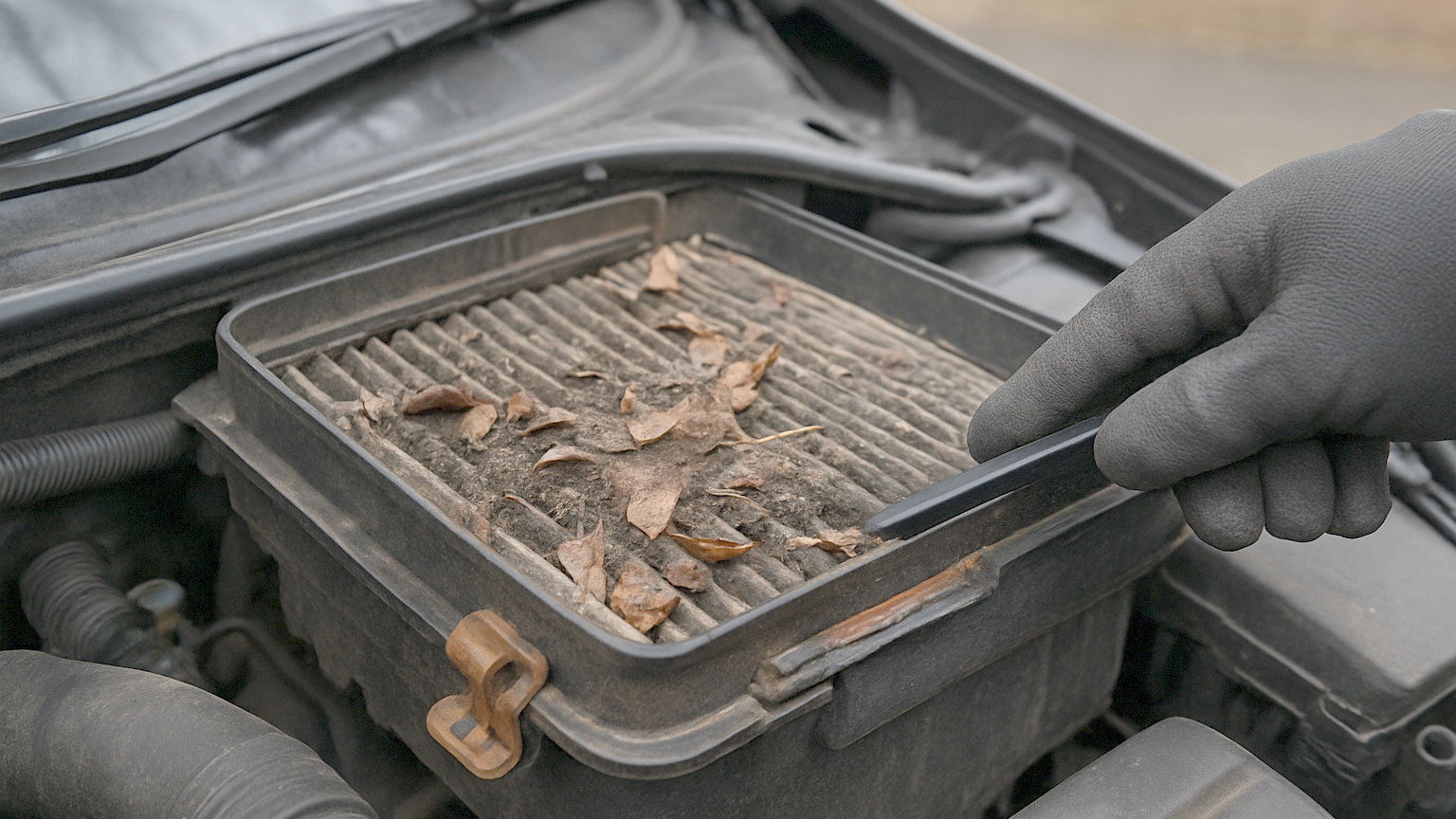
Is the cabin filter due?
Almost certainly, since it is among the most neglected service items. A blocked filter slows demisting dramatically, holds damp and smells, and restricts the airflow that keeps the blower resistor pack cool. It is inexpensive, often accessible behind the glovebox, and it is the single most effective winter preparation available.
What should you do about the battery?
Have it tested, since cold weather reveals a marginal battery immediately. Capacity falls as temperature drops while the engine needs more current to turn, and winter also brings heavier loads from lights, heated screens, blower and wipers. A battery that has struggled at all through autumn will not improve.
What about the screenwash?
Fill it with a proper concentrate mixed to the strength printed on the bottle for the temperature you expect. Plain water freezes in the reservoir and the pipes, and a frozen washer system in winter salt spray leaves you unable to clear the screen. It is a small item that has a disproportionate effect on visibility.
Do the wipers need attention?
Blades harden and split over a summer of ultraviolet exposure, and smearing on a dark wet evening is genuinely dangerous. Replacing them before winter is cheap. Lifting them away from the screen in frosty weather, or covering the screen, prevents them freezing to the glass and tearing when the wipers are switched on.
What else is worth checking?
Tyre tread and pressures, since wet grip depends heavily on both and pressures fall as temperature drops. All the lights, given the short daylight. And the scuttle drains under the windscreen, since blocked ones let water into the ventilation system or the footwells, which produces exactly the persistent misting that makes winter driving miserable.
What is worth carrying?
A scraper and de-icer, a torch, a warm layer and something to sit on if you have to change a wheel. On rural routes, a shovel and a blanket are sensible. None of it is expensive and all of it is considerably more useful in a car than in a garage when the weather turns.
A phone charger and a fully charged phone are worth adding, since most winter problems are resolved by a call rather than by anything carried in the boot. Checking that your breakdown cover is current is worth the two minutes as well, along with confirming the policy covers the people who actually drive the car.


