
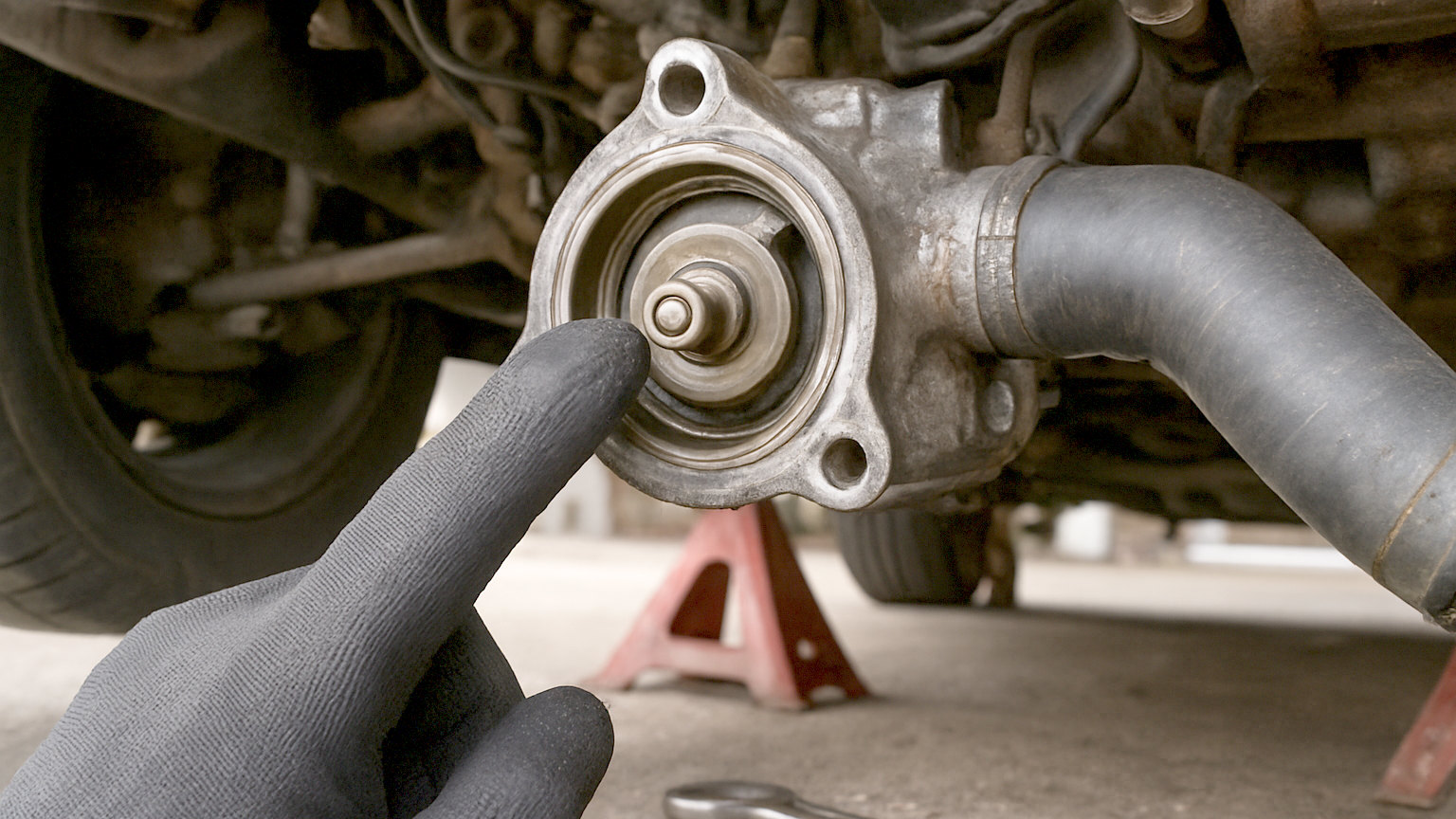
The thermostat is a simple valve that decides whether coolant is allowed to flow to the radiator. When the engine is cold it stays shut, so coolant circulates only within the engine and warms up quickly. Once operating temperature is reached it opens, letting coolant reach the radiator to be cooled. That single valve determines how hot the engine runs and therefore how warm the cabin can get.
What happens if it sticks open?
Coolant flows to the radiator continuously from the moment the engine starts, so it is being cooled before it has had a chance to warm up. The engine takes a very long time to reach temperature and may never reach it properly in cold weather. Since cabin heat comes from that coolant, the heater produces lukewarm air at best and often nothing useful at all.
How do you spot it?
The temperature gauge is the clearest indicator. An engine with a thermostat stuck open takes far longer than usual to reach the normal mark, and on a cold motorway run the needle may drop back down as airflow through the radiator increases. That combination of slow warm up and a falling gauge at speed is close to diagnostic.
What if it sticks shut?
The opposite and more serious problem. Coolant cannot reach the radiator, so the engine overheats rapidly. The cabin heater may produce very hot air briefly before the system boils. That is an engine protection issue rather than a heating one, and it requires stopping rather than continuing, since overheating can cause severe damage very quickly.
Does it affect anything besides comfort?
Considerably. An engine running below its designed temperature uses more fuel, because the management runs a richer mixture during warm up. Oil takes longer to reach temperature so it protects less well and does not evaporate the moisture it accumulates. Emissions rise, and on a diesel the particulate filter may struggle to regenerate. It is a genuine mechanical issue rather than an inconvenience.
Will it show a fault code?
Frequently. Many engines monitor how long the coolant takes to reach a target temperature and store a code when it takes too long, often described as thermostat below regulating temperature. That code is a strong indicator, though it can also be triggered by a faulty coolant temperature sensor, which is worth eliminating since it is a cheaper part.
Why do they fail?
Age and contamination. The wax capsule that operates the valve degrades over many heat cycles, and corrosion or debris in neglected coolant can prevent the valve seating or moving freely. Cars where the coolant has never been changed fail sooner, which is another reason the fluid interval matters more than its low cost suggests.
Is it an expensive repair?
Usually modest, though access varies. The part itself is inexpensive on most cars, and the labour depends on where it sits. Some are accessible in minutes; others are buried beneath the inlet manifold. Many modern cars use an electronically controlled thermostat integrated into a housing, which costs more and is replaced as an assembly.
What should be done alongside?
Replace the housing gasket or seal, since it is disturbed anyway and a leak there is a common follow up problem. Refill with the correct coolant specification and bleed the system properly, since an airlock produces the same lack of cabin heat you were trying to cure. And check the coolant condition, since the state of it often explains why the thermostat failed.
Can you drive with a stuck open thermostat?
Yes, since there is no risk of overheating, and it is not a good idea for long. The engine runs cold, which increases wear, fuel consumption and emissions, and on a diesel it can prevent the particulate filter regenerating. It is an inexpensive repair on most cars and one worth arranging before winter rather than after it.
A stored fault code for coolant temperature is also an MOT concern on cars where it illuminates the engine management light.


