
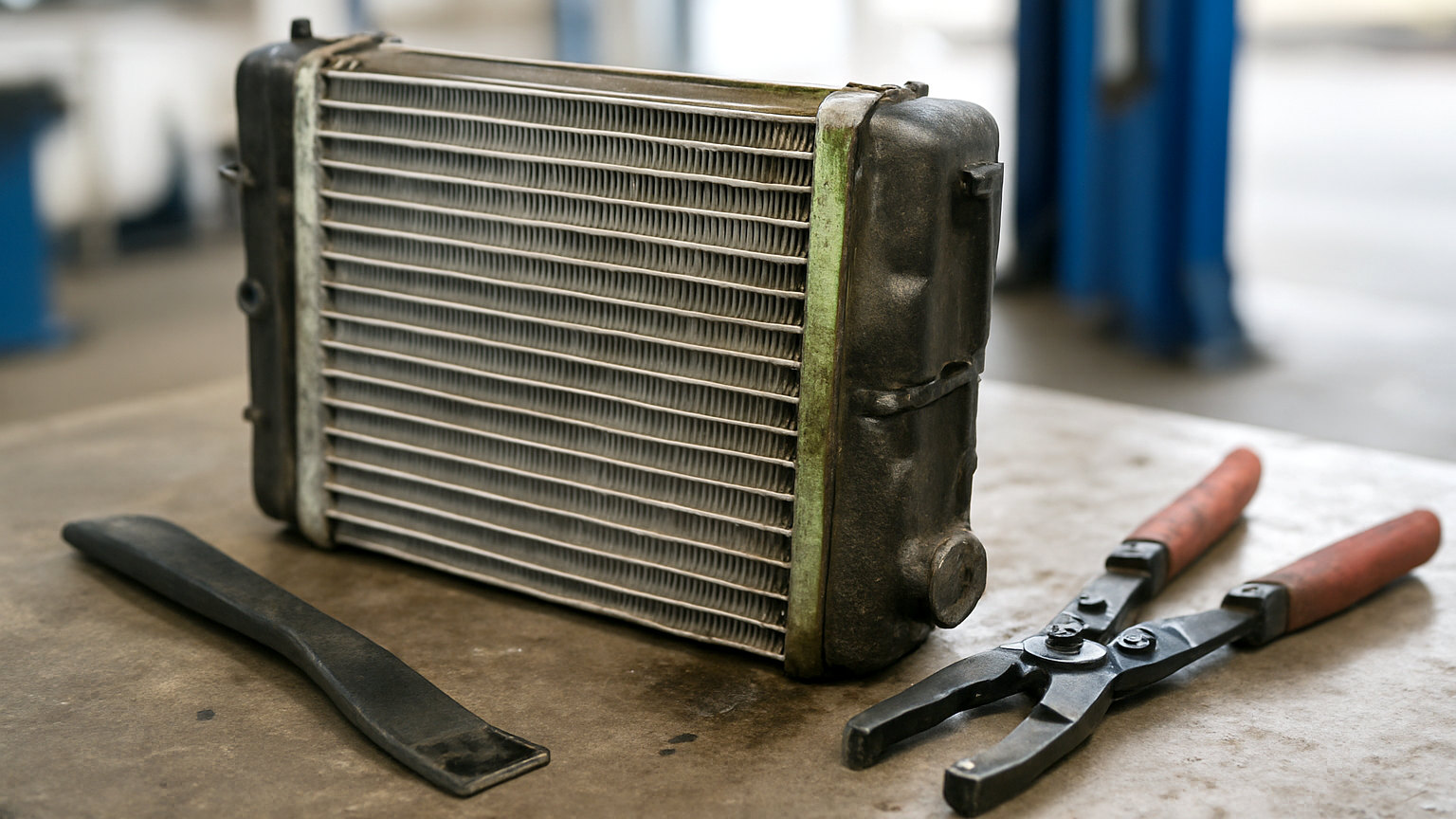
A sweet, slightly syrupy smell inside a car is one of the more specific symptoms in motoring. It is the smell of ethylene glycol, the main constituent of antifreeze, and if you can smell it in the cabin then coolant is escaping somewhere inside the car. On almost every vehicle that means the heater matrix or one of its connections.
Why is the matrix the usual culprit?
Because it is the only part of the cooling system that sits inside the passenger compartment. Hot coolant is pumped through it constantly, and the blower pushes cabin air across it, so any leak is immediately atomised and distributed throughout the interior by the ventilation system. There is no other route by which coolant reaches the cabin in normal circumstances.
What are the accompanying signs?
A damp or wet passenger footwell, often noticed as a soggy carpet with no rain to explain it. A greasy film on the inside of the windscreen that smears when wiped rather than clearing. Persistent misting that returns quickly. A coolant level that keeps falling with no leak visible under the bonnet. The smell is usually strongest when the heater is running.
How do you confirm it?
Press a white tissue or kitchen roll into the passenger carpet and look at the colour, since coolant is dyed and rainwater is not. Check the coolant level in the expansion tank when the engine is cold and monitor it over a week. And look at the inside of the windscreen in low sun, where an oily film is far easier to see than head on.
Is it dangerous?
It deserves to be taken seriously. Ethylene glycol is toxic if swallowed and is notably sweet tasting, which matters where children or pets travel in the car. Breathing the vapour in an enclosed cabin over a long journey is unpleasant and best avoided. Ventilating the car and dealing with the leak promptly is the sensible response.
Could it be something else?
Occasionally. A coolant leak elsewhere in the engine bay can be drawn in through the fresh air intake and smell similar, so checking under the bonnet for a weeping hose or radiator is worth doing. What distinguishes a matrix leak is the combination of the smell with a wet footwell, an oily windscreen film and misting.
What should you do immediately?
Check and maintain the coolant level, since running low risks overheating and engine damage that costs far more than the matrix. Use fresh air rather than recirculation to reduce the concentration inside. Lift the carpet to dry the underlay if you can, since coolant soaks in and the smell will persist otherwise. And arrange the repair rather than living with it.
Why is the repair expensive?
Because the matrix sits behind the dashboard, and on most cars the dashboard has to come out to reach it, taking the steering column, airbags and wiring with it. The part is often modest and the labour can run to a full day. That is why a small radiator can cost as much to replace as a clutch, and it surprises almost everybody.
Is bypassing it acceptable?
As a short term measure. Joining the two heater hoses together stops the leak and removes all cabin heat and demisting, which is unworkable in winter and dangerous if the screen cannot be cleared. It is a way of keeping a car usable while the proper repair is arranged rather than a solution in itself.
Should you use a leak sealant?
Generally not. Sealant products can block the narrow passages of the matrix, the radiator and the heater core elsewhere in the system, turning one problem into several. They occasionally work as an emergency measure to get a car home. As a way of avoiding a dashboard out repair they usually cost more than they save, and a garage will not thank you for using one before they open the system.


