
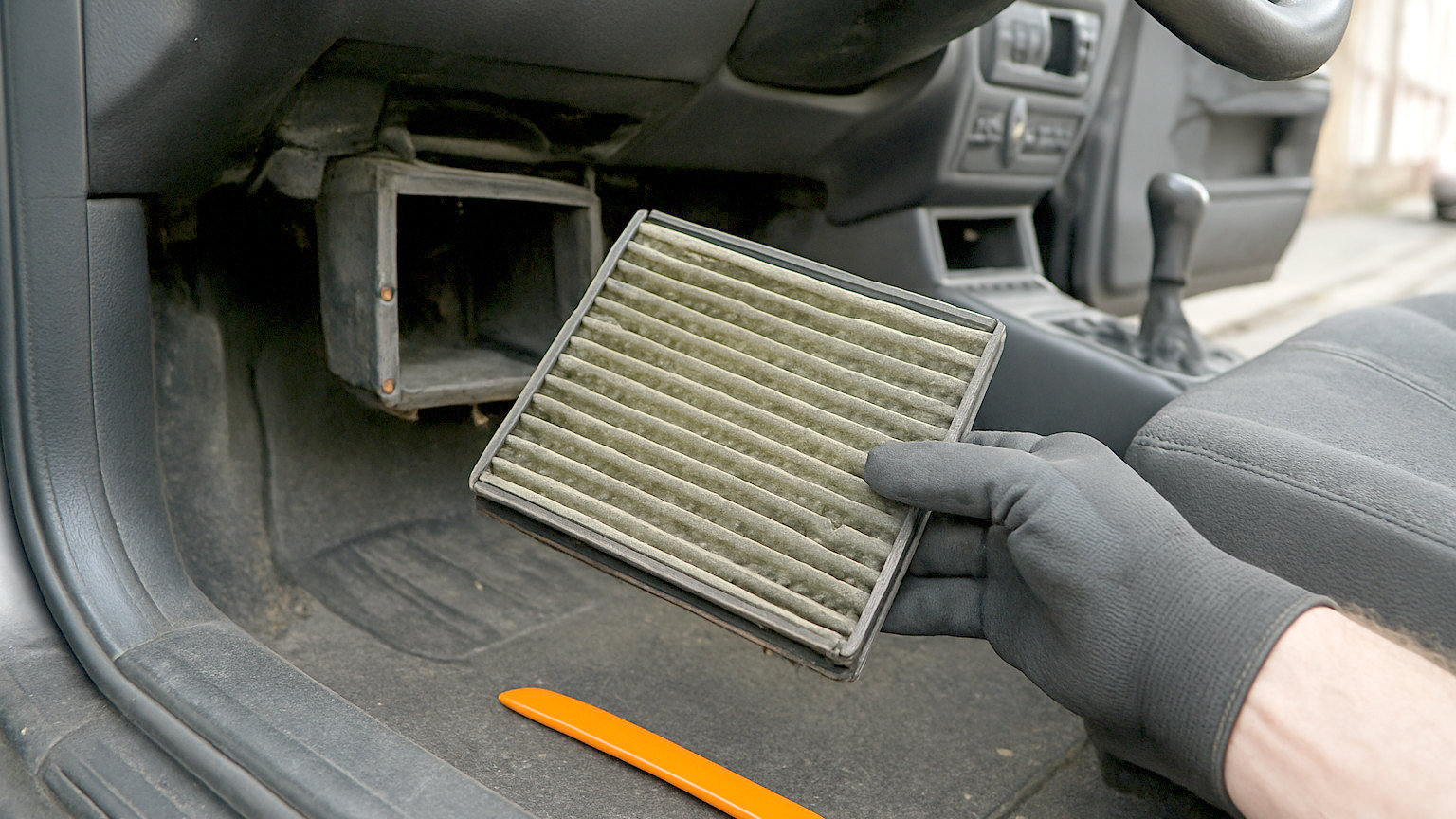
A smell that appears the moment the blower starts is coming from somewhere in the ventilation system, and the character of the smell narrows the cause considerably. Most are unpleasant rather than serious, and a couple point at something that needs prompt attention, so it is worth distinguishing between them before reaching for an air freshener.
What causes a musty damp smell?
Mould and bacteria growing on the air conditioning evaporator, which is the coldest surface in the system and stays damp with condensation. Organic matter drawn in through the intake feeds it. The smell is worst on first starting and fades as air flows through, which is the classic pattern. It is extremely common and it is not a mechanical fault.
How is that treated?
With an antibacterial treatment applied into the evaporator housing or through the vents, along with a new cabin filter. Some products are sprayed into the intake with the fan running, others are foam applied through the drain. It usually works well, and it works better if the underlying dampness is addressed rather than only the smell.
How do you prevent it returning?
By switching the air conditioning off a few minutes before the end of a journey while leaving the fan running, which dries the evaporator before the car is parked. Using fresh air rather than recirculation helps. And keeping the scuttle intake area clear of leaves reduces the organic matter feeding the growth in the first place.
What does a blocked drain smell like?
Stagnant, which is subtly different from the musty evaporator smell. The evaporator drain carries condensation out beneath the car, and when it blocks with debris the water sits in the housing and stagnates. The giveaway is usually water in the passenger footwell alongside the smell, since the condensation has to go somewhere.
What if it smells sweet?
That is coolant, and it means the heater matrix is leaking inside the car. It is quite distinct from a musty smell and it usually comes with a damp passenger carpet, an oily film on the inside of the windscreen and a falling coolant level. It should be investigated rather than masked, both because of the repair and because coolant is toxic.
What if it smells of exhaust?
Take that seriously. Exhaust fumes reaching the cabin indicate a leak in the exhaust system allowing gases to enter through body seals or grommets, and exhaust contains carbon monoxide, which is odourless and dangerous even where the accompanying smells are not. Drive with a window open and have it inspected promptly rather than at the next service.
What about a burning smell?
Hot plastic or an electrical smell from the vents warrants immediate attention, since it can indicate an overheating blower motor, a failing resistor pack or damaged wiring. Switch the system off and have it checked. A smell of hot oil is more likely to be an engine leak dripping onto the exhaust and being drawn in through the intake.
What should you do first?
Replace the cabin filter, since it is inexpensive, frequently forgotten, and it collects damp debris that smells in its own right. Check the evaporator drain is clear and that the footwells are dry. Clear leaves from the scuttle. Those three steps resolve the majority of ventilation smells, and they cost far less than any treatment product.
Do air fresheners help?
They mask rather than treat, and a strong fragrance layered over a musty evaporator produces something worse than either. Dealing with the source is both cheaper and more effective. Once the filter is changed and the evaporator treated, most cars need nothing further to smell perfectly acceptable.
If a smell returns within weeks of treatment, something is still damp, and finding the water matters far more than repeating the treatment. Lifting the carpets to check the underlay is the usual next step, since the surface can feel perfectly dry while the foam beneath is soaked.


