
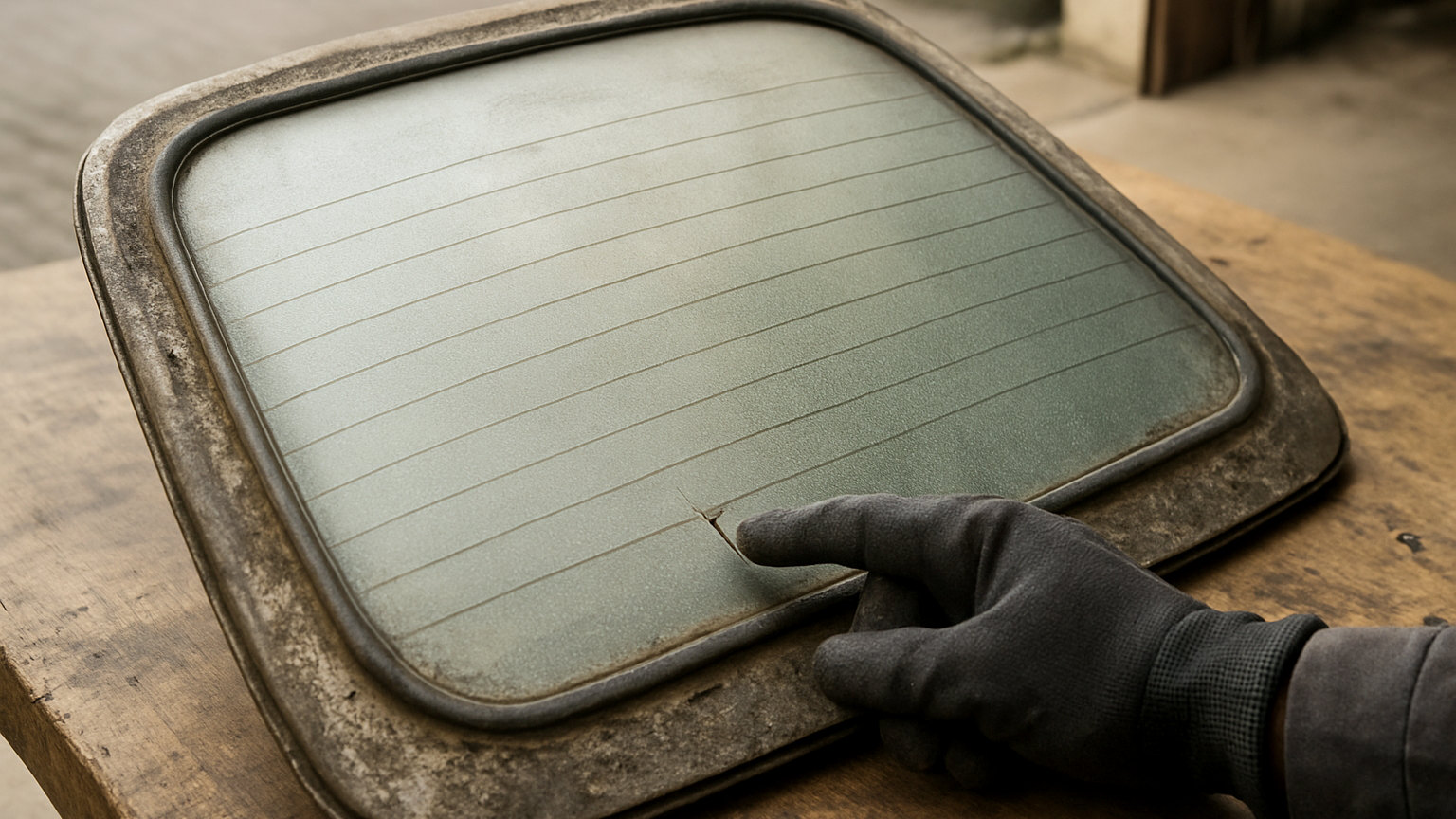
A heated rear window works by passing current through thin conductive lines printed onto the glass, which warm up and clear the mist or ice. The design is simple and the symptoms are correspondingly easy to interpret, since a single broken line produces a single stripe that stays misted while everything around it clears.
What does one uncleared stripe mean?
A break in that individual element. The lines are connected in parallel, so the others keep working and only the damaged one stays cold. It is usually caused by something scraping the inside of the glass, most often loading items into the boot or scraping ice from the wrong side. It is also the easiest version to repair.
Can a broken line be repaired?
Yes, and repair kits are inexpensive and genuinely effective. A conductive silver paint is applied across the break using a supplied template or masking tape, then left to cure. Cleaning the area thoroughly first is essential, and the repair must bridge the gap completely. It is a realistic job for anyone and it usually lasts.
What if nothing works at all?
Then the fault is in the supply rather than the glass. Check the fuse first, since heated screens draw substantial current and their fuses do blow. Then the relay, then the switch itself. Many systems include a timer that switches the screen off automatically after ten or twenty minutes, and a failed timer module produces exactly this symptom.
Where are the connections?
At each side of the screen, where a metal tab is bonded to the glass and a wire connects to it. Those tabs corrode and, more often, come unstuck from the glass, particularly on older cars. A screen that has stopped working entirely with a good fuse is frequently reporting a detached tab rather than anything more complicated, and it is visible on inspection.
Can a tab be reattached?
Yes, using conductive adhesive designed for the purpose. It requires the old adhesive to be cleaned away completely and the tab held in place while it cures, which takes patience rather than skill. Soldering directly to the glass is not appropriate, since the heat can crack it and the bond will not hold.
How do you find a break you cannot see?
With a multimeter set to measure voltage, working along each element with the screen switched on. Voltage should fall progressively from one side to the other, and a point where it jumps abruptly is the break. Running the screen for a minute and looking at where the mist clears is the low technology version and it works well enough for most purposes.
What about heated windscreens?
Some cars have extremely fine heating wires embedded in the front screen, which are far less obvious than the rear lines. They fail in similar ways, though repair is not usually practical and a replacement screen is expensive. They also draw very high current, so a failure is more often the relay or the wiring than the glass itself.
What should you avoid doing?
Scraping the inside of the glass with anything hard, and using an abrasive cleaner or a rough cloth on the element side. Fitting suction mounts or stickers over the elements can also damage them. And when loading the boot, being mindful of what is being pushed against the glass prevents the most common cause of a broken line.
Does it fail an MOT?
A heated rear window is not itself a test item on most vehicles, so a broken element will not fail. What matters is that you can see clearly through the rear screen, and a car that cannot be demisted properly creates an obvious practical problem in winter regardless of what the test requires.
Where a rear view mirror is the only means of seeing behind, obscured glass becomes a genuine issue rather than an inconvenience, and the same applies to heated door mirrors on a frosty morning.


