
Manual heating gives you direct control over three things: fan speed, temperature and where the air goes. Climate control replaces that with a target temperature and manages the rest itself, adjusting the fan, the blend and the vents continuously to hold the cabin at the figure you have chosen. It is more capable in use and considerably more complicated when something goes wrong.
What does the system actually measure?
More than most people realise. Cabin temperature, usually through a small sensor with its own tiny fan drawing air across it. Outside temperature. Coolant temperature. Sunlight intensity and sometimes direction, through a sensor on the dashboard top. Some systems also measure humidity. All of that feeds a module that decides what the vents, blend flaps and compressor should be doing.
What does dual zone mean?
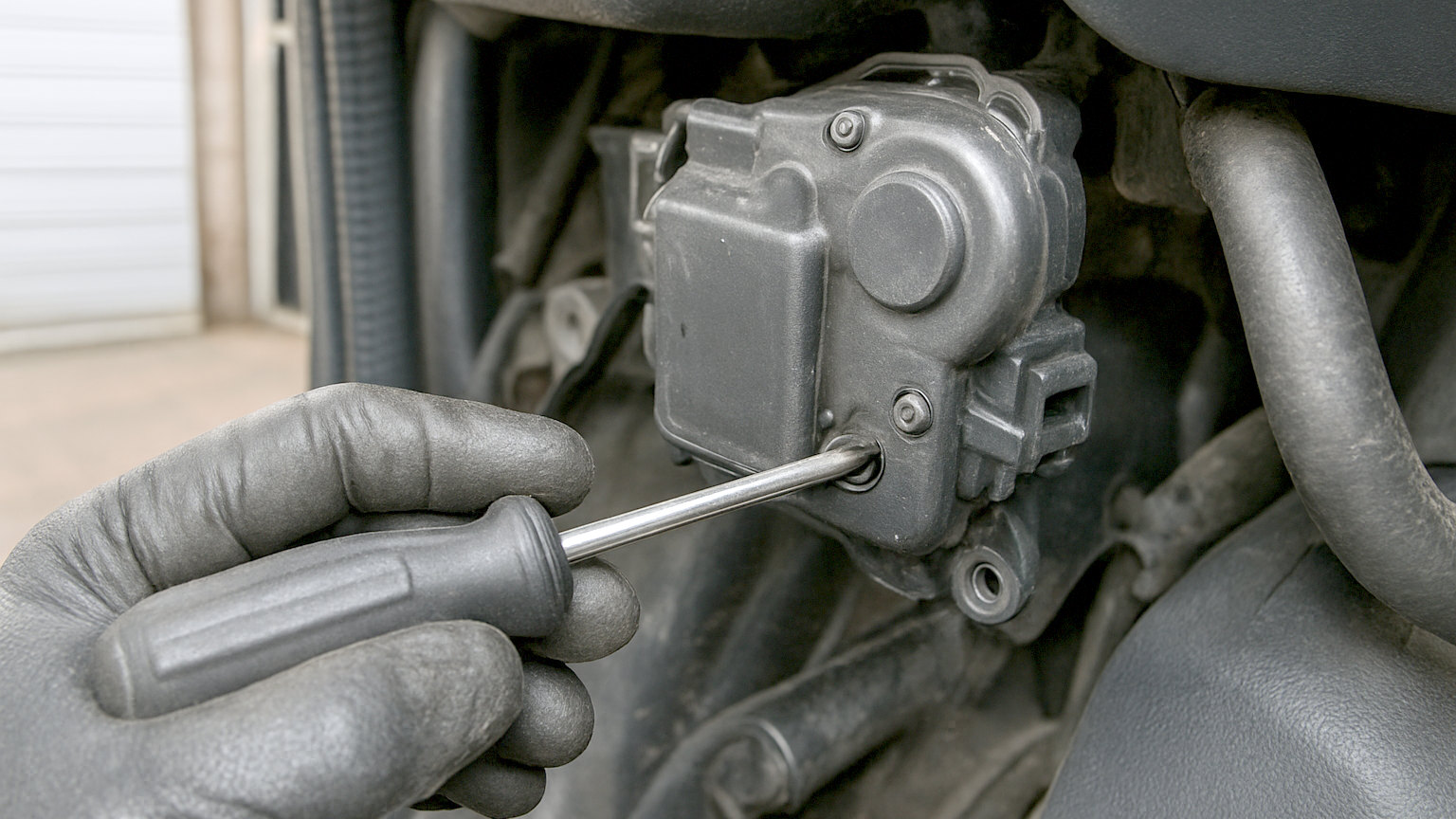
Separate temperature control for the driver and passenger, achieved with two independent blend flaps mixing hot and cold air differently on each side. Three and four zone systems extend the same idea to the rear. The practical consequence is that a failed actuator on one side produces heat on one side and cold on the other, which is a very recognisable symptom.
Why does the fan speed vary on its own?
Because the system is working. On a cold start it may hold the fan low until the coolant warms, so it does not blow cold air at you, then raise it as heat becomes available. In automatic mode it will also increase fan speed to reach the target faster and reduce it once the cabin is settled. That behaviour is normal rather than a fault.
Does the air conditioning run all the time?
On most systems in automatic mode, yes, including in winter, because it dehumidifies the air and improves demisting. That is why the compressor engages on a cold day and why economy is slightly worse with the system in auto. Switching it off saves a little fuel and makes the windows mist more readily, which is usually a poor trade.
How do faults present differently?
Manual systems fail mechanically and obviously: a resistor pack goes, a cable snaps, a valve sticks. Climate control failures are often partial and confusing, since the module compensates for a failing component until it cannot. A cabin temperature sensor reading incorrectly, for example, makes the system heat or cool inappropriately while everything appears to function.
Can it be diagnosed with a code reader?
Usually, and this is the practical advantage. The climate module stores its own fault codes naming the specific actuator or sensor, which turns guesswork into a specific component. Many cars also have a self test or calibration routine that cycles every flap and reports failures. Access to those functions frequently needs more than a basic engine code reader.
Why does it sometimes blow the wrong temperature?
Because the system regulates to the cabin sensor rather than to what you feel. If that sensor is blocked by dust, if its small fan has failed, or if it is positioned near a heat source, the module receives a false reading and compensates in the wrong direction. It is a common and inexpensive fault that produces a very confusing symptom.
Is it worth using automatic mode?
Generally yes, since the system manages the balance between fan, temperature and vents better than manual adjustment does, and it keeps the air conditioning working to control humidity. Overriding the fan or the vents disables part of the automation. Setting a comfortable figure and leaving it alone is what the system was designed for.
Does it cost more to repair?
Usually, since there are more components and the diagnosis requires a tool that can access the climate module. Against that, the fault codes point at the specific part, which reduces diagnostic time considerably compared with a manual system where everything is worked out by elimination. The parts are the expensive half rather than the labour.


