
Air trapped in a cooling system rises to the highest point, and on most cars that is the heater matrix behind the dashboard. Since air carries almost no heat compared with coolant, an airlock produces a cabin that stays cold while the engine runs at a perfectly normal temperature. It is one of the most common reasons a heater stops working after any cooling system work.
How does air get in?
Whenever the system is opened, which means after a coolant change, a hose replacement, a radiator or thermostat repair, or a water pump. It also enters when the level has fallen far enough for the expansion tank to draw air in. And a leaking head gasket introduces combustion gas continuously, which behaves exactly like an airlock and keeps coming back.
What are the symptoms?
No cabin heat with a normal temperature gauge. Heat that comes and goes, often appearing at speed and disappearing at idle. Gurgling from behind the dashboard as coolant and air move through the matrix. A temperature gauge that fluctuates oddly. And in worse cases, overheating, since air pockets prevent proper circulation through the engine.
What is the basic procedure?
With the engine cold, fill the system to the correct level and set the heater to maximum heat with the fan on, which opens any heater valve and lets coolant flow through the matrix. Start the engine and let it reach temperature with the expansion tank cap off or loose, topping up as the level drops. Air works its way out as the thermostat opens and circulation begins.
Why does the heater need to be on?
Because on cars with a heater control valve, the matrix is isolated from the system unless the heater is calling for heat. Bleeding with the heater off leaves the air exactly where it causes the most trouble. Setting maximum temperature before starting is a small step that is frequently missed and it makes a real difference.
Are there bleed screws?
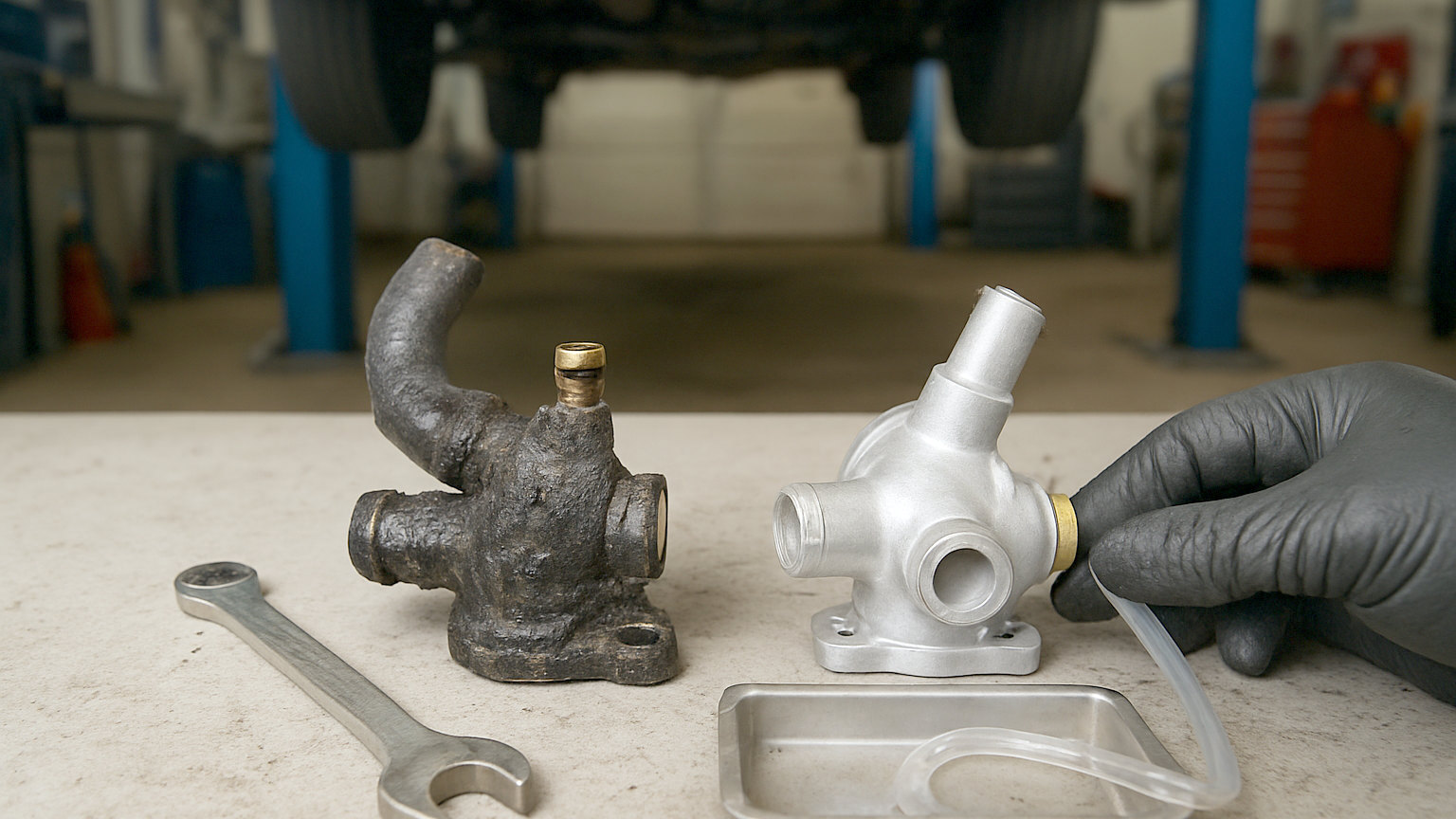
On many cars, yes, positioned at the highest points such as the thermostat housing or a heater hose. Opening them while filling lets air escape directly rather than having to find its way back to the expansion tank. Their location is in the workshop data, and using them turns an awkward job into a straightforward one.
What is a vacuum fill?
A tool that evacuates the entire system with compressed air and then draws coolant in under vacuum, filling every passage with no air at all. It is what many workshops use, and it is far more reliable than gravity filling on modern engines with complicated coolant routing. On cars notorious for airlocks it is worth asking whether the garage uses one.
What are the safety considerations?
Never open an expansion tank cap on a hot engine, since the system is pressurised and the coolant is above its normal boiling point, so releasing the pressure causes it to boil instantly and spray out. Wait until everything is cold. Coolant is also toxic and must not be left where children or animals can reach it, and it should be disposed of properly.
What if the air keeps coming back?
Then it is being introduced rather than trapped. A leak lets air in as the system cools and contracts, so finding it matters. A failing head gasket forces combustion gases into the coolant, which produces persistent air, bubbling in the expansion tank and a level that rises when the engine runs. Repeated bleeding that never sticks is a symptom in itself.
Should you do it yourself?
On many older cars it is a straightforward job with patience and a cold engine. On modern vehicles with complicated coolant routing, electric pumps and specified procedures, a workshop with a vacuum filler will do it properly in less time and with far less risk of leaving air behind. The consequence of getting it wrong is overheating, which raises the stakes.


