
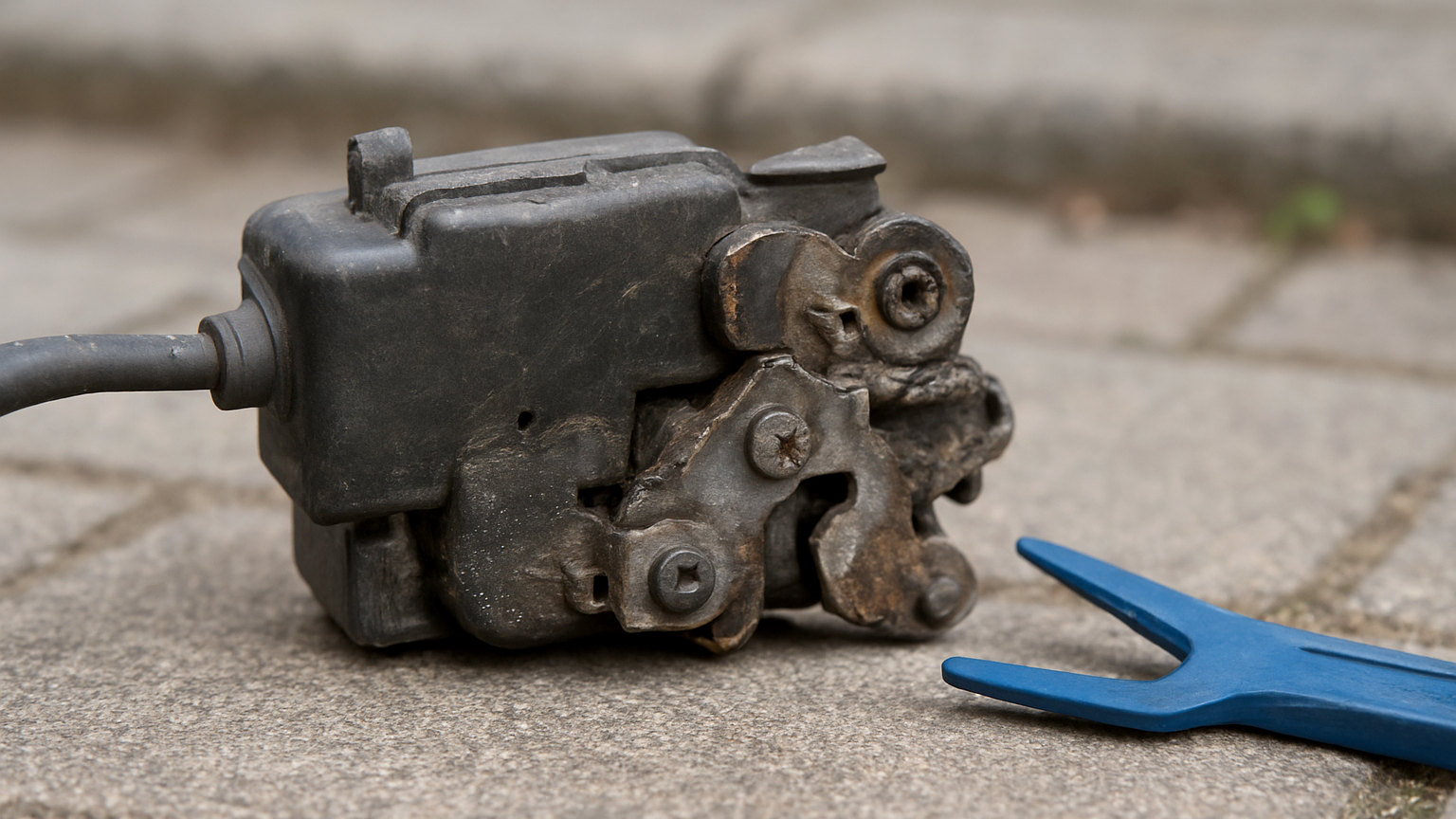
When every door locks except one, the diagnosis is already substantially narrowed. Whatever sends the signal is working, the fuse is fine and the module is functioning, since three other doors are responding to it. The fault is confined to that one door, and there are only three realistic possibilities inside it.
What is a door lock actuator?
A small electric motor driving a plastic gear train, which moves the lock mechanism between locked and unlocked. On most modern cars it is integrated into the lock assembly rather than being a separate part, so replacing it means replacing the whole latch unit. It works several thousand times over the life of the car, which is why the gears eventually strip.
What does clicking indicate?
A motor that is running while the mechanism stays put, which is the classic sign of stripped gears. You hear the actuator trying, sometimes repeatedly, and nothing moves. It confirms the actuator is receiving power, so the wiring and the module are working, and it points firmly at the mechanical part of the assembly.
What does silence indicate?
No power reaching the actuator, which means the wiring, a connector or the motor itself. The most common cause is a broken wire in the loom that passes through the flexible conduit between the door and the body, since it flexes every time the door opens. Front doors suffer far more than rear ones because they are used more.
Have other functions on that door stopped?
The most useful question available. If the window, the mirror and the speaker on the same door have also stopped, the loom is almost certainly at fault rather than the lock. If everything else works normally and only the lock has failed, the actuator is the likely culprit. That observation takes seconds and it saves considerable diagnostic time.
Can the mechanism be seized?
Occasionally, particularly on a car that has stood or one used in heavy salt. The latch and its linkages can corrode, so the actuator cannot move them even though it is working perfectly. Applying a suitable lock lubricant through the latch aperture sometimes frees it, and it is worth trying before anything is dismantled since it costs almost nothing.
Does temperature affect it?
Frequently, and it is a useful clue. A lock that works in summer and fails on cold mornings usually has a marginal actuator or stiff mechanism rather than a broken wire. Moisture that has entered the lock can also freeze. A fault that appears only in winter and clears in spring is describing something that is degrading rather than something that has failed.
How difficult is the repair?
Moderate. The door card comes off, the weather membrane is peeled back, and the latch assembly unbolts from the door edge with the linkages disconnected. The awkward parts are working through small access holes and refitting the membrane properly afterwards, since it is what keeps water out of the cabin. It is achievable at home with patience.
Is it worth fixing?
Generally yes, particularly on a driver or front passenger door. Beyond the inconvenience, a door that will not lock centrally leaves a security gap, and one that will not unlock can trap somebody inside or leave you unable to open it at all. On a rarely used rear door some owners reasonably wait, and it does not improve on its own.
Can you check the actuator yourself?
To a degree. Standing beside the door with the window down while somebody operates the central locking tells you whether the actuator is making any noise at all, which is the key distinction between a mechanical failure and an electrical one. Listening at each door in turn takes a minute and it identifies which door and which type of fault before anything is dismantled.
Doing the same with the door open, so you can hear the latch directly, makes a quiet actuator considerably easier to detect.


