
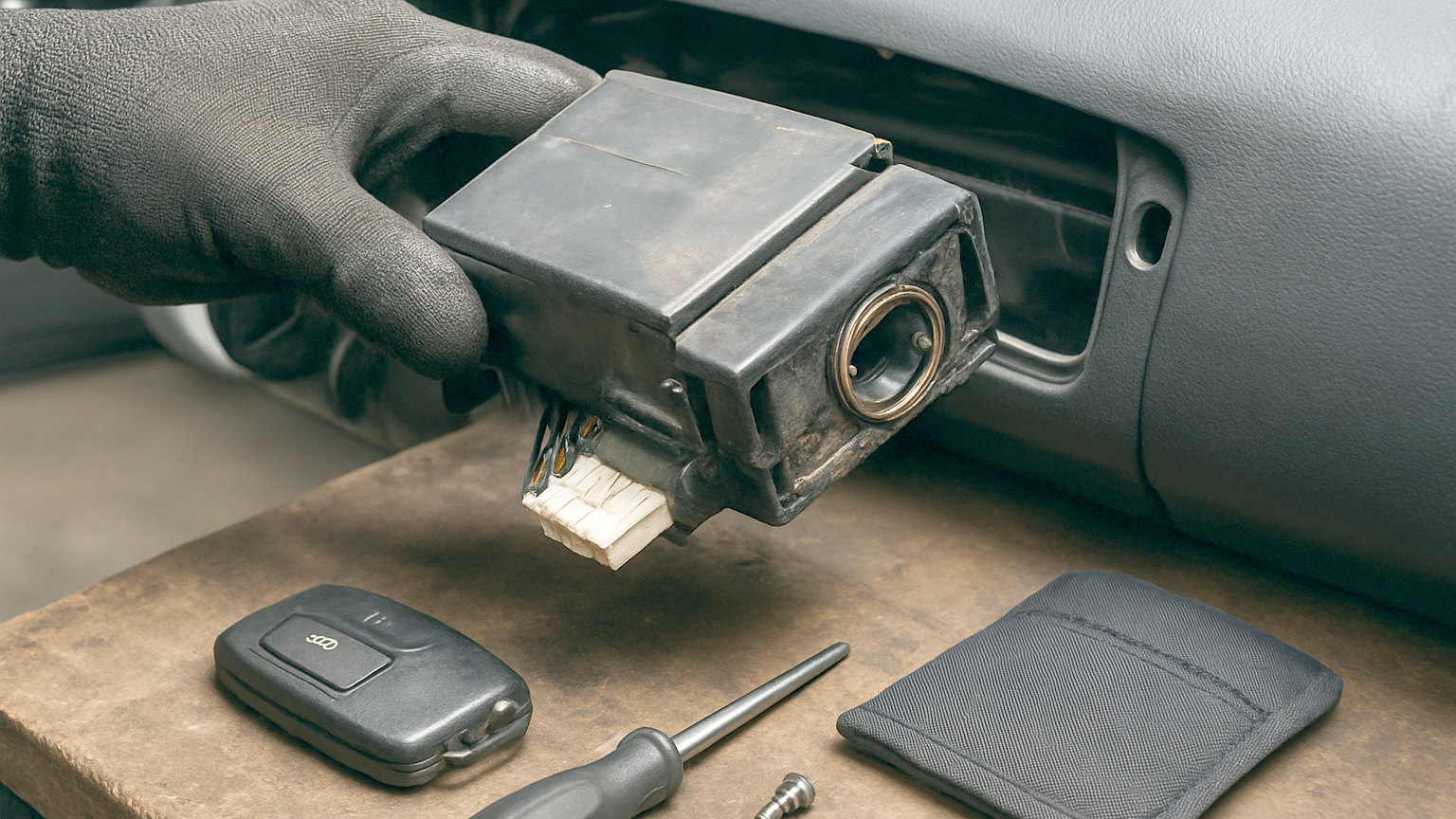
Keyless entry has been associated with a rise in a particular kind of vehicle theft, and the concern is well founded rather than exaggerated. The vulnerability is not a flaw in the encryption but in the geometry: the car assumes that if it can hear the fob, the fob must be nearby. That single assumption is what a relay attack exploits.
How does a relay attack work?
Two people with electronic equipment. One stands near the house holding a device that picks up the low power signal from the fob inside and relays it. The second stands by the car with a device that retransmits it, so the car believes the key is beside it. The doors unlock, the car starts and it is driven away, all without touching the fob.
Does it defeat the encryption?
No, and that is the important point. The codes are not broken or copied; the genuine conversation between car and fob is simply extended over a longer distance. That is why relay attacks work on cars whose security is otherwise sound, and why the countermeasures all involve preventing the fob from being heard rather than improving the encryption.
What is a signal blocking pouch?
A small bag lined with metallic material that blocks radio signals, sometimes called a Faraday pouch. A fob inside cannot be heard and cannot hear, so a relay attack has nothing to work with. They are inexpensive and effective, and the only practical test is to put the fob in, walk to the car and confirm it does not respond.
Do modern fobs sleep?
Many now do. A motion sensor inside the fob detects that it has been stationary for a period and puts the transmitter to sleep, so a fob on a hall table overnight is not broadcasting at all. It also extends battery life considerably. Some manufacturers offer this as a retrofit or a software update, which is worth asking about.
Can keyless entry be turned off?
On many cars, yes, through the vehicle settings or a specific button sequence on the fob. The car then requires a button press to unlock and, on some, the fob to be held against the start button. It removes the convenience and it removes the vulnerability, which is a trade some owners are happy to make.
What else helps?
A steering wheel lock, which is visible and takes time to defeat, and thieves generally prefer easier targets. A tracker, which does not prevent theft and substantially improves recovery. Parking defensively, blocking the car in where possible. And on some vehicles, an aftermarket immobiliser requiring a code before the engine will start.
Does it affect insurance?
It can. Some models with a poor security record attract higher premiums, and insurers increasingly ask about security measures. Fitting an approved tracker or immobiliser sometimes reduces the premium enough to offset the cost. It is worth asking, since the question is rarely volunteered.
Where should keys be kept?
Away from the front of the house, since the relay device has to get close enough to hear the fob. A pouch, a metal tin or simply a room at the back of the house all help. What should be avoided is the hall table by the front door, which is exactly where the equipment can reach and exactly where most people leave them.
Does it apply to conventional keys?
Not in the same way, since a fob that only transmits when a button is pressed cannot be relayed. That is why some owners of keyless cars deliberately disable the feature. Conventional systems have their own vulnerabilities, and the relay attack specifically depends on the constant conversation that keyless entry requires.
Older cars are stolen by other methods entirely, so no vehicle is immune, and the sensible response is layered security rather than assuming any single measure is sufficient on its own against a genuinely determined and well equipped thief.


