
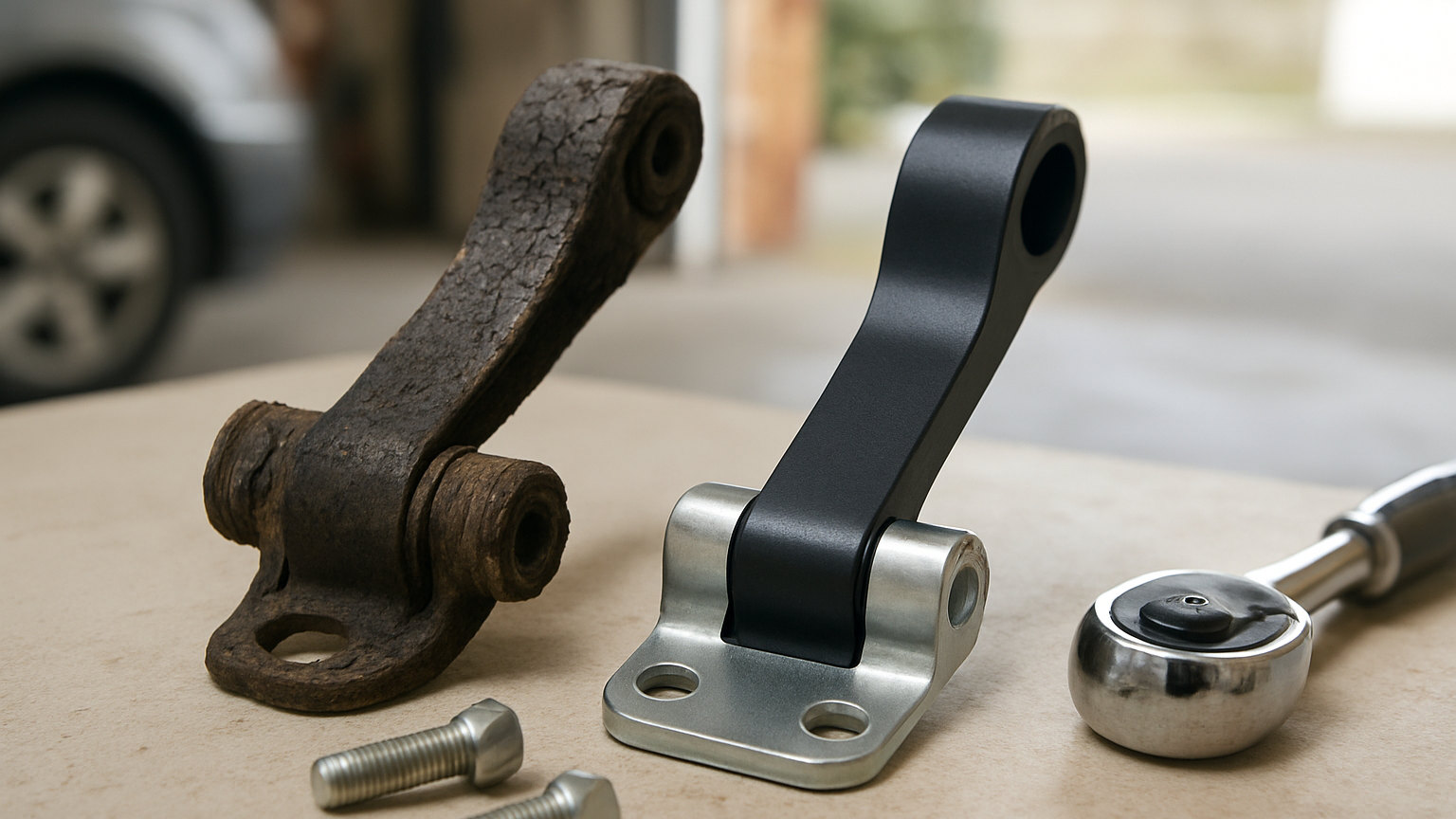
A creaking door is among the most irritating faults on a car and among the easiest to fix. It is almost always dry metal moving against metal, and a few minutes with the right lubricant resolves it. A door that swings open and bangs, or that drops through its travel, is a different fault and it is worth distinguishing between them.
Where does the creak come from?
Usually the check strap rather than the hinges, which surprises people. The strap is a metal arm running from the door to the pillar with a roller or shoe riding along it, and when it dries out it produces exactly the creak that everyone attributes to the hinges. The hinge pins themselves also dry and contribute.
What should be lubricated?
The check strap arm along its full length, the hinge pins at their top and bottom faces, and the latch mechanism and striker. Opening the door fully exposes the strap, and wiping it clean before applying anything makes a considerable difference since old grease mixed with grit is abrasive rather than lubricating.
Which lubricant works best?
A white lithium grease for the check strap and hinges, since it stays in place and does not run. Penetrating oils free things up and then evaporate, so they are useful for freeing a seized component and poor as a long term lubricant. For the latch itself, a dedicated lock lubricant is better since it does not attract dirt.
Why is it worse in cold weather?
Because grease thickens as it cools and any marginal lubrication becomes inadequate. Rubber seals also stiffen and can stick to the frame. A door that creaks every winter and behaves in summer is describing lubrication that has degraded rather than a component that has failed, and it responds well to attention.
What makes a door bang open?
A failed check strap, which no longer holds the door at its intermediate positions. The door then swings freely to full travel and can hit the wing or a wall, and in wind it becomes genuinely difficult to control. It also allows the door to be pushed beyond its designed limit, which accelerates hinge wear.
Can a check strap be replaced?
Yes, though it usually requires the door card to be removed since the strap is bolted inside the door. The pin at the pillar end has to be driven out. Parts are inexpensive for most models. On some cars the strap is integrated into the hinge, which makes the job larger and is worth establishing before starting.
What about a clunk when closing?
Often the latch meeting the striker at a slight angle, which suggests the door has dropped on its hinges or the striker needs adjusting. It can also be a loose door card clip or something in the door pocket. Closing the door slowly and listening tells you whether the noise comes from the latch or from the door itself.
How often should you do it?
Once a year is plenty, and autumn is the sensible moment since winter is when the noise appears. It takes ten minutes for all the doors and the boot, and it also reduces wear on the hinges and the check straps, both of which are considerably more expensive to replace than a tube of grease.
What should you avoid?
Spraying general purpose penetrating oil over everything and hoping, since it evaporates and leaves the joint dry within weeks while attracting dirt in the meantime. Also avoid getting any lubricant on the rubber seals or the paintwork, and wipe up the excess rather than leaving it to collect grit.
Masking the paint below the hinge with a cloth while spraying saves a good deal of cleaning afterwards, and grease on a door shut is unpleasant to find on clothing weeks later long after you have forgotten it is there at all. A few sheets of newspaper on the sill works just as well.


