
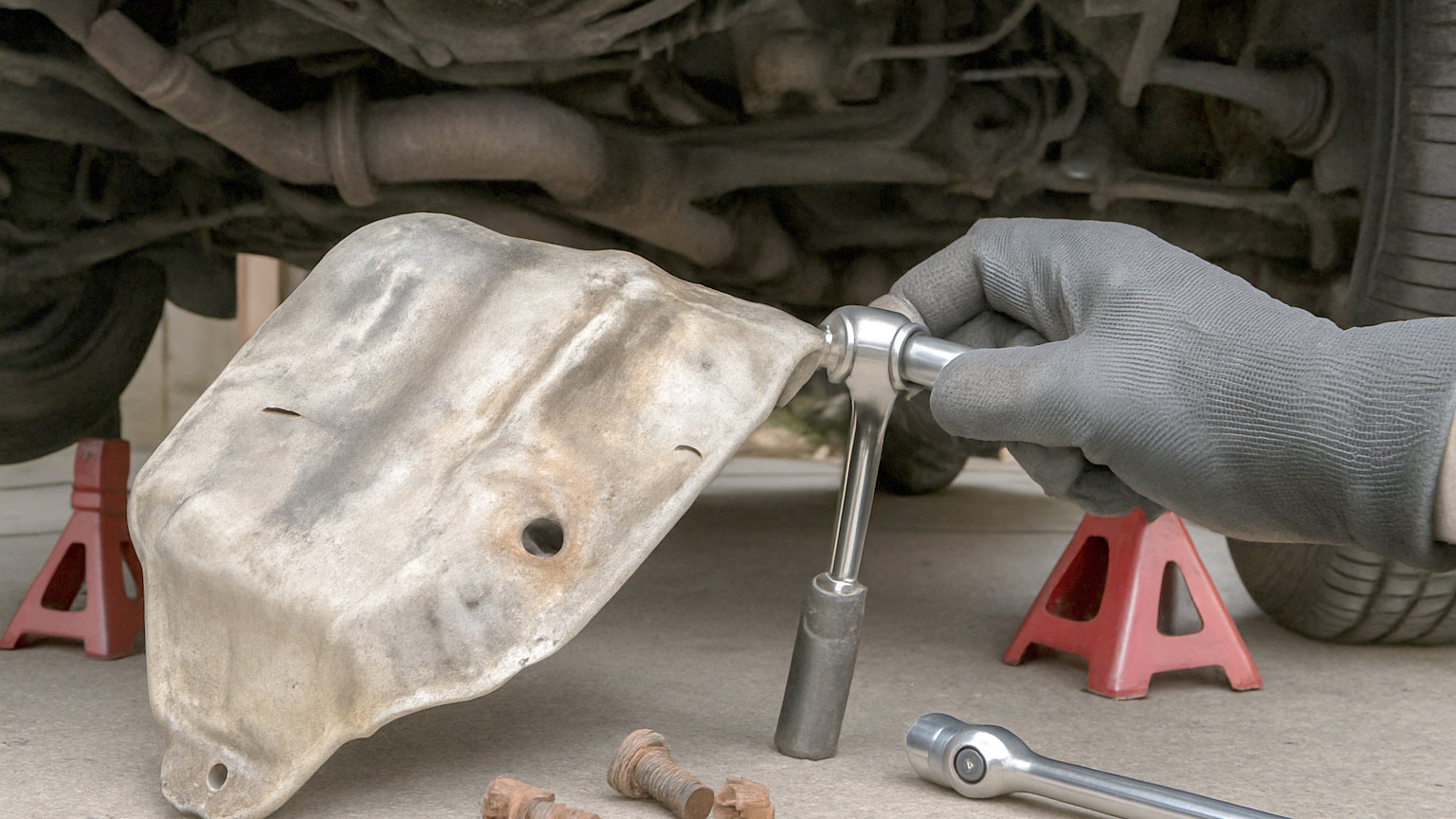
Rust needs three things: bare steel, water and oxygen. Remove any one and corrosion stops. That simple requirement explains everything about where it appears on a car, because the places that rust first are the places where water sits for long periods against metal whose protection has been breached, and a great many of those places are entirely hidden.
Why does it work from the inside out?
Because the outside of a car is painted, waxed and washed while the inside of a sill, a door or a chassis rail is not. Water enters through drain holes and seams, sits in the bottom of enclosed sections, and works outwards. By the time a bubble appears in the paint, the metal behind it has usually been corroding for years rather than months.
Which areas go first?
Sills and the jacking points beneath them. Wheel arch lips, particularly at the rear. The bottoms of doors and tailgates. Around the windscreen and rear screen where the bonding meets the flange. Suspension mounting points and subframe rails. And the boot floor and spare wheel well, which collect water from any leak above them.
Why are drain holes so important?
Because every enclosed section on a car has them, and they exist precisely so water can escape. When they block with mud and debris, the section fills and the water sits against bare steel. Doors, sills, boot lids and tailgates all rely on them. Clearing them with a piece of wire once a year is one of the most effective anti corrosion measures available.
What role does salt play?
A large one. Salt dissolved in water dramatically accelerates the electrochemical reaction, so a British winter does more damage in a few months than a dry summer does in years. It also clings to the underside, so a car that is washed on top and never underneath continues corroding through spring with the salt still in place.
Do stone chips matter?
Considerably. A chip is a breach in the protection, and once water reaches the steel beneath, corrosion spreads under the surrounding paint. That is why a chip left untreated becomes a blister and then a hole. Touching them in promptly, particularly on the leading edges of the bonnet and around the wheel arches, is genuinely preventative.
Why do seams and joints corrode?
Because two pieces of metal folded and spot welded together create a capillary gap that draws water in and holds it. Factory seam sealer covers those joints, and it cracks and lifts with age and accident repair. Once water gets behind it, corrosion works along the seam invisibly, which is why so much serious rot begins there.
Does the age of the car matter?
Less than it used to. Galvanised panels, better cavity waxes and improved paint have made modern cars far more resistant than those of thirty years ago. What has not changed is that damage, blocked drains and neglected repairs still create the conditions, so a ten year old car with a poorly repaired arch can be worse than a twenty year old one that has been looked after.
What should you inspect?
The inner sills and jacking points, the arch lips front and rear, the bottoms of all the doors, the boot floor beneath the carpet, and the areas around the suspension mountings. A torch and a small mirror make it far easier. Doing that once a year catches problems while they are still surface corrosion rather than structural repairs.
Does it always mean the car is finished?
Not at all, and the distinction is worth holding onto. Surface corrosion on a wing or an arch lip is a cosmetic problem with a straightforward fix if caught early. What determines whether a car is worth keeping is corrosion in the structure, and that is a quite separate assessment made from underneath rather than from the paintwork.
Plenty of perfectly sound cars look scruffy, and plenty of tidy ones are structurally finished, which is why the two judgements have to be kept apart.


