
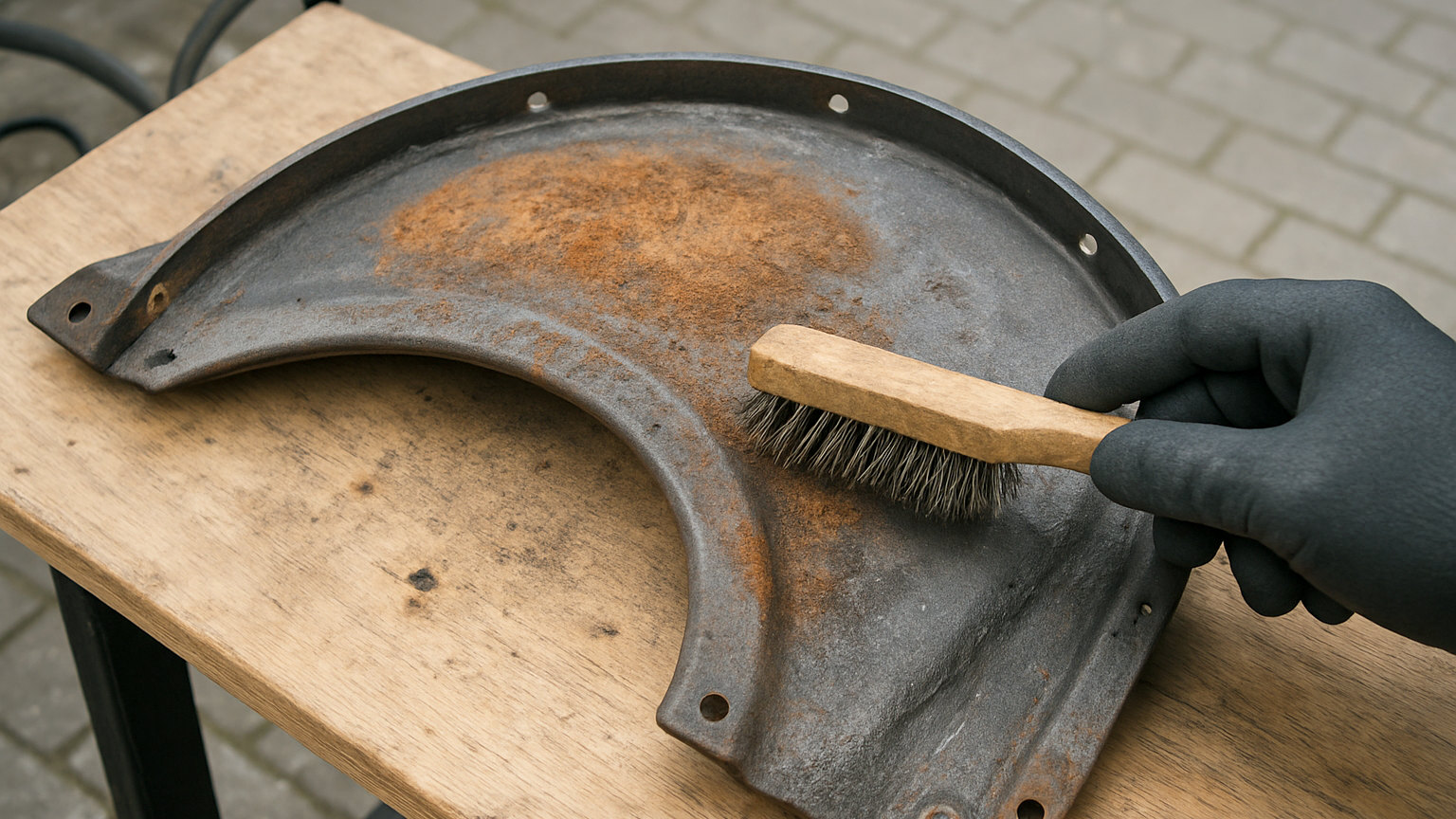
Surface rust on otherwise sound metal is one of the few bodywork jobs that genuinely rewards doing at home. The work is not difficult and it does require patience, because the outcome is decided almost entirely by the preparation rather than by the paint. Rushing the removal is why most amateur rust repairs fail within a year.
How do you know it is only surface rust?
By tapping the area gently and probing it. Sound metal rings and resists a screwdriver pressed firmly against it. Metal that gives, sounds dull, or flakes away is no longer surface corrosion and needs cutting out and welding. If a small area disintegrates under light pressure, the rot is more extensive than it appeared and the job has changed.
What has to be removed?
All of it, which is the part people underestimate. Every trace of loose rust and the paint immediately around it must come off, back to bright clean metal, feathering the surrounding paint edges so the repair blends. Leaving corrosion beneath a coat of primer simply seals it in with moisture already present, and it will reappear.
What do rust converters do?
They chemically convert iron oxide into a stable black compound that can be painted over, rather than removing it. They are genuinely useful in pitted areas and awkward corners where abrasion cannot reach every crevice. They are not a substitute for mechanical removal on accessible surfaces, and applying one over loose flaking rust achieves very little.
What primer should be used?
An etch primer on bare steel, which bites into the surface and provides adhesion, followed by a primer filler to build the surface. Some products combine the functions. What matters is that the bare metal is covered promptly, since fresh steel begins to oxidise within hours in damp air and priming over that starts the problem again.
How is the colour matched?
From the paint code on the vehicle identification plate, usually under the bonnet, in a door shut or in the boot. Aerosols mixed to that code are widely available. On a car that has faded, an exact code match may still look slightly different, which is why blending into the surrounding panel rather than stopping at a hard edge produces a better result.
Does it need lacquer?
On metallic and pearlescent finishes, yes, since the colour coat has no gloss of its own. On solid colours the paint may already contain the gloss. Applying lacquer in thin coats over a properly cured base is what produces a repair that matches, and rushing that stage is what produces the milky patches people recognise as an amateur repair.
What about cavities and the underside?
Different products and a different approach. Enclosed sections benefit from a cavity wax injected through existing holes, which creeps into seams and displaces moisture. The underside benefits from a flexible protective coating rather than hard paint, since anything brittle will chip and trap water beneath it, which is worse than leaving it bare.
When should you not attempt it?
When the metal has perforated, when the area is structural such as a sill or a suspension mounting, or when the rust is on a seam where it extends invisibly in both directions. Those need cutting out and welding by somebody equipped to do it, and covering them cosmetically is both a waste of effort and potentially an MOT problem.
How long should a home repair last?
Where the preparation was thorough and the metal genuinely sound, many years, and it is entirely reasonable to expect it to outlast the rest of the paint. Where it reappears within a season, corrosion was left behind rather than the products failing. That is worth knowing, because it means a returning repair is a preparation problem rather than an argument for paying somebody else.
Going back further next time, and taking longer over the removal stage, is usually all that is required to get a lasting result.


