
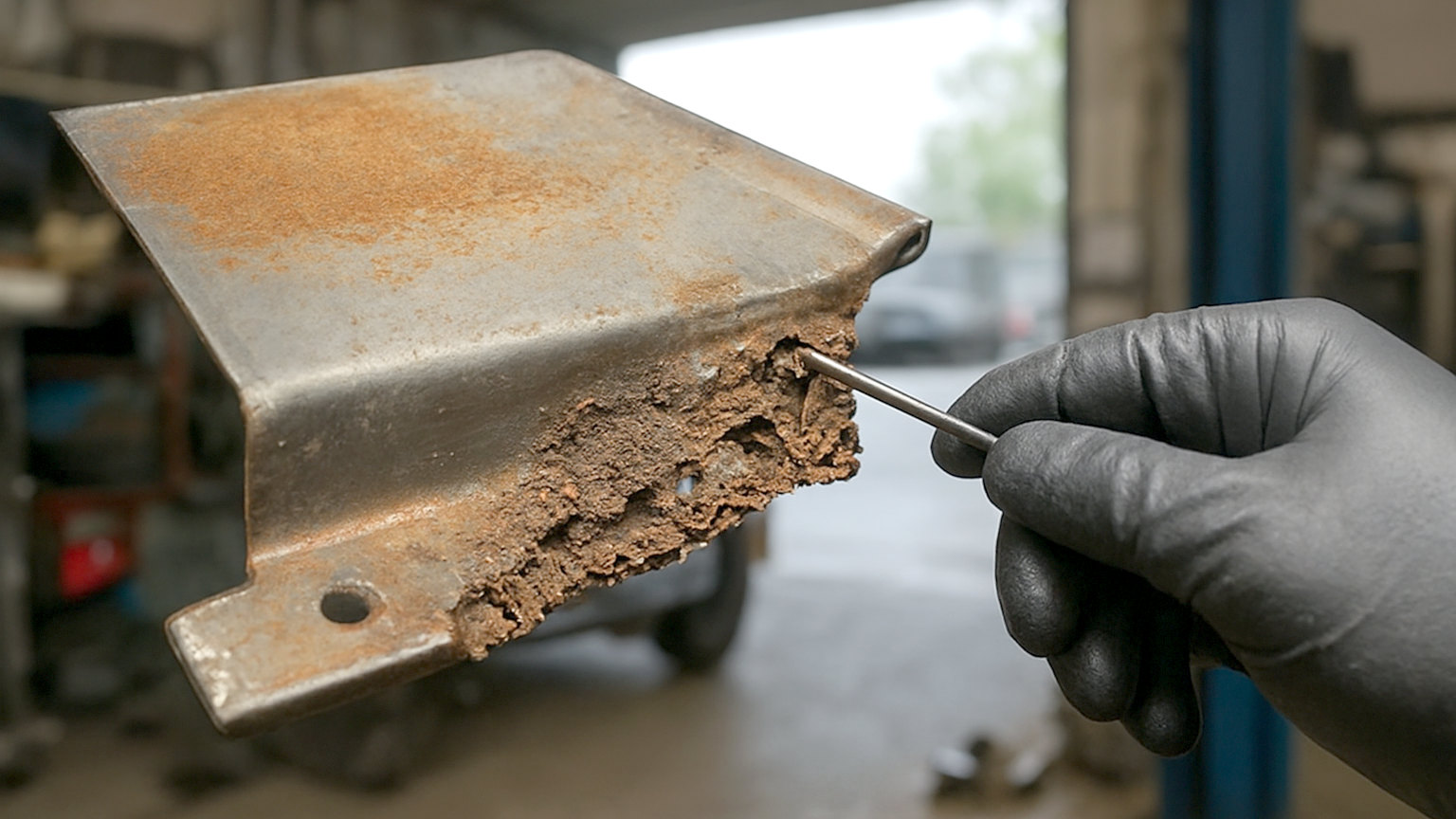
The distinction between surface rust and rot decides everything about whether a repair is a weekend job with an aerosol or a welding bill. Surface rust sits on metal that is still sound and full thickness. Rot means the corrosion has eaten through, so there is less metal than there should be or none at all. Telling them apart is straightforward once you know what to look for.
What is the tapping test?
Tapping the area firmly with a knuckle or the handle of a screwdriver. Sound metal produces a sharp ring. Metal that has thinned or has rot behind it sounds dull and flat, and in advanced cases it flexes. It takes seconds, it needs no equipment, and it is what a body shop will do first when assessing a car.
What does probing tell you?
More, and it is destructive so it should be done on an area already needing repair. Pressing firmly with a screwdriver against corroded metal will either meet resistance, indicating sound steel beneath the surface rust, or push straight through. Anything that gives under moderate pressure is rot rather than surface corrosion, whatever the paint above it suggests.
Why does bubbling understate the damage?
Because paint blisters when corrosion beneath it expands, and by that point the metal has been rusting for a considerable time. A blister the size of a coin frequently reveals an area several times larger once the paint is removed. That is why estimates for rust repair are so often provisional until the area has been stripped back.
Where does rot usually start?
Inside enclosed sections where water sits and nobody looks. Sills, chassis rails, inner arches and box sections all corrode from within, so the outside appears sound while the structure is failing. That is why a car can look presentable and fail an MOT on corrosion, and why inspection from underneath matters more than a walk around.
Is surface rust urgent?
Not immediately, and it does not stay surface rust indefinitely. Left through a winter it progresses, and the point at which it becomes rot is not predictable. Treating it while the metal is sound costs an afternoon and an aerosol; treating it two years later costs a welder. That difference is the practical argument for dealing with it early.
Can rot be filled?
Not legitimately. Body filler has no structural strength and it does not stop corrosion continuing behind it, so filling a hole simply hides it while it grows. On a structural area it is also an MOT failure regardless of how it looks. Filler over rot is the classic disguise on a car being prepared for sale, and it is why probing suspicious areas matters when buying.
How is rot repaired properly?
By cutting out all the affected metal, back to sound steel, and welding in a new section shaped to match, then treating and sealing both sides including the inside of the cavity. It is skilled work and it is the only repair that lasts. Anything less thorough returns, usually within a couple of years and usually larger.
What should you do with the assessment?
Use it to decide whether the car is worth the work before committing to anything. Surface rust across several panels is a manageable afternoon. Rot in a sill or around a suspension mounting is a welding job with an uncertain final cost, since more is nearly always found once the area is opened up. Knowing which you have makes that decision honestly.
Can it be caught in between?
Frequently, and that is the value of inspecting annually. Corrosion passes through a stage where the metal is pitted but still sound, which is the last point at which a simple treatment works. Finding it there rather than two years later is the difference between an aerosol and a welder, and it costs nothing but an hour with a torch.
Doing that inspection at the same time each year, ideally before winter, also means you notice what has changed rather than judging each area in isolation.


