
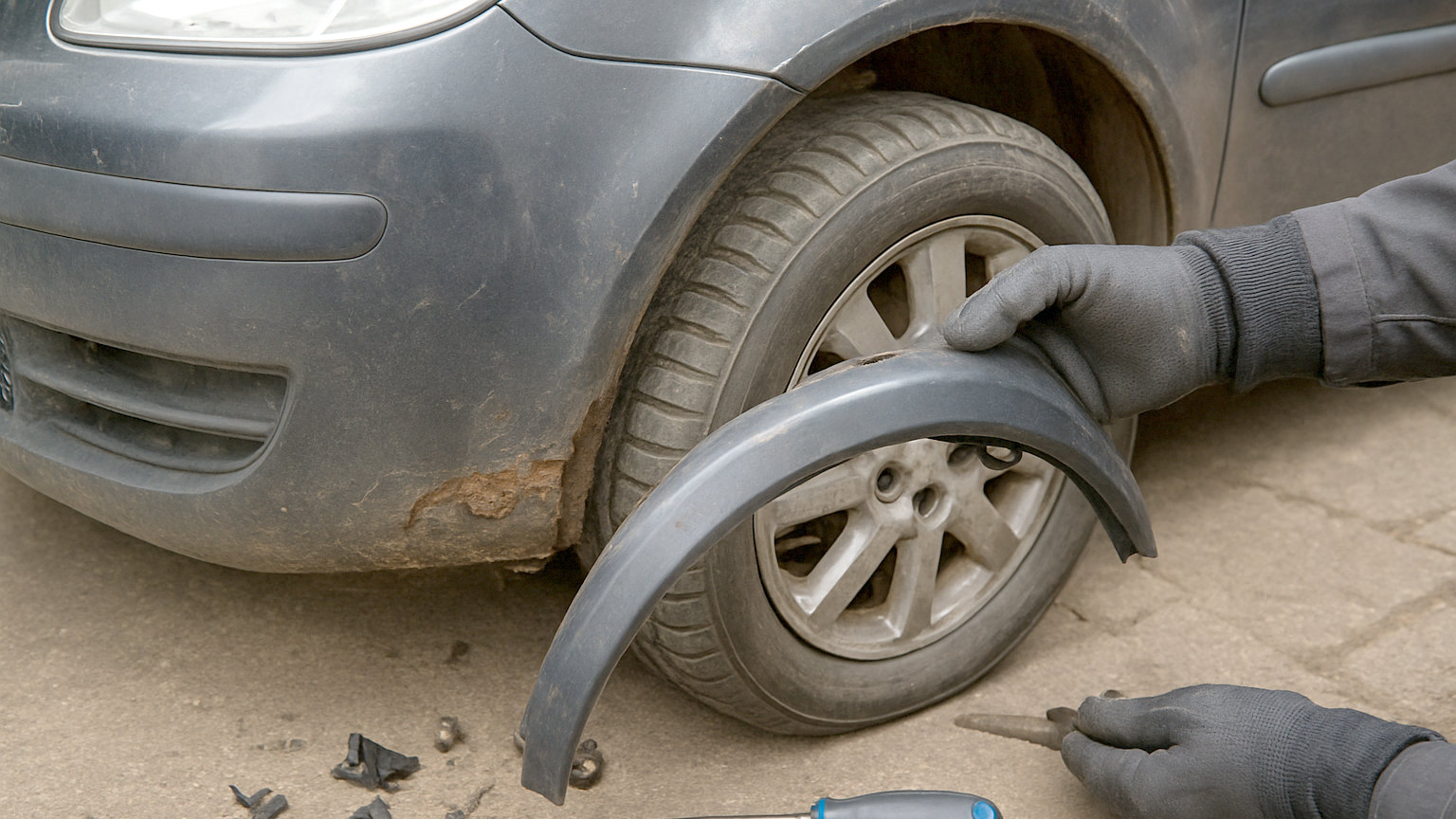
A stone chip looks trivial and it is a breach in a carefully engineered barrier. Modern paint is several layers deep, each doing a different job, and the outer surface is only part of it. Once a stone removes all of them down to bare steel, the metal is exposed to water and salt, and corrosion begins within days rather than months.
What are the paint layers?
Typically an electrophoretic primer bonded directly to the steel for corrosion protection, a primer surfacer to smooth the surface, a base coat carrying the colour, and a clear lacquer providing gloss and ultraviolet protection. A light chip that removes only lacquer is cosmetic. One deep enough to show grey primer is worth watching, and one showing bare metal needs attention.
How do you tell how deep it is?
By colour and by touch. A white or grey centre indicates primer, which is still protecting the steel. A dark, slightly shiny centre that shows a brown tinge after rain indicates bare metal already beginning to corrode. Running a fingernail across it tells you whether it has depth, and a magnifying glass in good light removes most of the guesswork.
Why does rust spread sideways?
Because iron oxide occupies more volume than the steel it replaces, so as corrosion develops it lifts the paint from beneath. Water then reaches further metal, and the process continues outwards under the surrounding paint. That is why a pinhead chip becomes a blister the size of a coin, and why the visible damage always understates what is underneath.
How should a chip be touched in?
Clean the area thoroughly and remove any corrosion with a fine abrasive or a rust converter, then apply primer if bare metal is showing, followed by colour built up in thin layers rather than one thick blob, then lacquer. Allowing each layer to dry properly matters far more than speed, and the result is a chip that is protected rather than invisible.
Is a paint pen good enough?
For protection, yes, and for appearance it depends entirely on patience. A pen applied carefully in thin layers and left to cure produces a mark far less noticeable than the chip was. Applied thickly it leaves a raised blob that catches the light and looks worse. The paint code is on a plate under the bonnet or in the door shut.
Where do chips concentrate?
The leading edge of the bonnet, the front bumper and grille area, the lower doors and sills where wheels throw debris, and the wheel arch lips. Following closely behind another vehicle on a gritted road produces far more than any other single behaviour, which is a practical argument for leaving a larger gap in winter.
Is paint protection film worth it?
On the areas that take the most impact, frequently. A clear film applied to the bonnet leading edge, the front bumper and the arches absorbs chips that would otherwise reach the paint. It costs money and it is far cheaper than a respray. It also needs applying to clean undamaged paint, so it is a decision best made early.
When should you deal with them?
Before winter, since that is when salt and water do the damage. An hour spent in autumn touching in the chips accumulated over a year is one of the more worthwhile pieces of maintenance available, and it costs the price of a paint pen. Left until spring, several of those chips will have become blisters instead.
Does it matter on every panel?
Some more than others. Chips on a bonnet or a wing are worth attending to, and those on the arch lips and lower doors matter most because that is where salt water lingers and where corrosion spreads fastest. Prioritising the lower half of the car makes sense if time is limited, since gravity and road spray do the rest.
The rear arches in particular collect everything the front wheels have already loosened, which is why they corrode noticeably before the front ones do.


