
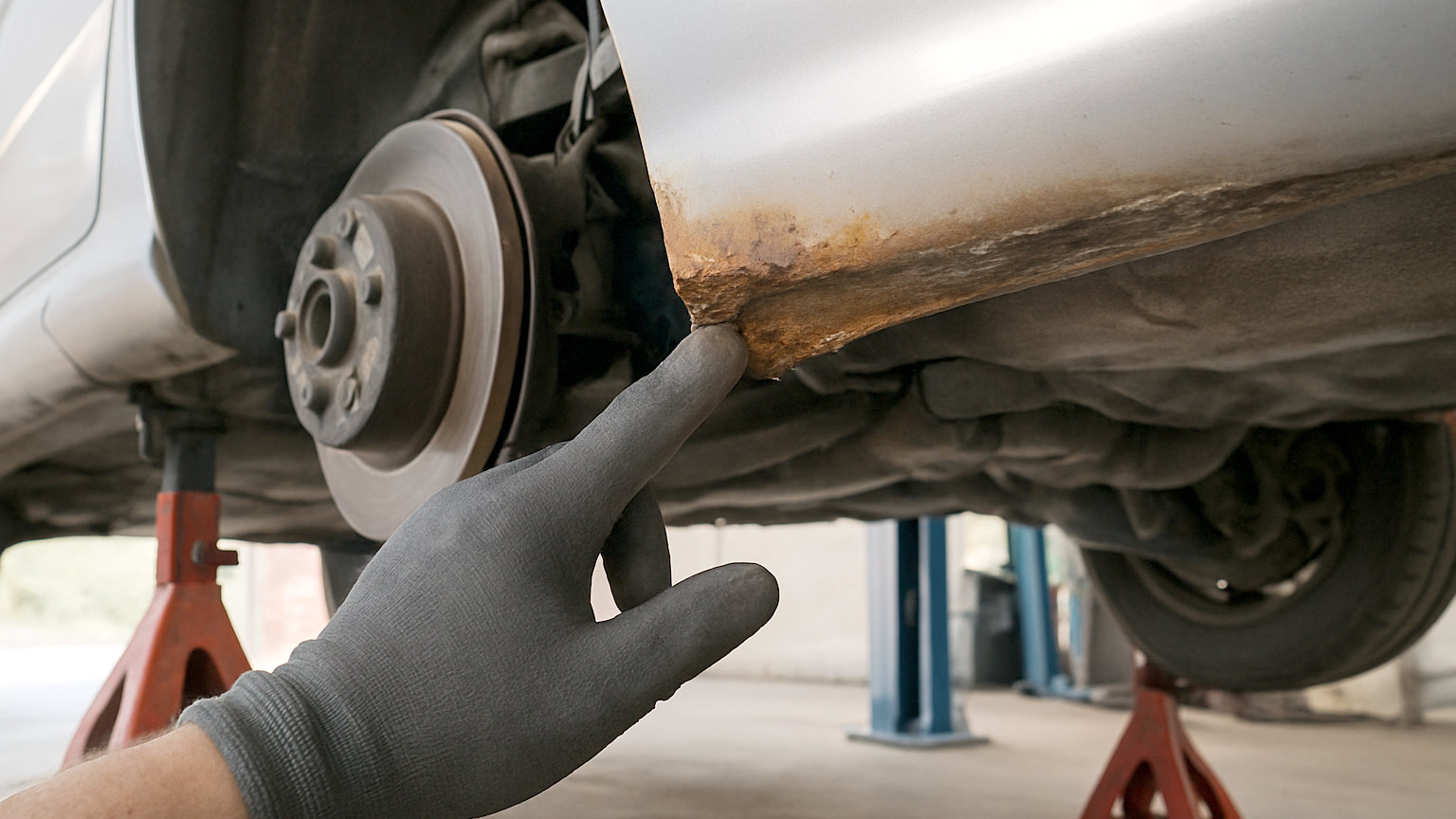
Few things are more dispiriting than corrosion reappearing in the same place a year after paying to have it repaired, and it is almost always explicable. There are four reasons rust returns, and each represents a stage of the job that was shortened. Understanding them is what allows you to ask the right questions before agreeing to the work.
Was all the rust removed?
The most common reason by far. Corrosion extends further under the paint than it appears, and a repair that stops at the visible edge leaves active rust sealed beneath fresh primer with moisture already present. It continues immediately, and it reappears at the edge of the repair within a year or two. Cutting back to bright clean metal is the only reliable approach.
Was the back of the panel treated?
Frequently not, and it is the second great cause. A panel that has rotted from the inside will do so again unless the inner face and the cavity behind it are cleaned, treated and waxed. A repair that addresses only the outside is cosmetic regardless of how good the paint looks, because the conditions that caused the corrosion have not changed.
Was filler used over rust?
It happens, and it is the clearest sign of a repair done to a price. Body filler has no structural strength and does not arrest corrosion, so filling over pitted or perforated metal hides it for a season. The tell is a repair that bubbles again in exactly the same outline, since the corrosion beneath has simply continued its original path.
Was the cause addressed?
The most overlooked question. If a sill rotted because a drain hole was blocked, or an arch went because a liner was funnelling mud behind it, repairing the metal without clearing the drain or refitting the liner guarantees a repeat. The metal was a symptom. Anyone quoting for the repair should be able to say why it corroded.
Does seam sealer matter?
Considerably. Factory seams are sealed to keep water out of the capillary gap between panels, and welding disturbs that. A repair that does not reinstate the seam sealer on both faces leaves an open path for water into the joint, which is where the original corrosion frequently started. It is a small material cost and a genuine difference in longevity.
How long should a repair last?
A properly executed welded repair with both faces treated and the cavity waxed should last as long as the surrounding metal, which on a reasonable car means many years. Anything failing within two years was not done thoroughly. That is a reasonable expectation to state when getting quotes, and it separates firms that will do the work properly from those that will not.
What should you ask before agreeing?
Whether the corroded metal will be cut out or treated in place, whether the inner face and cavity will be protected, whether seam sealer will be reinstated, and what guarantee is offered. Those four questions make quotes genuinely comparable and they signal that you know what a lasting repair involves.
Is a guarantee meaningful?
It can be, and read what it covers. A guarantee against corrosion recurring in the repaired area, in writing, is worth having from a firm that will still be trading. It also tends to indicate a shop confident in its preparation, which is a useful signal in itself even if you never need to call on it.
Is it worth going back?
If the repair has failed within the guarantee period, certainly, and it is worth raising promptly and in writing. A firm that has done the work badly should put it right. Where no guarantee was given and the repair was priced accordingly, the lesson is in what to ask next time rather than in pursuing a dispute.
Keeping photographs of the area before and after any repair is worth the moment it takes, since it establishes what was actually done if the question arises later.


