
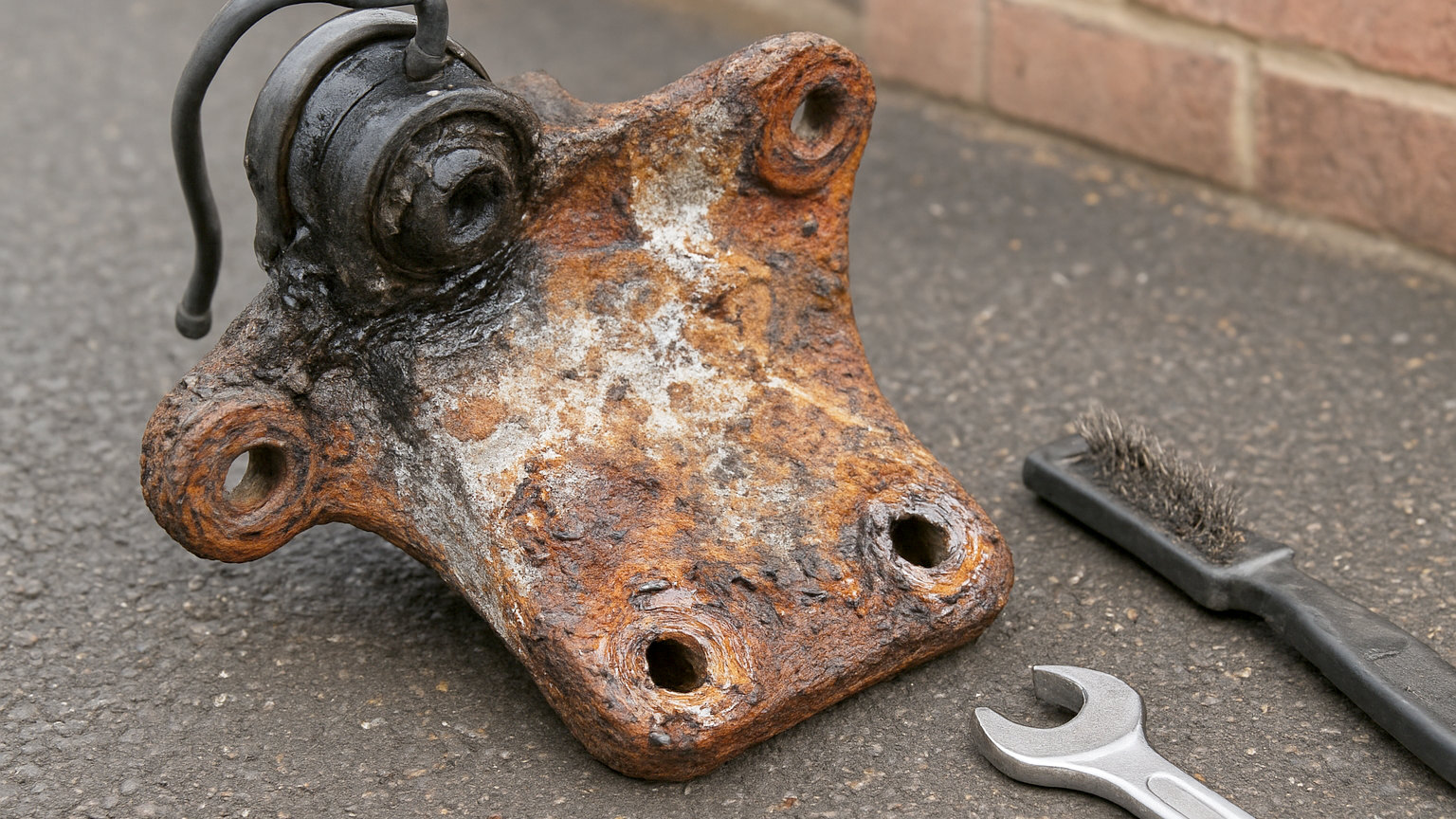
Road salt is the single largest factor in why cars corrode in Britain, and its effect is not subtle. Salt dissolved in water makes it a far better conductor, which dramatically accelerates the electrochemical process that turns steel into rust. A car that would take years to corrode in a dry climate can develop serious problems in a few British winters.
How does salt accelerate corrosion?
By turning water into an electrolyte. Rusting is an electrochemical reaction requiring current to flow between anodic and cathodic areas on the metal surface, and salt water carries that current far better than pure water does. The reaction that would proceed slowly in rain proceeds many times faster in salt spray at the same temperature.
Why does it keep working after winter?
Because salt is hygroscopic, meaning it draws moisture from the air, so a salt deposit on the underside stays damp even when the car is dry to the touch. A vehicle that is never washed underneath continues corroding through spring and summer with the winter salt still in place. That single fact is why underside washing matters more than paintwork.
Where does it collect?
Inside the arches, particularly at the rear where mud packs behind the liner. Along the sills and in their drain holes. On brake pipes and their mounting clips. Around subframe mountings and suspension components. And in the folds and seams of the underbody, where it is completely out of sight.
How should a car be washed in winter?
Underside first and thoroughly, with plenty of water rather than a brief rinse, paying attention to the arches and sills. A hose with a lance that reaches underneath, or a jet wash used sensibly, does the job. The paintwork is the easy part and the least important. Doing it on a mild day every few weeks through winter is the practical routine.
Are car washes enough?
Those with an underbody spray are genuinely useful, and many automatic washes clean only the visible surfaces. Where a wash offers an underbody rinse it is worth the small additional cost through winter. What matters is volume of water reaching the arches and the underside rather than the appearance of the paint afterwards.
Does coastal air matter?
Considerably, and it is often underestimated. Salt carried in sea air affects cars kept near the coast all year, not just in winter, and it reaches the same areas. A car that has lived by the sea deserves the same underside washing routine as one used on gritted roads, and it is worth knowing when buying used.
Can you rinse too aggressively?
You can. A pressure washer aimed directly at wheel bearings, at brake components or into the scuttle drives water where it should not go, and it can strip protective coatings from the underside. Using moderate pressure and keeping the lance a sensible distance away achieves the same cleaning without introducing new problems.
Is there anything else worth doing?
Clearing the drain holes so salty water does not sit inside enclosed sections. Touching in stone chips before winter rather than after. And on a car being kept long term, having the cavities waxed. Those three, combined with regular underside washing, address most of what salt does and cost very little in comparison.
Is it worth avoiding gritted roads?
Not realistically, since they are gritted precisely because conditions require it and the alternative is a genuine safety risk. The sensible response is to accept the exposure and manage it by washing, rather than to drive on untreated roads in freezing weather. Leaving a larger gap behind other vehicles does reduce the amount of spray the car receives.
It also reduces the stone chips that provide the entry points salt needs, which makes it doubly worthwhile through the winter months.
Grit thrown from a lorry or a gritting vehicle at close range does a remarkable amount of damage to a bonnet and windscreen, so hanging back is worth more than it appears.


