
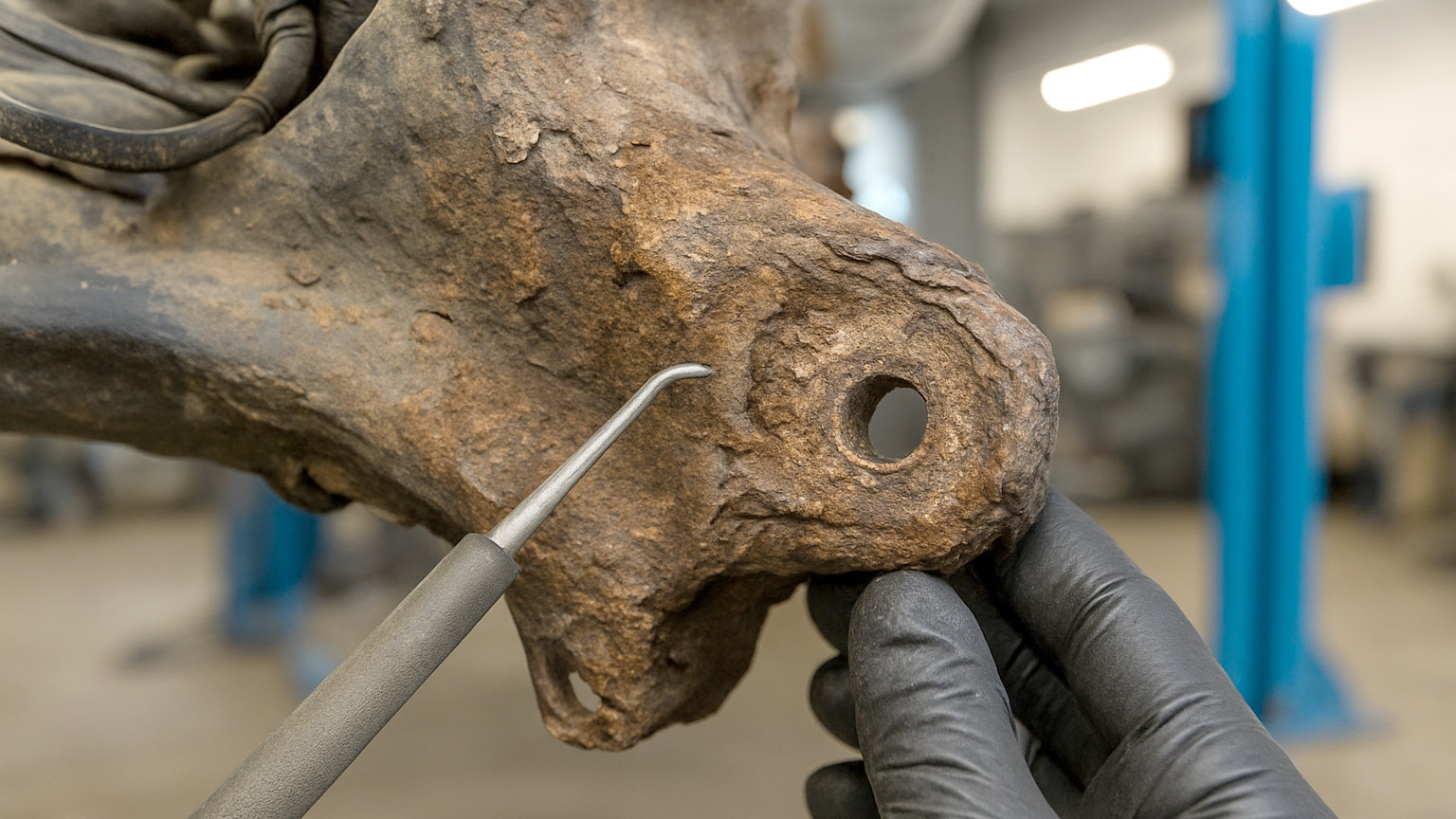
Rust is one of the few faults on a used car that can be genuinely terminal, and it is also one of the easiest to miss because the corrosion that matters is almost entirely out of sight. A car can present beautifully at standing height while its sills and floor are failing, which is why the inspection has to happen underneath.
Where should you look first?
The sills and jacking points, along their full length including where they meet the arches. Then the inner arches front and rear, the floor pan, the chassis rails, the suspension and subframe mounting points, and the brake pipes. A torch is essential and a small mirror helps considerably. Kneeling down and looking properly is what separates a real inspection from a walk around.
What about inside the car?
Lift the boot carpet and the spare wheel, since standing water and a corroded floor there indicate both a leak and rot. Lift the cabin carpets at the edges if the seller allows, and feel the underlay. Check around the seat belt anchorages. Damp carpets on a car being sold in dry weather are a meaningful finding.
How do you spot filler?
A small magnet wrapped in cloth to protect the paint will not stick where filler is thick beneath. Tapping produces a dull note rather than a ring. Look along panels at a shallow angle in good light, where ripples and inconsistencies show up clearly. Overspray on rubber seals, mismatched textures and paint on the edges of trim all suggest work has been done.
Do panel gaps matter?
Considerably. Uneven gaps, a bonnet or boot that sits proud on one side, or doors that need lifting to close all suggest either accident damage or corrosion in the structure that supports them. Comparing one side of the car against the other is the quickest way to spot it, and it takes seconds.
What does the MOT history tell you?
A great deal, and it is free to check online. Advisories mentioning corrosion, particularly on sills, subframes or brake pipes, are a record of what a tester saw and they build a picture over several years. An advisory noted three years ago and never mentioned since usually means it was repaired or the car changed testers, and both are worth asking about.
Should you view in the rain?
Never by choice, and daylight matters more than weather. Wet paint hides swirls, ripples and mismatched colour, and a car viewed in the dark or under artificial light gives away far less. Insisting on a dry daylight viewing is entirely reasonable, and reluctance to accommodate that is itself informative.
Is an inspection worth paying for?
On any car costing meaningful money, frequently yes. An independent inspection includes getting the car raised, which most private viewings do not, and that is exactly where structural corrosion lives. The cost is small against the price of the car and against a welding bill discovered at the first MOT.
What should make you walk away?
Soft or flexing sills, corrosion around suspension or seat belt mountings, a boot floor that has been sitting in water, or filler over a structural area. Those are not negotiating points, they are reasons to look at another car. There are always other cars, and structural corrosion is the one fault that rarely turns out smaller than it first appeared.
Is some rust acceptable?
On an older car, inevitably, and pretending otherwise rules out a great many perfectly usable vehicles. Surface corrosion on a wing, a scabby arch lip or a rusty exhaust heat shield are all manageable. The distinction is between cosmetic corrosion you can price and structural corrosion you cannot, and that line is the one worth holding.
Getting the car raised, or paying somebody to do it, is what allows that line to be drawn with any confidence at all.
A seller who is reluctant to let the car be inspected properly, or who has parked it tight against a wall on grass, has told you something useful before you have looked at anything.


