
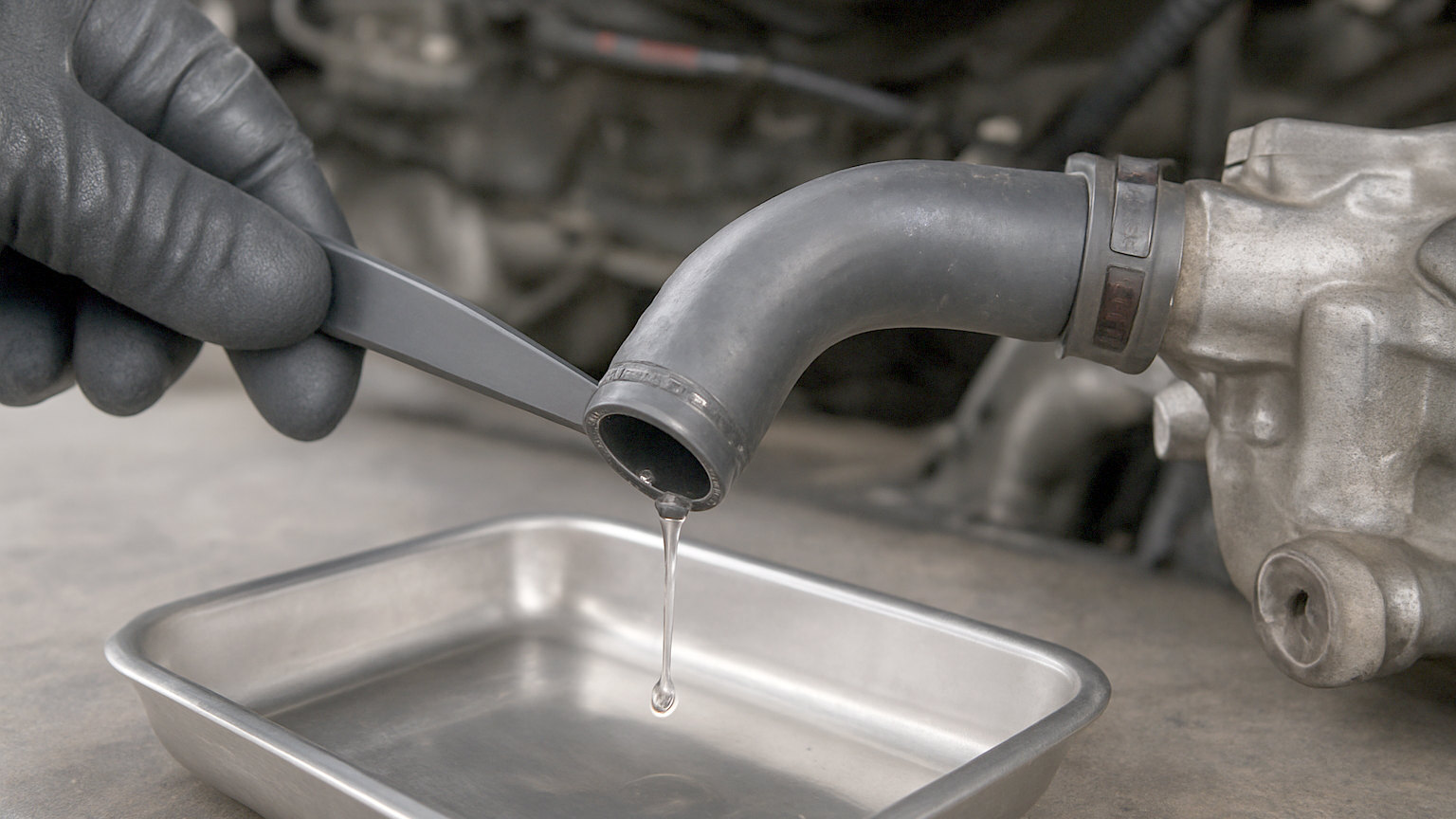
Finding a puddle beneath a parked car is alarming until you know what it is. On a warm day with the air conditioning running, clear water dripping from the middle of the underside is condensation from the evaporator and is completely normal. It is the moisture removed from the cabin air, and a car in humid conditions can produce a surprising amount of it.
Why does it produce water at all?
Because the evaporator behind the dashboard runs well below the dew point of the air passing over it, so moisture condenses onto its surface exactly as it does on a cold drink. That water collects in the housing and runs out through a drain tube beneath the car. Removing that moisture is what makes air conditioning so effective at demisting.
How do you know it is harmless?
By the fluid. Condensation is completely clear, odourless, and it evaporates without leaving a mark. Coolant is coloured and smells sweet. Oil is dark and leaves a stain. Screenwash is usually coloured and smells of detergent. Placing clean cardboard under the car overnight and looking at what collects settles the question in a few minutes.
Where should the drip be?
Roughly beneath the middle of the car towards the passenger side, since that is where the heater and evaporator housing sits. Water appearing at the front near the radiator or at a wheel is not condensation. Noting the position of the puddle relative to the car is one of the more useful observations when trying to identify any fluid loss.
What if there is water inside instead?
That usually means the drain tube has blocked, so condensation backs up in the housing and overflows into the passenger footwell. It is a common fault, particularly on cars parked under trees where leaf debris finds its way in. The symptom is a wet carpet that appears in warm weather when the air conditioning is being used rather than after rain.
Can the drain be cleared?
Often, and it is a cheap job. The tube emerges through the bulkhead beneath the car, and gently probing it with a length of soft trimmer line or blowing it through with low pressure air usually clears the blockage. Care matters, since forcing something sharp up the tube can damage the housing or the evaporator itself.
Could it be the exhaust?
Yes, and it is also normal. Burning fuel produces water, and on a cold start it condenses in the exhaust and drips from the tailpipe until the system is hot enough to evaporate it. Water from the tailpipe on a cold morning is a sign of a healthy engine. Persistent water in large quantities once fully warm, with white smoke, is a different matter entirely.
What if it appears without air conditioning?
Then it is worth investigating. Many climate control systems run the compressor automatically even in winter, so condensation is possible year round. But a puddle on a cold dry day with no air conditioning in use points at something else, most likely coolant, screenwash or water that has found its way into the car and is draining out.
Should you be concerned?
Not by clear water beneath the car on a warm day, which is the system working correctly. Be concerned by anything coloured, oily or sweet smelling, by water appearing inside the car, and by any puddle accompanied by a falling fluid level under the bonnet. Those three distinctions cover essentially every case.
How much water is normal?
More than people expect on a humid day, since the system may remove a litre or more of water from the cabin air over a long journey. A steady drip while parked after driving with the air conditioning running is entirely ordinary, and the puddle usually evaporates within an hour or two.
If nothing at all appears on a hot day with the system running hard, that is worth a thought, since it may mean the drain is blocked and the water is going somewhere less convenient.


