
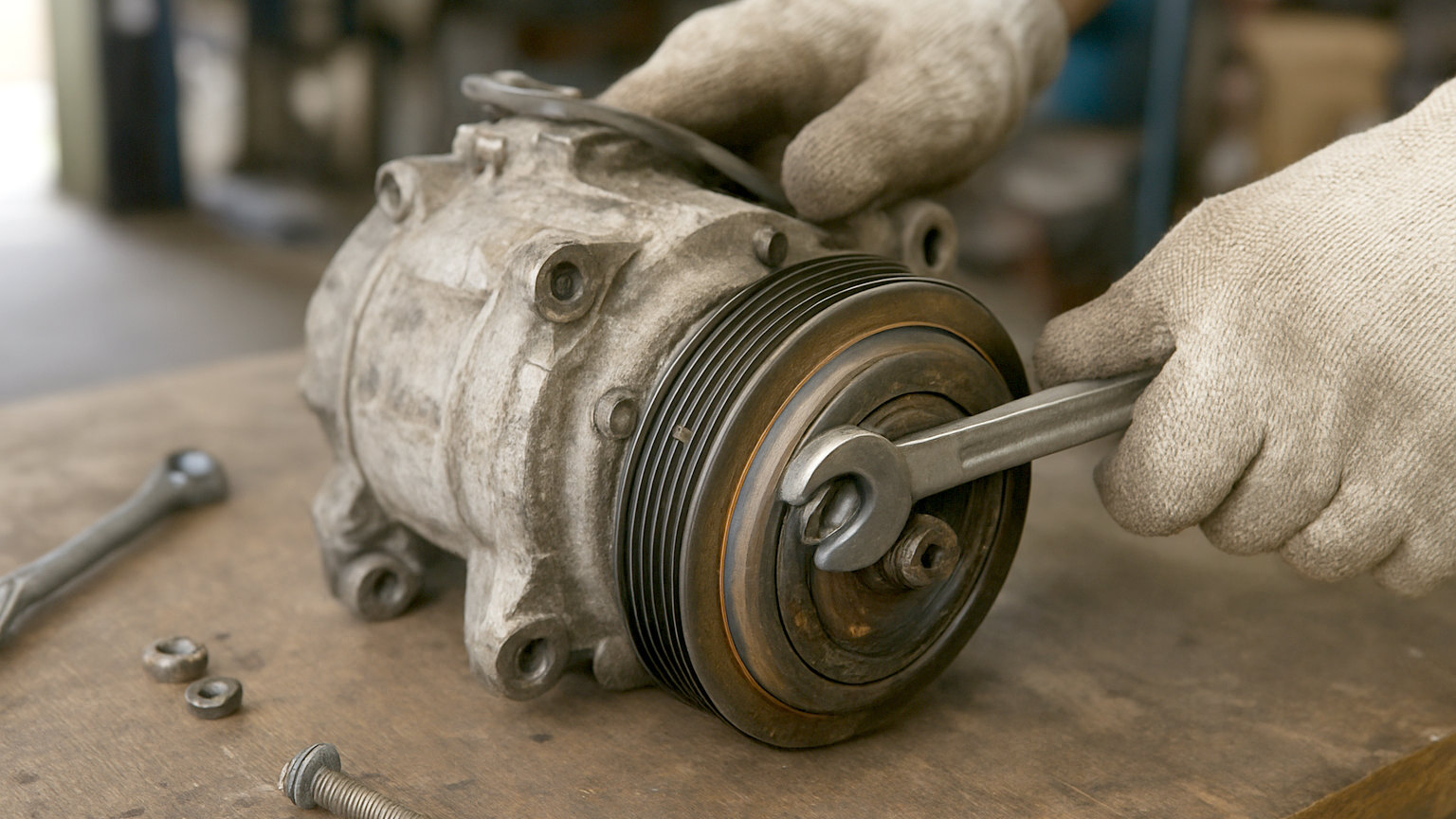
Air conditioning is thought of as a summer system, and switching it off from October to April is one of the more expensive habits an owner can develop. Running it regularly through winter keeps the compressor seals lubricated, and it also demists the windscreen far faster than heat alone, which is a safety benefit rather than a comfort one.
Why does it prevent leaks?
Because the oil that lubricates the compressor is carried around the system dissolved in the refrigerant, so it only reaches the shaft seal when the system is running. A compressor left idle for months allows that seal to dry out and shrink, and it then leaks. Ten minutes of use every few weeks keeps everything wet and pliable.
How does it help demisting?
By removing moisture from the air rather than simply warming it. The evaporator runs below the dew point, so water condenses onto it and drains away outside the car. Dry air clears a misted screen far faster than warm humid air, which is why most cars engage the compressor automatically when the screen setting is selected.
Does it work when it is cold outside?
Yes, though most systems inhibit the compressor below a certain ambient temperature, often around freezing, because there is a risk of the evaporator icing and because moisture in the air is already low. On a damp day above that threshold, it works normally and is genuinely useful. On a hard frost, the system may decline to run at all.
Can you use it with the heater?
Absolutely, and it is the correct combination for demisting. The air is cooled and dried by the evaporator, then reheated by the matrix before entering the cabin, so it arrives warm and dry. That is exactly what a misted screen needs. Adding fresh air rather than recirculation completes the arrangement, since outside air is drier than the air already inside.
Does climate control do it automatically?
On most cars in automatic mode, yes, which means the compressor engages regularly through winter whether you notice or not. That is one of the practical advantages of leaving the system in auto. If you routinely press the button to switch the air conditioning off, you are disabling exactly the function that keeps the system healthy.
Does it cost fuel?
A small amount, since the compressor takes power from the engine when engaged. In winter it runs far less than in summer, because the cooling demand is minimal and it is cycling mainly to dehumidify. The fuel cost of ten minutes a week is trivially small against the cost of a compressor or a condenser, which is the real comparison.
What if it has not been used for years?
Try it and see, and do not be surprised if nothing happens. A system that has stood is likely to have lost refrigerant past a dried seal, so the pressure switch prevents the compressor engaging. That is the system protecting itself. Have it checked and recharged properly, and then use it regularly to avoid the same outcome.
What is the practical routine?
Run it for ten minutes at least once a fortnight all year, which happens automatically if you leave climate control in auto mode. Switch it off a few minutes before the end of a journey while leaving the fan running, which dries the evaporator and prevents the musty smell that damp systems develop.
Is there any downside?
Very little. The fuel cost in winter is minimal since the compressor cycles rarely, and the alternative is a system that dries out and leaks. The only genuine caveat is that on a very cold day the system may decline to engage at all, which is designed behaviour rather than a fault worth investigating.
Selecting the windscreen setting is usually the simplest way to bring the compressor in when you want it, since most cars engage it automatically for demisting.


