
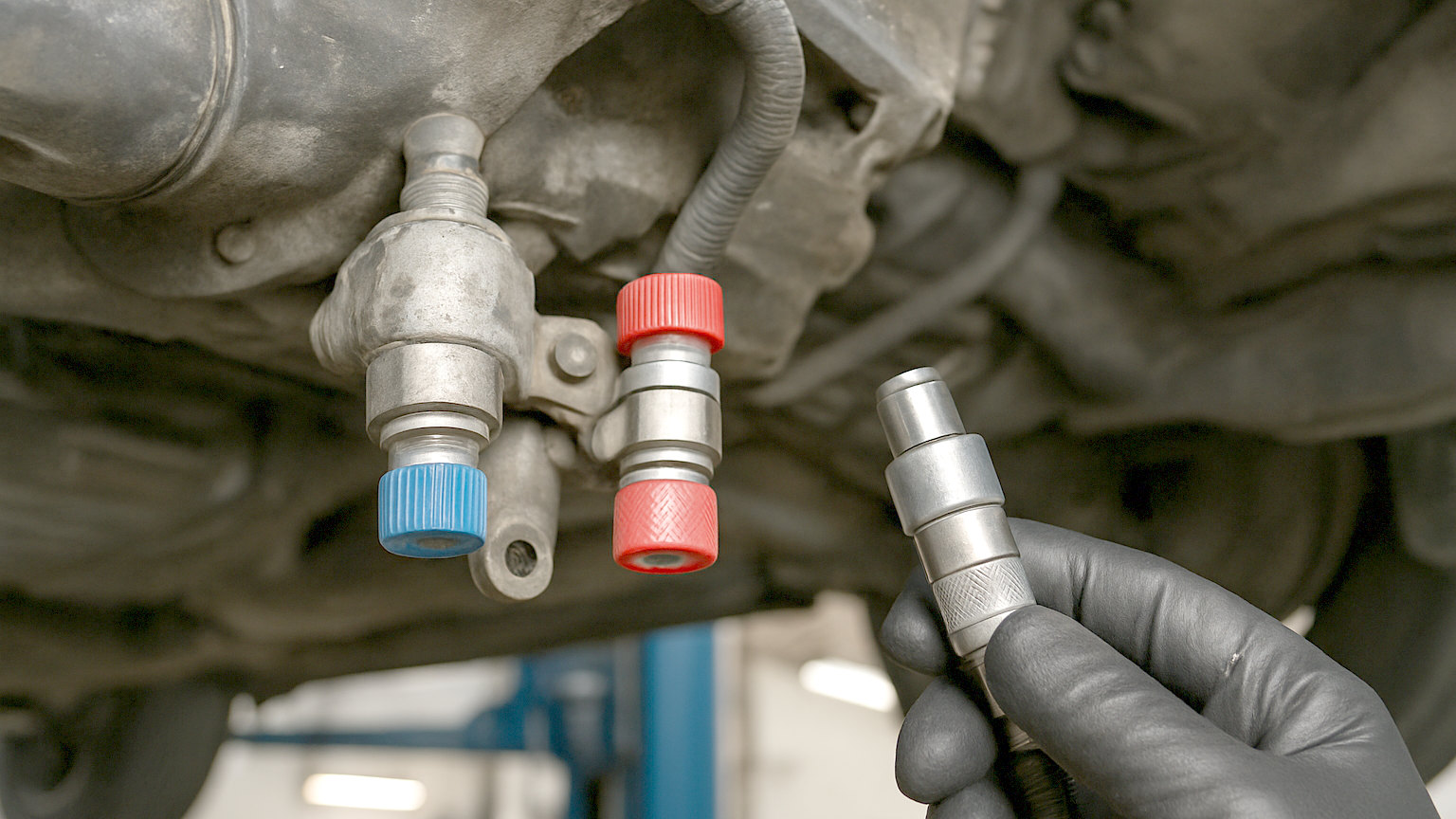
Two refrigerants are in common use in cars on British roads, and which one your car takes affects both what a service costs and where you can have it done. They are not interchangeable, the equipment used to handle them is separate, and the price difference is substantial enough to surprise owners of newer vehicles.
What is R134a?
The refrigerant used in cars from the mid nineteen nineties until around 2017, introduced to replace earlier types that damaged the ozone layer. It works well, it is comparatively inexpensive, and equipment to handle it is universal. Its disadvantage is a high global warming potential, which is what led regulators to require something better.
What is R1234yf?
The replacement, mandated for new vehicle types in Europe from 2017. Its global warming potential is a tiny fraction of the older refrigerant, which is the entire point of it. It performs similarly in use, so a driver would notice no difference in cooling. What is different is the cost, which is several times higher, and the handling requirements.
Which one does your car use?
There is a label under the bonnet, usually near the service ports or on the slam panel, stating the refrigerant type and the charge weight. As a rough guide, cars registered before about 2017 use the older type and those after use the newer, with a transitional period where both appear. Checking the label takes a moment and avoids an unwelcome surprise.
Why does the newer type cost more?
Because the refrigerant itself is considerably more expensive to manufacture, and because workshops need separate recovery and charging equipment for it. A garage that has invested in both machines has to recover that cost. The result is that a regas on a newer car can cost two or three times what the same job costs on an older one.
Is it flammable?
Mildly, which is one of the properties that made its introduction controversial. It requires specific handling procedures and equipment, and it is one reason the two systems are kept entirely separate. In normal use in a vehicle it presents no practical hazard to the owner, and the safety considerations apply to the workshop rather than the driver.
Can a system be converted?
Not sensibly, and not between these two. The service ports are deliberately different sizes to prevent cross charging, the oils are different, and the system components are specified for one refrigerant. Filling a system with the wrong type risks damage and makes future servicing awkward, since a workshop recovering it will find contaminated refrigerant.
What happens if they are mixed?
The recovery machine detects contamination, and the mixed refrigerant cannot be reused and must be disposed of specially. Many workshops charge for that, and some will decline the work. It is another reason aerosol top up cans are unwise, since it is easy to buy the wrong one and there is no way to be certain what is already in the system.
Does it change how you use the system?
Not at all. Both perform the same job and both benefit from being run regularly to keep the compressor seals lubricated. The practical difference is entirely in servicing cost, so on a newer car it is worth being more diligent about preventing leaks, since replacing what escapes is meaningfully more expensive.
Where can it be serviced?
Anywhere with the correct machine for your refrigerant type, which is worth confirming when booking rather than on arrival. Many independent garages have equipment for the older type only, since the newer machines represent a significant investment. A quick phone call avoids a wasted journey.
Main dealers will always have the correct equipment for their own vehicles, and specialist air conditioning firms generally have both, which makes them a reliable option for a newer car. The underbonnet label tells you which type your car needs, so it is worth checking before you make the call.


