
Air conditioning that blows genuinely cold on the move and turns warm in traffic is describing a specific problem, and it is not usually a shortage of refrigerant. What changes between the two conditions is airflow through the condenser at the front of the car, and the system depends on that airflow to reject the heat it has removed from the cabin.
Why does the condenser need airflow?
Because it is where the heat leaves the system. Hot high pressure refrigerant passes through it and gives up its heat to the passing air, condensing into a liquid in the process. Without adequate airflow the refrigerant cannot condense properly, pressures rise, and cooling performance falls away sharply. At speed the airflow is free; at a standstill it must be provided by the fans.
What is the most likely cause?
A cooling fan that is not running when it should. Most cars run the fan whenever the air conditioning is switched on, or when refrigerant pressure rises above a threshold. A failed fan motor, relay, resistor or pressure switch means no airflow at a standstill, which produces exactly this pattern. It is worth checking whether the fan runs with the system on and the engine idling.
Could the condenser be blocked?
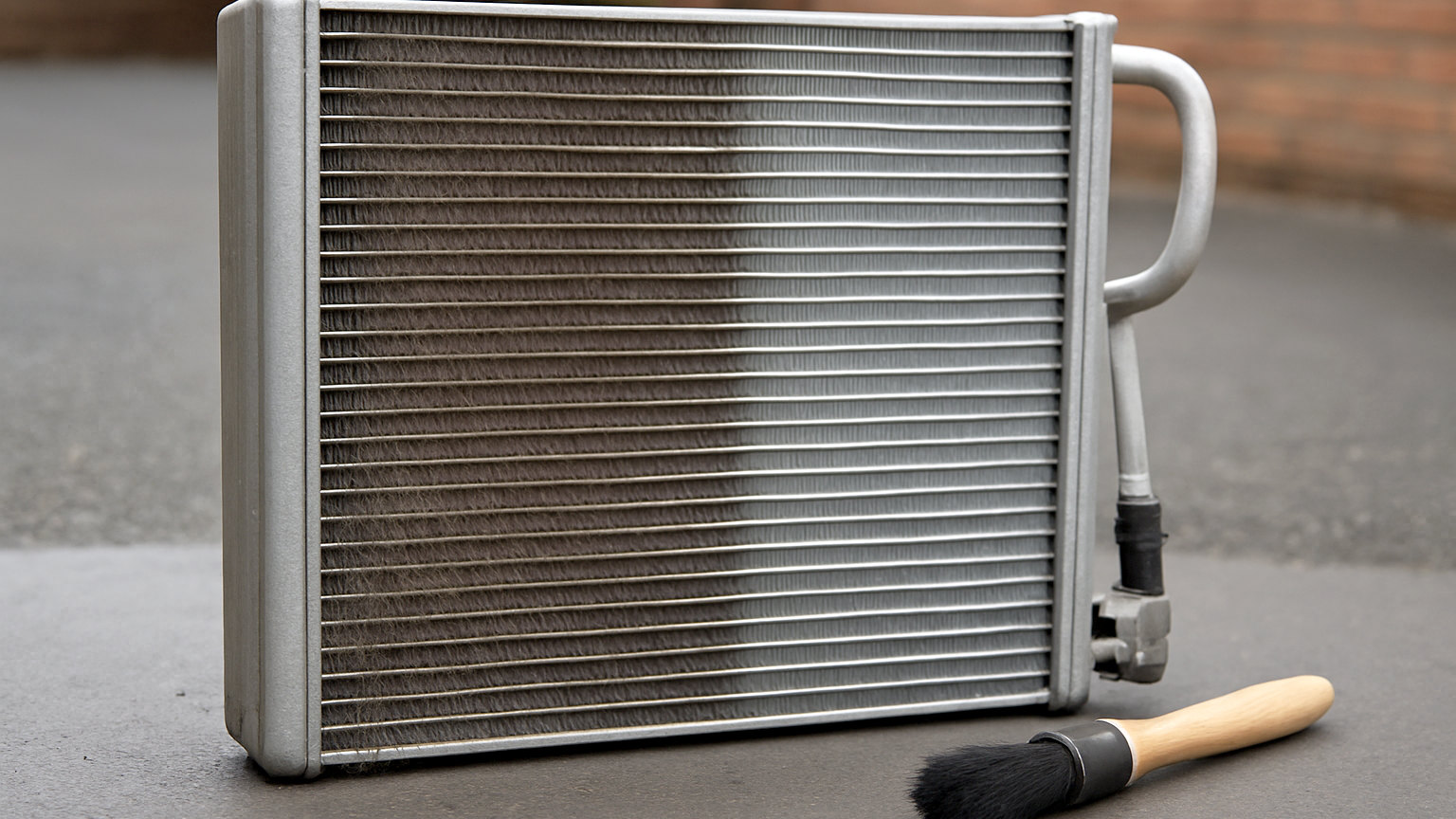
Frequently, and it is easy to overlook. Sitting at the very front of the car, it collects leaves, insects, plastic bags and road debris over years, and the fins corrode and flatten. A partially blocked condenser passes enough air at speed and not enough at idle. Inspecting it with a torch through the grille, and rinsing it gently from the engine side, often produces a noticeable improvement.
Does the engine cooling system matter?
Yes, since the condenser sits in front of the radiator and they share the same airflow. An engine that runs hot in traffic and an air conditioning system that fades at the same moment usually share a cause, most often a failed fan or a blocked front end. Noticing whether the temperature gauge rises at the same time is a useful clue.
Can it still be low refrigerant?
It can, since a system slightly low will cope in favourable conditions and fail when working hardest, which is exactly what stationary traffic on a hot day represents. The distinction is that a low system usually also cools less well at speed than it used to, whereas an airflow problem produces perfectly good cooling on the move.
What about overfilling?
An overcharged system produces excessive pressures, which the safety switch detects, and the compressor is cut out to protect it. The symptom is intermittent cooling that fails when conditions are hardest, which looks similar. It is a common consequence of aerosol top up cans, where there is no way to know how much refrigerant is already in the system.
How is it diagnosed?
By connecting gauges and observing the pressures with the engine idling and the system running. High pressure on the high side with poor cooling points at airflow or overcharge. Low pressure on both sides points at a shortage. That measurement takes minutes and it distinguishes the possibilities far more reliably than any driving impression.
What can you check yourself?
Whether the cooling fan runs when the air conditioning is switched on with the engine idling, which is audible with the bonnet up. Whether the condenser is visibly blocked with debris. And whether the engine temperature also rises in traffic, since that points at a shared airflow cause rather than anything within the air conditioning system itself.
Can you improve it yourself?
Cleaning the condenser is genuinely worthwhile and costs nothing. With the engine cold, rinsing gently from the engine side outwards pushes debris back out the way it came, using low pressure rather than a jet washer, which will flatten the delicate fins. Clearing leaves from the front of the car makes a measurable difference on an older vehicle.


