
Air conditioning does not manufacture cold air. It moves heat from inside the car to the outside, using a refrigerant that absorbs heat when it evaporates and releases it when it condenses. Understanding that cycle explains almost every symptom the system produces, including why it drips water and why it helps clear a misted windscreen.
What does the compressor do?
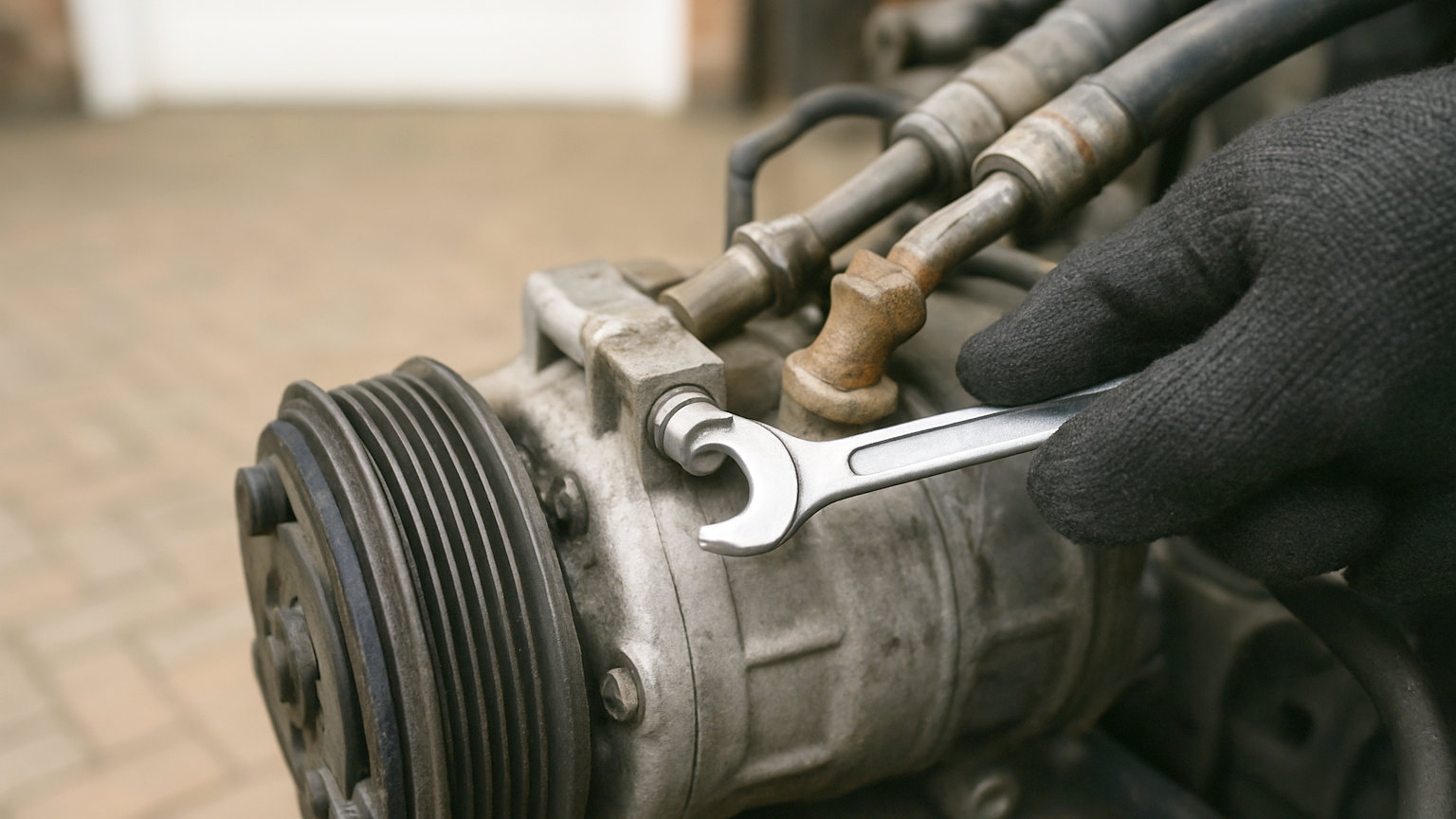
Drives the whole cycle by compressing low pressure refrigerant vapour into a high pressure, high temperature gas. It is belt driven from the engine and engaged by an electromagnetic clutch, which is the click you hear when the system switches on. On many modern and electric vehicles it is driven by its own electric motor instead, which allows cooling with the engine stopped.
What happens at the condenser?
The hot high pressure gas passes through a radiator like unit mounted in front of the engine radiator, where airflow carries the heat away. As it loses heat the refrigerant condenses into a liquid, still under high pressure. That is why the condenser needs good airflow and why a blocked one, or a failed cooling fan, produces poor cooling in traffic.
What is the expansion valve for?
To create the pressure drop that makes the cooling happen. The high pressure liquid is forced through a restriction, and on the other side the pressure falls sharply. That drop allows the refrigerant to evaporate at a very low temperature, and evaporation absorbs heat. It is the same effect that makes an aerosol can feel cold when sprayed.
Where does the cooling actually occur?
At the evaporator, a small matrix inside the heater housing behind the dashboard. Cold refrigerant passes through it while the blower pushes cabin air across, and the air gives up its heat to the refrigerant. The cooled air goes into the cabin and the now warmed refrigerant vapour returns to the compressor to begin the cycle again.
Why does it dehumidify?
Because the evaporator is well below the dew point of the air passing over it, so moisture condenses onto its cold surface exactly as it does on a cold drink. That water runs down and out through a drain beneath the car. Removing that moisture is why air conditioning demists a windscreen so effectively, and it is the reason the system is useful in winter.
What is the receiver drier?
A canister containing a desiccant that absorbs any moisture in the system and traps small debris. Moisture is the enemy of an air conditioning system, since it combines with refrigerant to form acids that corrode components from inside. That is why the drier should be replaced whenever the system is opened, and why leaving a system open to the air is damaging.
How is the refrigerant lubricated?
Oil is carried around the system dissolved in the refrigerant, which lubricates the compressor as it circulates. That is a crucial detail, because it means a system low on refrigerant is also low on lubrication, and running the compressor in that state damages it. It is also why pressure switches prevent the compressor engaging when the charge is low.
Why does the system need using?
Because circulating refrigerant is what carries oil to the compressor seals. A system left unused for months allows those seals to dry out and shrink, which leads to leaks. Running the air conditioning for ten minutes every few weeks, including through winter, keeps everything lubricated and is the single easiest way to extend its life.
Why does the system fail so predictably?
Because almost every failure traces back to one of three things: refrigerant escaping, airflow being restricted at the condenser, or the compressor being run without adequate lubrication. Those three account for the overwhelming majority of faults, and all three are influenced by how the car is maintained rather than by anything inherent in the design.
Knowing that makes the system far less mysterious, since almost every symptom an owner encounters traces back to one of those three and each has a recognisable pattern of behaviour.


