
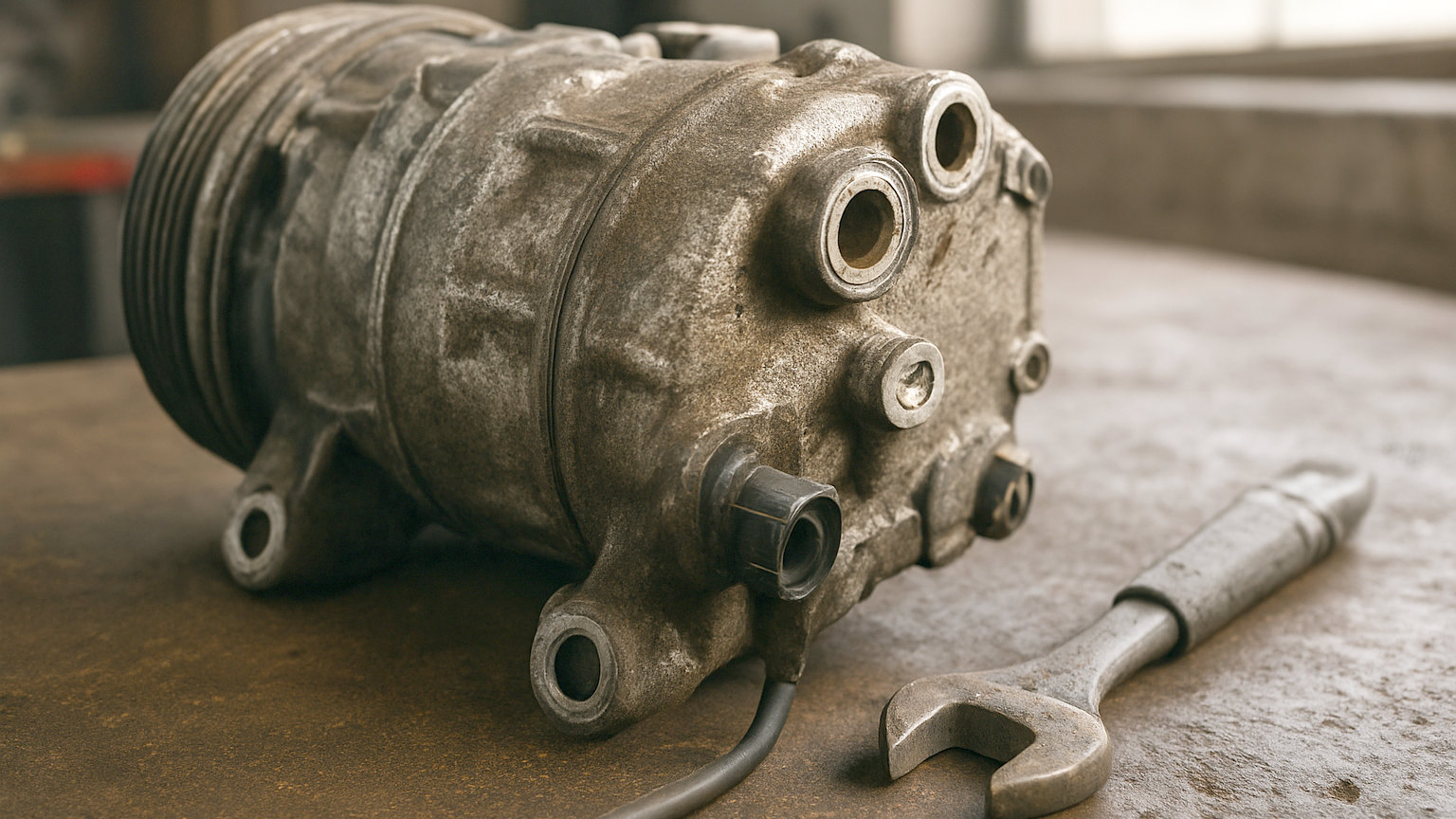
Air conditioning on an electric car does the same job in a fundamentally different way. There is no engine to drive a compressor, so the compressor has its own high voltage electric motor. That single change makes cooling available whenever the car is switched on, including while parked and charging, and it allows the same system to manage battery temperature as well as cabin comfort.
What is different about the compressor?
It is driven electrically rather than by a belt, so it runs at whatever speed the system requires rather than being tied to engine revs. It also uses a specific electrically insulating oil, and using conventional compressor oil in one is dangerous as well as damaging. That is one of several reasons air conditioning work on these vehicles is not a general garage job.
Why does climate control affect range?
Because everything comes from the battery. A combustion car heats its cabin with waste heat that would otherwise be thrown away, so heating is effectively free. An electric car has no waste heat worth using, so every kilowatt used for warmth is a kilowatt not available for driving. Heating costs considerably more range than cooling does.
What is a heat pump?
An air conditioning system that can run in reverse, moving heat from outside into the cabin rather than the other way round. Because it moves heat rather than generating it, it can deliver several times more heat than a simple electric heater for the same energy. It is why heat pump equipped cars lose noticeably less range in winter.
Do heat pumps work in the cold?
Less well as temperatures fall, since there is less heat available outside to move. Below a certain point most systems supplement with resistive heating, which is where the range penalty appears. Modern designs also draw waste heat from the motor, the inverter and the battery, which improves matters considerably in genuinely cold conditions.
What is preconditioning?
Warming or cooling the cabin while still plugged in, using power from the supply rather than the battery. It is one of the genuine advantages of an electric car, since you get into a comfortable vehicle with a full battery. It also warms the battery itself, which improves both performance and charging speed in cold weather.
How does the battery use the system?
Batteries have a preferred temperature range, and thermal management keeps them within it. The air conditioning circuit is used to cool the pack during rapid charging and hard driving, and a chiller transfers heat between the refrigerant and the battery coolant. That is why the system may run audibly when the car is parked and charging.
Does it still need servicing?
Yes. The refrigerant permeates and leaks in the same way, the cabin filter blocks in the same way, and the condenser collects debris in the same way. Because the system is also responsible for battery cooling, a fault has consequences beyond comfort, so keeping it healthy matters more rather than less.
What can the owner do?
Precondition while plugged in whenever possible. Use heated seats and a heated steering wheel in preference to heating the whole cabin, since they warm you directly for a fraction of the energy. Change the cabin filter at the recommended interval. And have any loss of cooling investigated promptly, since the same system is looking after the most expensive component in the car.
Is repair different?
Meaningfully. The compressor and its wiring are high voltage components, so the work requires a technician qualified to isolate the system safely. That narrows where the car can be taken and it usually costs more than the equivalent job on a combustion car, which is worth knowing before a fault appears rather than afterwards.
Checking what your local independent garages are qualified to work on is worth doing when you buy the car rather than when the cooling stops in July.


