
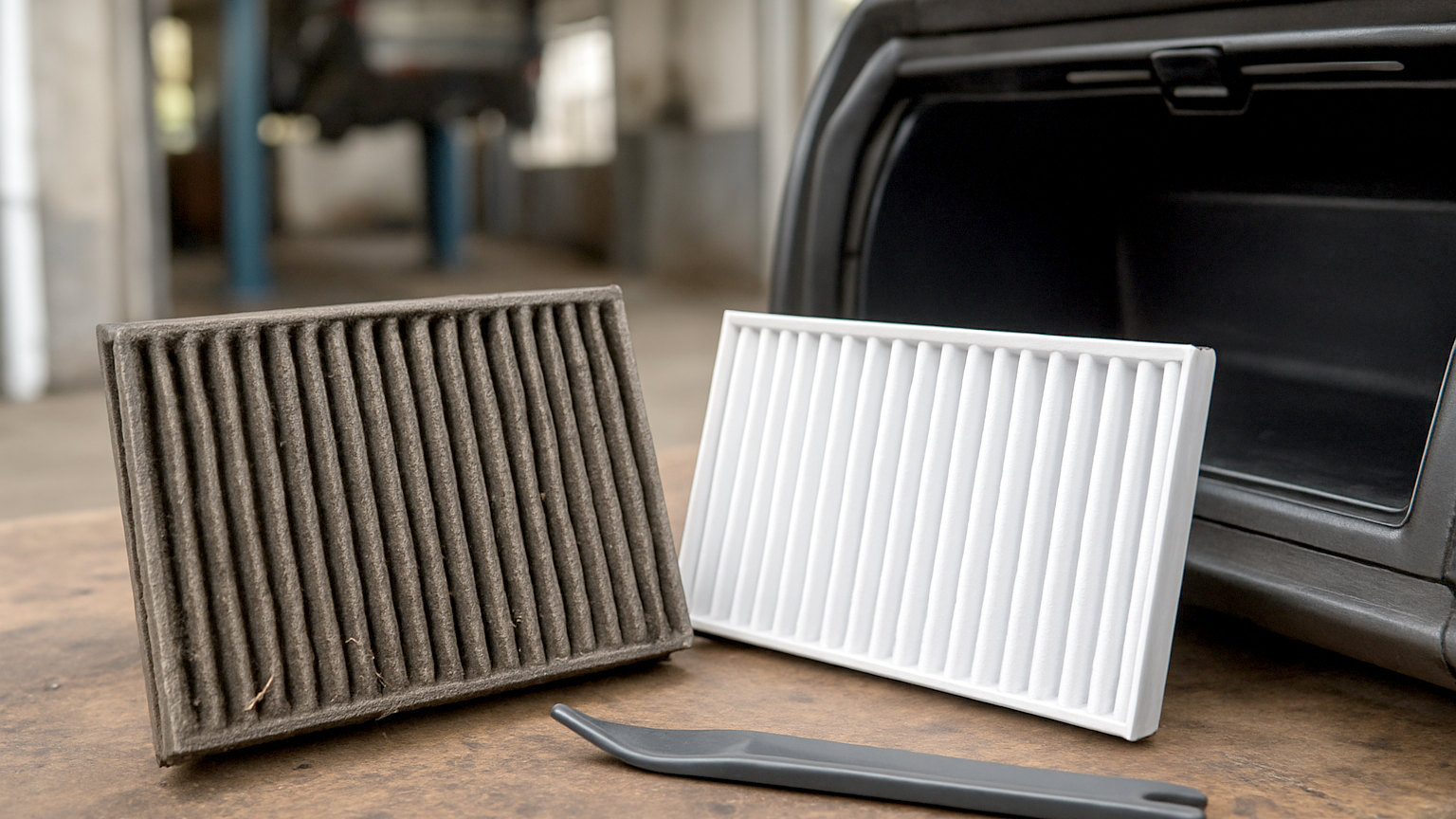
The cabin filter, sometimes called the pollen filter, cleans the air entering the car through the ventilation system. It is among the cheapest service items on any vehicle and one of the most commonly skipped, partly because a blocked one causes no dramatic symptom. What it does cause is a series of smaller problems that owners rarely connect back to it.
What does it actually filter?
Dust, pollen, soot and general road grime drawn in through the intake at the base of the windscreen. Carbon impregnated versions also absorb odours and some exhaust gases, which is worth having if you sit in traffic regularly. Whatever the type, it collects a remarkable quantity of debris, and a filter removed after two years is usually black.
How often should it be changed?
Manufacturers typically specify annually or every twelve to fifteen thousand miles, and conditions matter. Urban driving, dusty rural lanes and parking under trees all shorten its life. Annually is a sensible default for most cars in Britain, and it is worth checking it has actually been done rather than assuming it was included in a service.
What happens when it blocks?
Airflow falls, so the heater takes longer to warm the cabin, the air conditioning seems weaker even though it is cooling correctly, and demisting becomes noticeably slower. The blower has to work harder, and the resistor pack that controls fan speed relies on that airflow to stay cool, so a blocked filter is a leading cause of resistor failure.
Does it affect misting?
Considerably. Reduced airflow to the screen means demisting takes far longer whatever settings are used. Filters also become damp and hold moisture, which is then released back into the cabin, so a saturated filter actively contributes to a car that mists up. Replacing one is among the most effective things you can do about slow demisting.
Does it cause smells?
Frequently. A damp filter full of organic debris grows mould and bacteria, and the resulting musty smell is blown into the cabin every time the fan starts. Treating the evaporator without changing the filter often produces a smell that returns within weeks, since the source was in the filter housing all along.
Where is it fitted?
Most commonly behind or beneath the glovebox, sometimes in the scuttle area under a panel at the base of the windscreen. On many cars it is a genuinely simple job, requiring a couple of clips or screws and no tools beyond a screwdriver. On others access is awkward, which is why it is sometimes quietly omitted from a service.
Is it worth fitting a carbon one?
For anyone commuting in traffic or sensitive to pollen, generally yes. Carbon filters cost a little more and absorb odours and some pollutants that a standard filter passes straight through. They do not last longer, so the change interval is the same. For a car used mainly on open roads, a standard filter is usually adequate.
What should you do alongside?
Clear leaves and debris from the scuttle intake area under the windscreen, since that is where most of the material entering the filter comes from and blocked drains there cause water ingress as well. Check the housing for standing water. And if the system smells, treat the evaporator at the same time so the new filter starts clean.
Can you fit one yourself?
On many cars, easily. The filter is often behind a panel below the glovebox held by clips, and the whole job takes fifteen minutes with a screwdriver. Note which way round the old one comes out, since there is usually an airflow arrow, and check the housing for leaves and water while it is open.
A vacuum cleaner in the housing while the filter is out removes accumulated debris and reduces the chance of the new one clogging as quickly as the last one did.
Keeping the old filter to compare against is oddly useful, since it shows at a glance how much the new one is collecting by the time the next change is due.


