
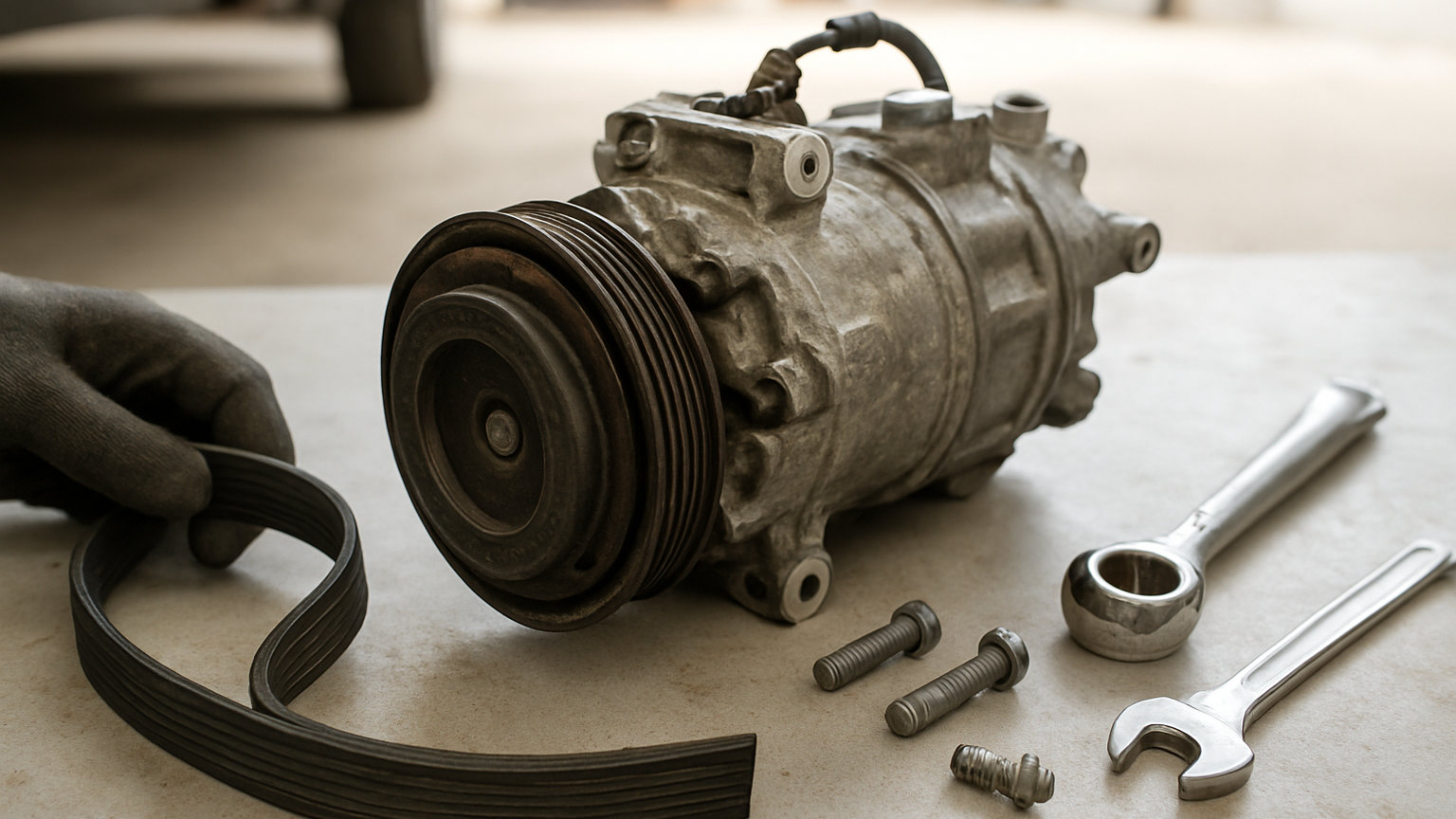
Air conditioning does use fuel, since the compressor takes mechanical power from the engine and that power has to come from somewhere. The interesting question is how much, and how it compares with the alternative of opening the windows, because the answer is not the same at every speed and the received wisdom is frequently wrong.
How much does it actually cost?
Estimates vary with the car, the conditions and how hard the system is working, and figures of a few percent up to around ten percent in demanding conditions are commonly cited. The penalty is largest at low speed, where the engine is producing little power overall so the compressor load represents a larger proportion of it, and smallest at a steady cruise.
Is opening the windows better?
At low speed, yes. Around town, open windows cost almost nothing while the compressor is working hardest, so windows win comfortably. At motorway speed the position reverses, because the aerodynamic drag of open windows becomes significant while the compressor load is a small fraction of the power already being produced. The crossover point is usually somewhere around forty to fifty miles per hour.
What about a sunroof?
Similar principle. An open sunroof creates drag and turbulence, and at speed it also produces considerable noise. For ventilation while moving slowly it is efficient; at motorway speed the air conditioning is usually the better choice both for economy and for comfort.
Does it matter on a cold day?
Much less, since the compressor cycles far less when there is little heat to remove. In winter it runs mainly to dehumidify, so its duty cycle is low and the fuel penalty is correspondingly small. That is worth knowing, because it removes the main argument for switching it off through the colder months.
How does it affect an electric car?
More noticeably, because there is no waste engine heat to draw on and everything comes from the battery. Cooling is generally less costly than heating, which is why electric cars use heat pumps and heated seats to reduce the demand. Range loss from climate control in extreme weather can be meaningful, and preconditioning while plugged in avoids most of it.
Can you reduce the load?
By reducing the work the system has to do. Parking in shade, using a windscreen shade, and briefly opening the windows to vent the hottest air before setting off all help. A cabin that starts at fifty degrees takes far more energy to cool than one that starts at thirty, and the first few minutes are where most of the consumption happens.
Does recirculation help?
Considerably, once the cabin is cool. Recirculating already cooled air is far more efficient than continuously cooling hot outside air. The trade off is that humidity and carbon dioxide build up, so alternating rather than leaving it on permanently is the sensible approach, particularly with several people in the car.
Is it worth switching off to save fuel?
Rarely, once everything is weighed. The saving is modest, the discomfort is real, and switching it off for months causes the seals to dry and leak, which costs far more than any fuel saved. Driving smoothly, keeping tyres correctly inflated and removing roof bars all save considerably more fuel than sitting in a hot car.
What about the first few minutes?
That is where most of the consumption happens, since the system is working at full capacity to bring a hot cabin down. Venting the worst of the heat with the windows open for the first minute of driving, then closing them and switching to recirculation, cools the car faster and uses less energy than either approach alone.
Parking in shade or using a windscreen shade removes much of that initial heat load before you even start, which is the cheapest saving available and it makes the first few minutes of any summer journey considerably more pleasant into the bargain.


