
Air conditioning that has become gradually less effective, or that has stopped producing cold air entirely, is one of the most common summer complaints. In the large majority of cases it comes down to refrigerant level, and because the system is completely sealed, a level that has fallen means it has escaped somewhere. That single fact shapes the whole diagnosis.
Why does refrigerant escape?
Because no sealed system is perfect. Refrigerant molecules are extremely small and they permeate slowly through rubber hoses and past seals, so every system loses a little each year even when nothing is wrong. Manufacturers typically expect a few percent annually. What is not normal is a system that goes from cold to warm within a season, which indicates a genuine leak.
How do you know if it is low?
The clearest sign is a compressor that does not engage at all. Most systems have a pressure switch that prevents the compressor running if the refrigerant level is too low, since running it without adequate refrigerant means running it without lubrication. So air conditioning that produces no change in engine note when switched on is frequently reporting low charge rather than an electrical fault.
Does the compressor engage?
Worth checking directly. With the engine idling and the bonnet open, switching the system on should produce an audible click from the compressor clutch and a small change in engine note as the load is applied. On many cars the centre of the compressor pulley can be seen to start turning. If nothing happens at all, the cause is refrigerant level, electrical supply or the compressor itself.
Could it be the condenser?
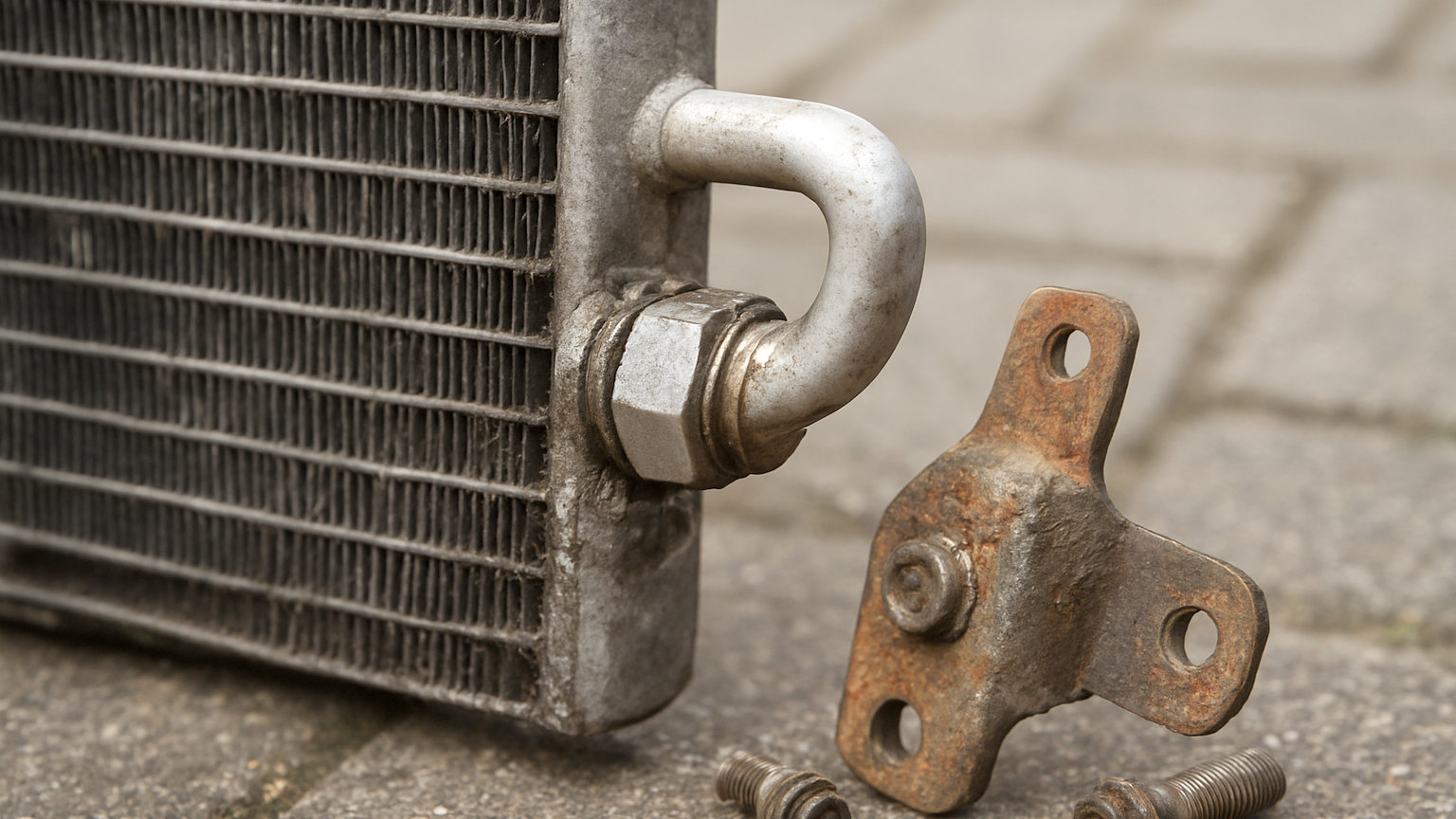
Frequently overlooked and easy to check. The condenser sits in front of the radiator and needs airflow to shed heat, and it collects leaves, insects and road debris over the years. A blocked one cannot reject heat properly, so cooling becomes poor particularly in traffic. Its position also means stones damage it, which is a common cause of a slow leak.
What if it is cold at speed and warm in traffic?
That points at airflow rather than refrigerant. At speed there is plenty of air through the condenser; at a standstill the cooling fans have to provide it. A failed fan, a fan relay or a blocked condenser produces exactly this pattern. It is a useful distinction because it separates an electrical or airflow problem from a system that is simply low on charge.
Can the cabin filter cause it?
It reduces airflow rather than cooling capacity, so the air coming out may be genuinely cold while there is far too little of it. A blocked filter is inexpensive, frequently forgotten, and it is worth eliminating before anything is measured. It also makes the system work harder and can allow the evaporator to freeze in some conditions.
What about the blend flap?
On cars where hot coolant runs through the heater matrix continuously and a flap mixes hot and cold air, a failed blend flap actuator can leave warm air mixing in even with the system set to cold. The clue is usually a clicking noise from behind the dashboard, or one side being cold while the other is warm on a dual zone system.
What should be done first?
Have the system properly diagnosed rather than simply regassed. A workshop should measure the pressures, recover and weigh what refrigerant is actually in the system, and look for the leak with dye or an electronic detector. Adding gas to a leaking system means paying for it again next summer, and refrigerant is not cheap.
Is it worth checking anything yourself?
A few things, and all are free. Listen for the compressor clutch clicking in when the system is switched on with the engine idling. Look through the grille with a torch for a condenser packed with leaves and insects. Check whether the cooling fan runs at a standstill with the system on. And consider when the cabin filter was last changed, since restricted airflow makes perfectly cold air feel weak.


