
Stalling when you turn the wheel into a parking space is a very specific symptom and a genuinely useful one, because it tells you two things at once. It confirms that the engine idle has no reserve capacity, and it identifies the exact moment the extra load appears. Both of those narrow the diagnosis considerably compared with a car that simply stalls sometimes.
Why does steering load the engine at all?
On a car with hydraulic power steering, a pump driven by the auxiliary belt pressurises fluid to assist the steering. At full lock, with the car stationary and the tyres pressed hard against the ground, that pump is working at its maximum and absorbing a meaningful amount of engine power. At idle, where the engine is producing very little, that load is proportionally large. The management is supposed to anticipate it and raise the idle, and a car that stalls instead has not managed to.
Does the same apply to electric power steering?
Indirectly. An electrically assisted system draws a large current from the electrical system rather than mechanical power from the belt, so the alternator has to work harder, which still loads the engine. The effect is smaller but it exists, and on a car whose idle is already marginal it can be enough. It also means that a stall while steering on an electric system points more towards the idle control and charging side than to the steering itself.
What makes the idle unable to cope?
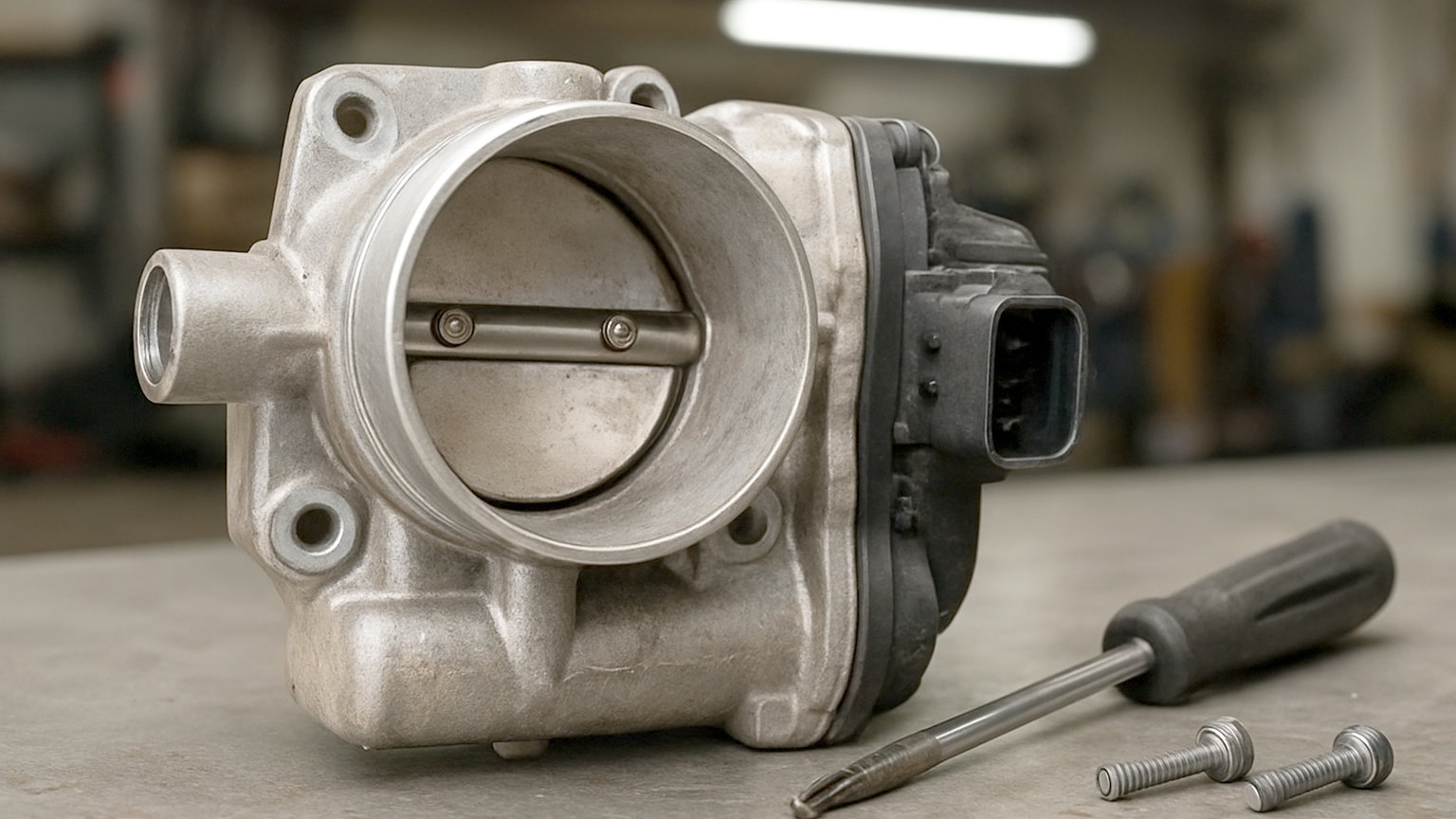
The same short list that causes stalling generally. A dirty throttle body or a sticking idle control valve limits how much extra air can be admitted when the load arrives. An unmetered air leak means the management is already working at the edge of its adjustment. A coolant temperature sensor giving a wrong reading sets an idle target that is too low. In each case the engine is idling successfully only because nothing is asking anything of it, and the steering is what asks.
Could the steering system itself be at fault?
Yes, and it is worth ruling out because the fix is completely different. A power steering pump with worn internals, a system low on fluid, or a rack that has become stiff will absorb far more power than it should. The clues are steering that feels heavier than it used to, a whining or groaning noise as you turn, and foamy or discoloured fluid in the reservoir. If the steering has become physically harder work as well as stalling the car, start there.
What about the belt?
A slipping auxiliary belt produces a related but distinct set of symptoms, usually a squeal on full lock rather than a stall, though a belt that grabs and slips repeatedly can upset an idle. Check the belt for glazing and cracks and check the tensioner, since a belt slipping under the load of the steering pump is a common finding and an inexpensive repair. It is also worth checking whether the noise and the stall happen together or separately.
Does it get worse with the air conditioning on?
Almost always, and this is a useful confirmation. Air conditioning adds its own load through the compressor, so a car that stalls only when steering with the air conditioning running has an idle that copes with one load but not two. If switching the air conditioning off cures the stalling entirely, that does not mean the air conditioning is faulty; it means the idle control has very little margin and needs attention.
What should you check first?
Look at the power steering fluid level and condition, since that is free and it is genuinely a common cause. Then have the throttle body inspected and the fault codes and fuel trims read, since those cover the idle control side. Avoid holding the steering at full lock for more than a few seconds in the meantime, because doing so is hard on the pump regardless of whether the car stalls, and it will not help a system that is already struggling.


