
A car that stalls repeatedly in the first two or three minutes and then behaves impeccably for the rest of the day is following a very specific rule. Cold running uses a different set of instructions from warm running, with a raised idle, a richer mixture and different ignition timing, and it relies heavily on the engine management knowing accurately how cold the engine actually is. A fault confined to that period is nearly always in that system.
What does a car do differently when cold?
Fuel does not vaporise readily on cold metal, so a portion of what is injected condenses on the port and cylinder walls instead of burning. The management compensates by injecting more, and by holding a raised idle speed so the engine has more momentum while everything warms up. It also runs in open loop initially, ignoring the oxygen sensors until they reach temperature. All of that depends on the coolant temperature reading being correct.
Why is the coolant temperature sensor the prime suspect?
Because it is the single input controlling the whole warm-up strategy. A sensor reporting the engine as already warm when it is stone cold means the management delivers a warm-running mixture and a low idle to an engine that needs neither, and the result is stalling, hesitation and rough running until the engine genuinely warms up and the two conditions coincide. It is an inexpensive part and it is the first thing worth checking on this symptom.
Do air leaks behave differently when cold?
They do, in two ways. Rubber hoses are stiffer and less pliable when cold, so a split that closes up under heat is at its widest during warm-up. And the proportional effect of any leak is greatest at the low airflow of a cold idle. This is why a car with an air leak will often stall repeatedly on a frosty morning and idle acceptably by the afternoon, which drivers reasonably but wrongly interpret as a weather problem rather than a fault.
What about the idle control?
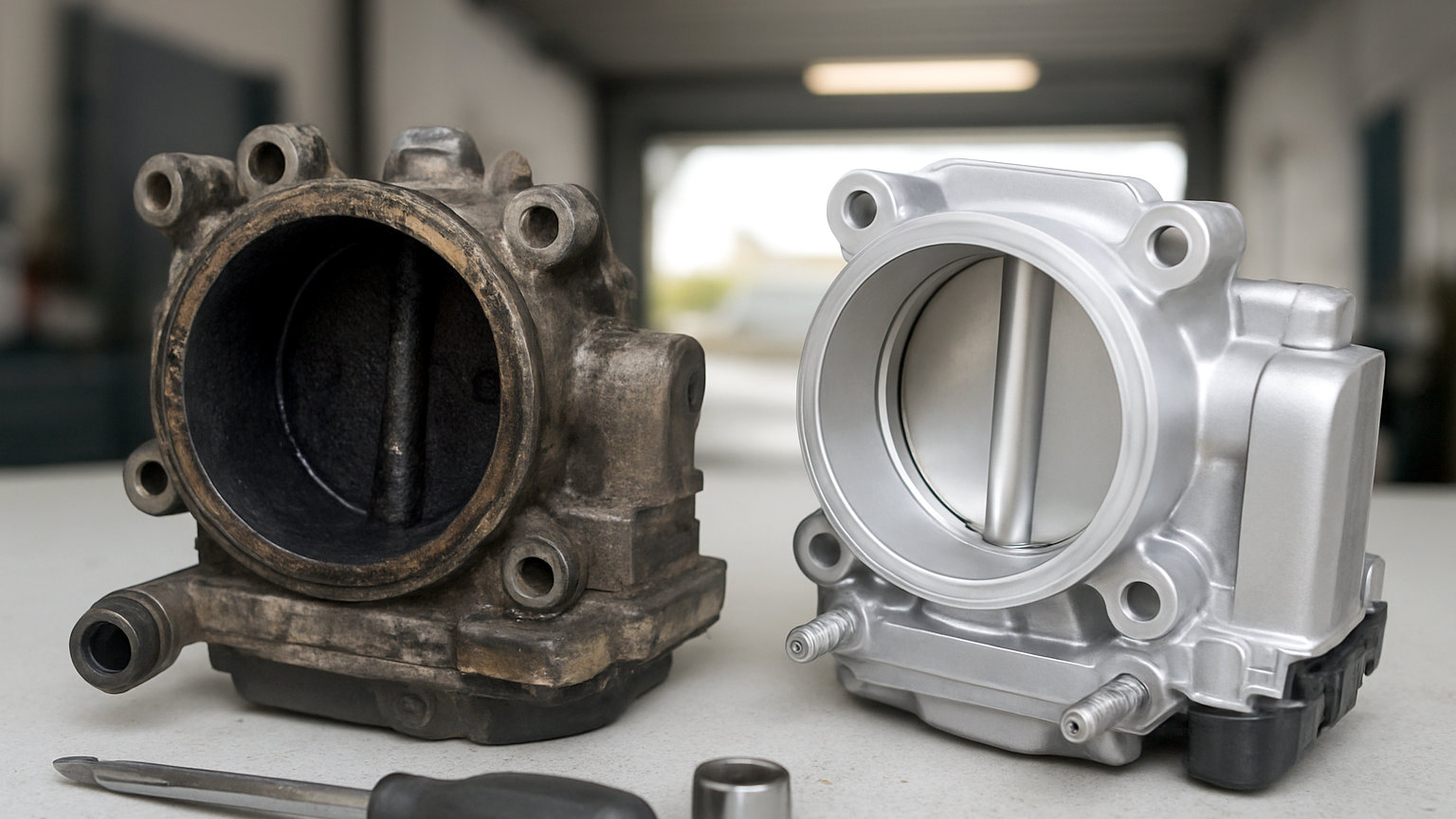
The raised cold idle depends on either an idle air control valve or an electronic throttle held slightly open. A valve that is sticky with carbon may fail to open far enough when cold, leaving the idle too low to sustain itself. The characteristic pattern is a car that starts, runs for a few seconds at a normal speed, then drops away and dies. Cleaning the valve or throttle body resolves a good proportion of these cases.
What causes it on a diesel?
Glow plugs, most commonly. Their job is to preheat the combustion chambers so that the first minute of running is stable, and when several have failed the engine starts on the working cylinders, runs unevenly, produces white smoke and frequently stalls before it warms up. Because the symptom is confined to cold running and disappears completely once warm, it fits this pattern exactly, and the plugs are relatively inexpensive parts even if access can be awkward.
Could it be fuel rather than air?
Occasionally. A fuel pressure regulator or an injector that leaks slightly will flood a cold engine with excess fuel, causing a rich stall in the first moments after starting, usually accompanied by a strong fuel smell and black smoke. A weak fuel pump that cannot maintain pressure during the higher demand of cold enrichment does the reverse. Both are less common than the sensor and air leak causes but worth considering if those come back clear.
What should you check first?
Ask for the coolant temperature sensor reading to be compared against actual engine temperature on a diagnostic tool from a genuinely cold start, since that single check confirms or eliminates the most likely cause in minutes. Inspect the intake and breather hoses cold, when any splits will be at their most obvious. Note exactly how many seconds after starting the stall occurs, because that timing is genuinely useful information for whoever looks at it.


