
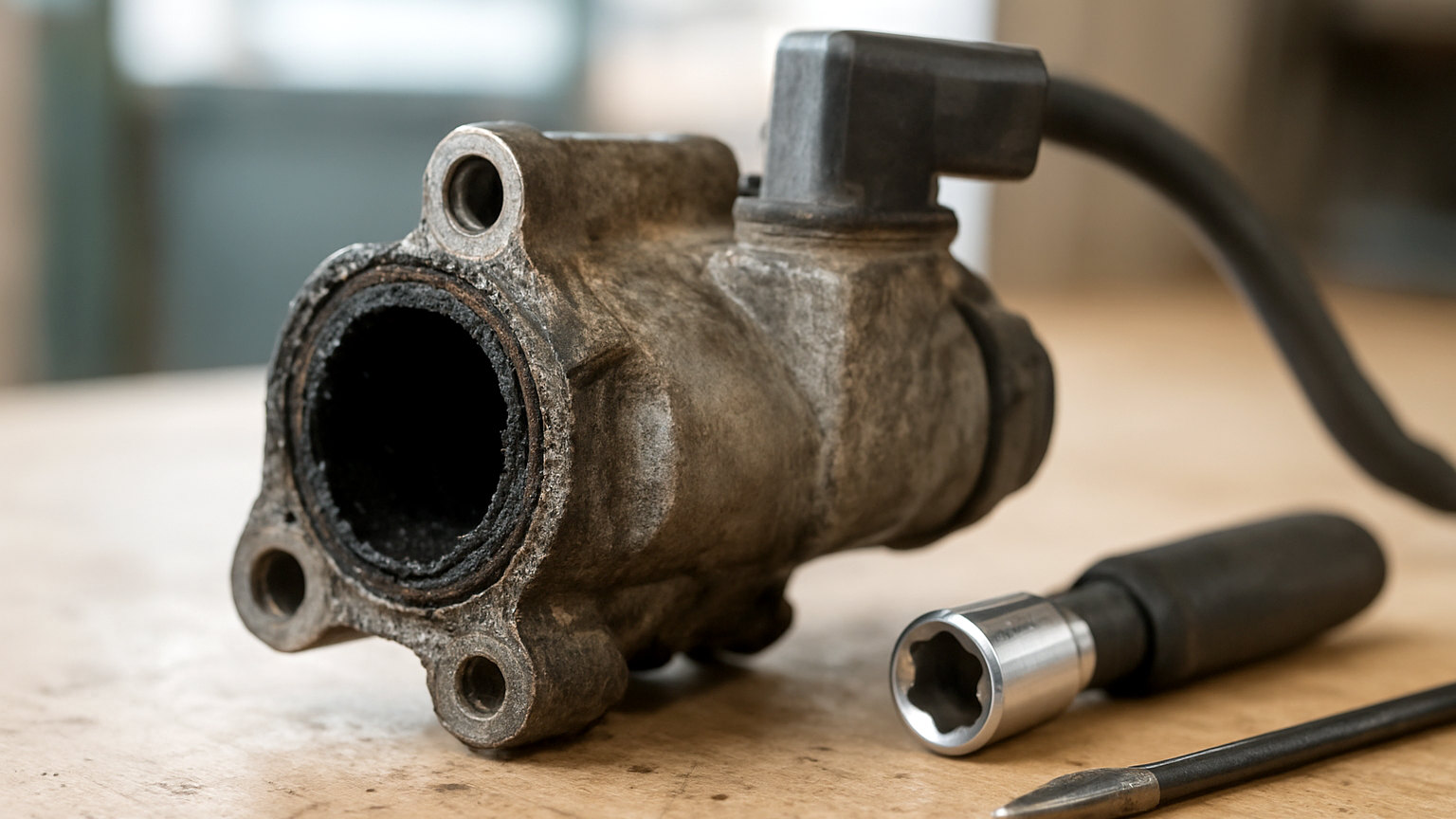
On engines with a conventional cable operated throttle, the throttle plate closes completely at idle, which would stop the engine if nothing else happened. The idle air control valve is what prevents that: a small electrically operated valve that opens a bypass passage around the closed throttle and lets through precisely the amount of air the engine needs to idle. Everything about idle quality on those cars depends on it working smoothly.
How does the valve work?
The engine management commands a position, usually through a stepper motor or a rotary solenoid, and the valve opens the bypass by that amount. The system then measures the resulting idle speed and adjusts. It compensates continuously for cold running, air conditioning, electrical load, power steering and the gear selected, which is why a healthy idle stays reassuringly constant no matter what you switch on.
Why do they fail?
Almost always through contamination rather than electrical failure. The valve sits in the path of air that has already passed the throttle, carrying oil vapour from the crankcase breather system, and over time that vapour builds a sticky carbon deposit on the valve and in the bypass passage. The valve then moves stiffly or sticks at a fixed position. Electrical faults do occur, with worn motor windings or a corroded connector, but deposits account for most cases.
What are the symptoms?
They depend on where it sticks. A valve stuck too far closed produces a low idle, stalling when coming to a stop, and stalling when the air conditioning or steering loads the engine. A valve stuck open produces a high idle that will not settle, sometimes with the car creeping forward at a standstill. A valve that moves erratically produces a hunting idle that rises and falls. A fault code relating to idle control may or may not be stored, so its absence proves nothing.
Can it be cleaned?
Frequently, and it is worth trying before buying a replacement. The valve unbolts from the throttle body or manifold, and the deposits can be cleaned from the valve and its passage with a suitable carburettor or throttle cleaner and a soft brush. On stepper motor types the moving pintle should not be forced by hand, since that can damage the gearing. Cleaning cures a good proportion of cases, and where it does not, the valve has usually worn or failed electrically.
How do modern cars manage without one?
Cars with electronic throttle control have no separate valve. The management simply holds the throttle plate slightly open by whatever amount is needed, which is more precise and removes a component that used to fail regularly. The same faults still occur, though, because carbon builds around the throttle plate instead and produces exactly the same symptoms. On those cars the equivalent repair is a throttle body clean followed by an adaptation reset.
Is a fault code enough to condemn the valve?
No, and this matters because the valve is not always the cause. A code relating to idle control means the management could not achieve the idle it wanted, which happens equally when there is an unmetered air leak somewhere else in the intake. Replacing the valve on the strength of that code alone, without checking for leaks or looking at the fuel trims, is one of the more common wasted repairs. Check the hoses first.
What prevents the problem recurring?
Keeping the crankcase breather system healthy, since that is the source of the oil vapour, and using the correct oil at the correct interval. Cars used only for short journeys will foul the valve faster because the intake never gets hot enough to keep deposits down, so an occasional longer run helps. Cleaning the valve as a matter of routine when the throttle body is cleaned, rather than waiting for stalling, is a sensible habit on any older car and takes very little extra time once the intake ducting is already off.


