
Every car idles fast for the first minute or two from cold, and that is entirely normal, since the engine needs extra speed and a richer mixture until it reaches working temperature. A high idle only becomes a fault when it persists after the engine is warm, when it is much higher than the raised cold idle should be, or when it appears and disappears unpredictably. Establishing which of those you have is the first step.
What should a normal warm idle look like?
Most cars settle somewhere between six and nine hundred revolutions per minute once fully warm, with a modest rise when the air conditioning engages or the electrical load increases, and a drop of a hundred or so when an automatic is put into drive. A car sitting at fifteen hundred once warm, or one that stays high for ten minutes rather than one, is doing something it should not. Knowing what your car normally does makes this easier to judge.
Why do air leaks raise the idle?
Because they let in air the management did not intend to admit. The system closes the throttle or the idle valve as far as it can to compensate, and when that is not enough the idle simply stays high. This is the single most common cause, and the usual sources are split breather hoses, cracked intake ducting, a failed inlet manifold gasket and a perished brake servo hose. Many of them hiss audibly at idle if you listen with the bonnet up in a quiet space.
Which sensors cause a high idle?
The coolant temperature sensor is the classic, because it sets the target idle. A sensor reporting the engine as permanently cold will hold the fast idle indefinitely, along with a rich mixture and poor fuel economy. A throttle position sensor reading slightly open when the pedal is released will do the same, as will an accelerator pedal sensor with a similar fault. All of these are visible on a diagnostic tool in live data, which is why reading data is more useful than reading codes alone.
Could the throttle be sticking?
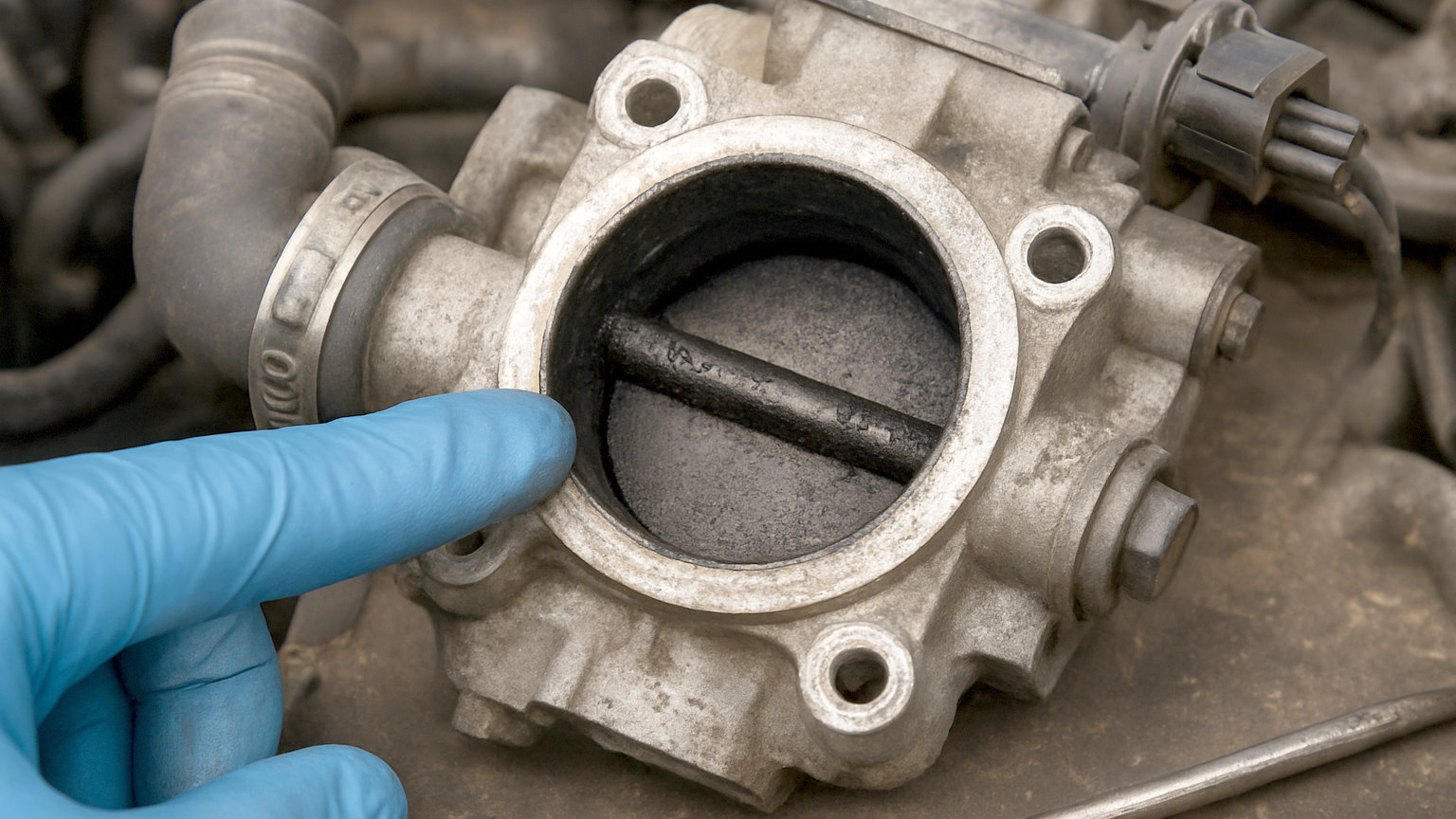
Mechanically, yes. On cable throttles a stiff or badly routed cable, a seized return spring or a mat trapped against the pedal can hold the throttle slightly open. On electronic throttles, carbon deposits can prevent the plate returning fully to its rest position. There is also the matter of adaptation: after a throttle body clean, many cars idle high until the relearn procedure is completed, which is a common and easily misread cause.
Is a high idle harmful?
It is not immediately dangerous but it is not harmless either. Fuel consumption rises noticeably, the car creeps forward more strongly at a standstill which makes low speed manoeuvring and hill starts awkward, brakes wear faster because they are constantly working against the engine, and an automatic transmission engages with more of a jolt. On a manual it also makes smooth gearchanges harder. It is worth fixing rather than adapting to.
What about a car that idles high only sometimes?
Intermittent high idle usually points at an electrical or sensor fault rather than a mechanical restriction, since mechanical problems tend to be consistent. It can also be the car deliberately raising the idle to run a particulate filter regeneration on a diesel, which lasts fifteen or twenty minutes and comes with a hot smell and a fan running afterwards. That last one is not a fault at all and is worth ruling out before anything is investigated.
What should you check first?
Listen for hissing, inspect the breather and intake hoses for splits, and have the fuel trims read, since high positive trims confirm unmetered air is entering. Ask whether the throttle body has been cleaned recently and whether an adaptation reset was carried out afterwards. Those checks cover the great majority of high idle complaints and cost very little compared with replacing sensors on suspicion.


