
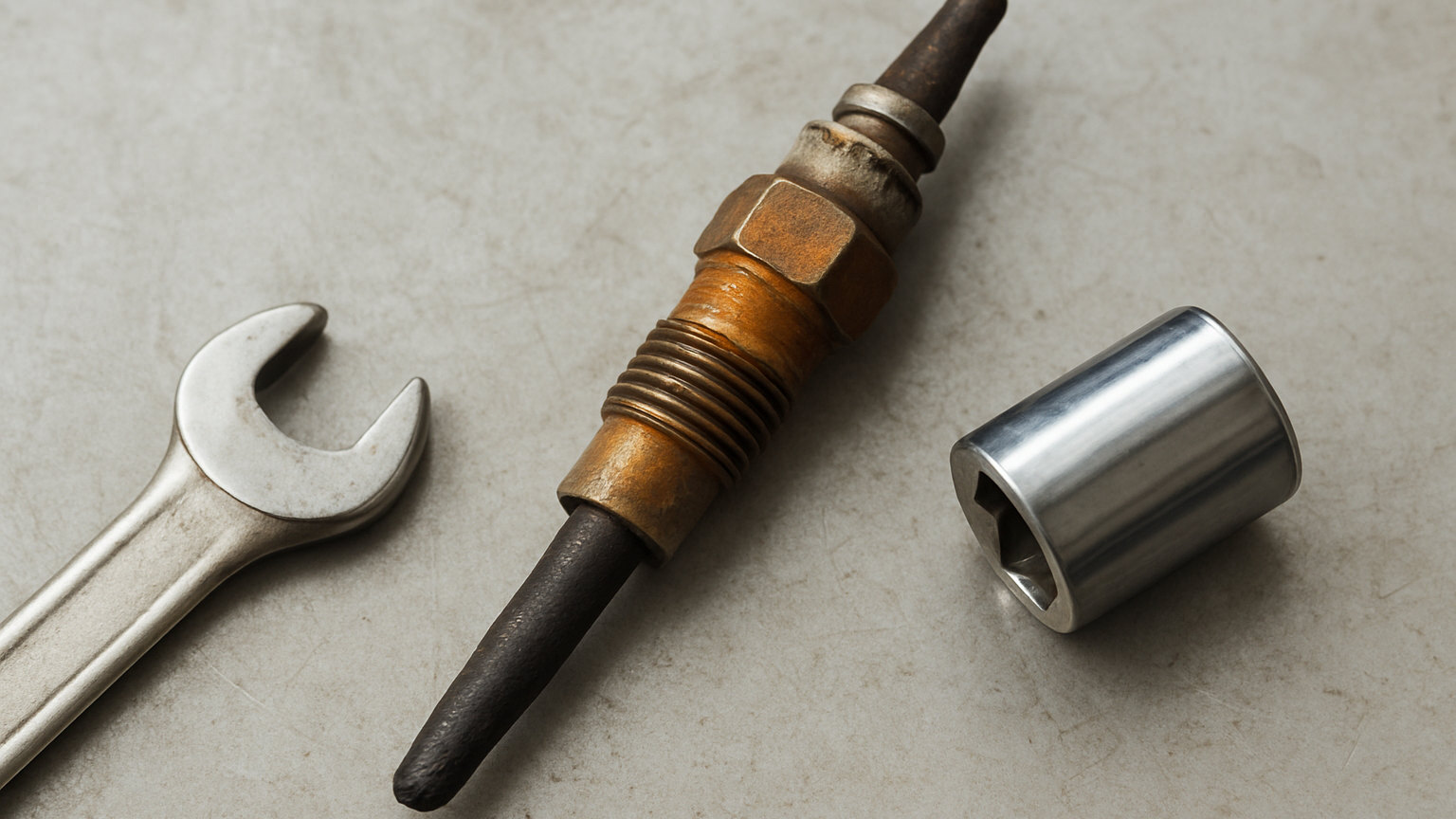
A diesel that shudders, clatters and produces white smoke for the first minute after a cold start, then settles into a perfectly smooth idle once warm, is describing a fault with a very narrow set of possible causes. Compression ignition depends entirely on the air in the cylinder being hot enough, and everything that helps achieve that on a cold morning is either working or it is not.
Why is cold starting so much harder for a diesel?
There is no spark. The fuel ignites because the air has been compressed until it is hot enough to do so, and when the cylinder walls and head are at freezing point they absorb a great deal of that heat before ignition can happen. Combustion becomes late, incomplete or fails entirely on some cylinders, which produces the shaking, the noise and the white smoke, which is unburnt fuel rather than steam.
What do glow plugs do about it?
Each glow plug is a heating element that projects into a combustion chamber and reaches a very high temperature within seconds. They preheat the chamber before cranking and, on most modern engines, continue running for a period after starting to stabilise the first minute of idling. That post-heat function is why glow plug failure so often shows up as a rough cold idle rather than as a refusal to start.
How do you know if glow plugs have failed?
The pattern is distinctive: rough idle and misfiring confined entirely to the first minute or two, white smoke that clears as the engine warms, worse behaviour on cold mornings and none at all in summer, and often no starting problem whatsoever until the coldest weeks of the year. Because the engine will run on the working cylinders, plugs fail one at a time without anyone noticing, and the symptom builds gradually over a couple of winters.
What role do injectors play?
A worn or leaking injector delivers a poor spray pattern, and poor atomisation matters far more in a cold cylinder than a hot one, because there is less heat available to vaporise droplets. That produces a cylinder that contributes little or nothing until the engine warms. A garage can read injector correction values on a diagnostic tool, which shows how much the management is compensating for each one and identifies a weak injector far more reliably than listening does.
Could it be compression?
Yes, and this is the possibility to rule out on a high mileage engine. Diesels rely on high compression to generate ignition heat, so a cylinder with worn rings or a leaking valve loses the ability to fire when cold long before it causes problems when warm. A compression test is the definitive check. The distinguishing sign is that the problem gets gradually worse over years and eventually starts to affect warm running and starting as well.
Does fuel quality make a difference?
It can. Diesel lubricates the injection system, and poor or contaminated fuel accelerates wear and worsens atomisation. In very cold weather, waxing can restrict flow through the filter, which produces a rough start that improves as things warm. A car that became noticeably worse within a tank of an unfamiliar forecourt is worth running down and refilling elsewhere before anyone starts dismantling anything.
What should you check first?
Have the glow plugs tested, since they are the most likely cause and among the cheapest parts involved, and ask for the injector correction values to be read at the same time. Both are quick with the right equipment. Note how long the roughness lasts, whether it is worse below a particular temperature, and whether there is white smoke, because that combination points fairly directly at which of these is responsible and saves the diagnosis a good deal of guesswork.
It is also worth doing this before winter rather than during it, since a diesel that idles roughly in November will often refuse to start altogether in January.


