
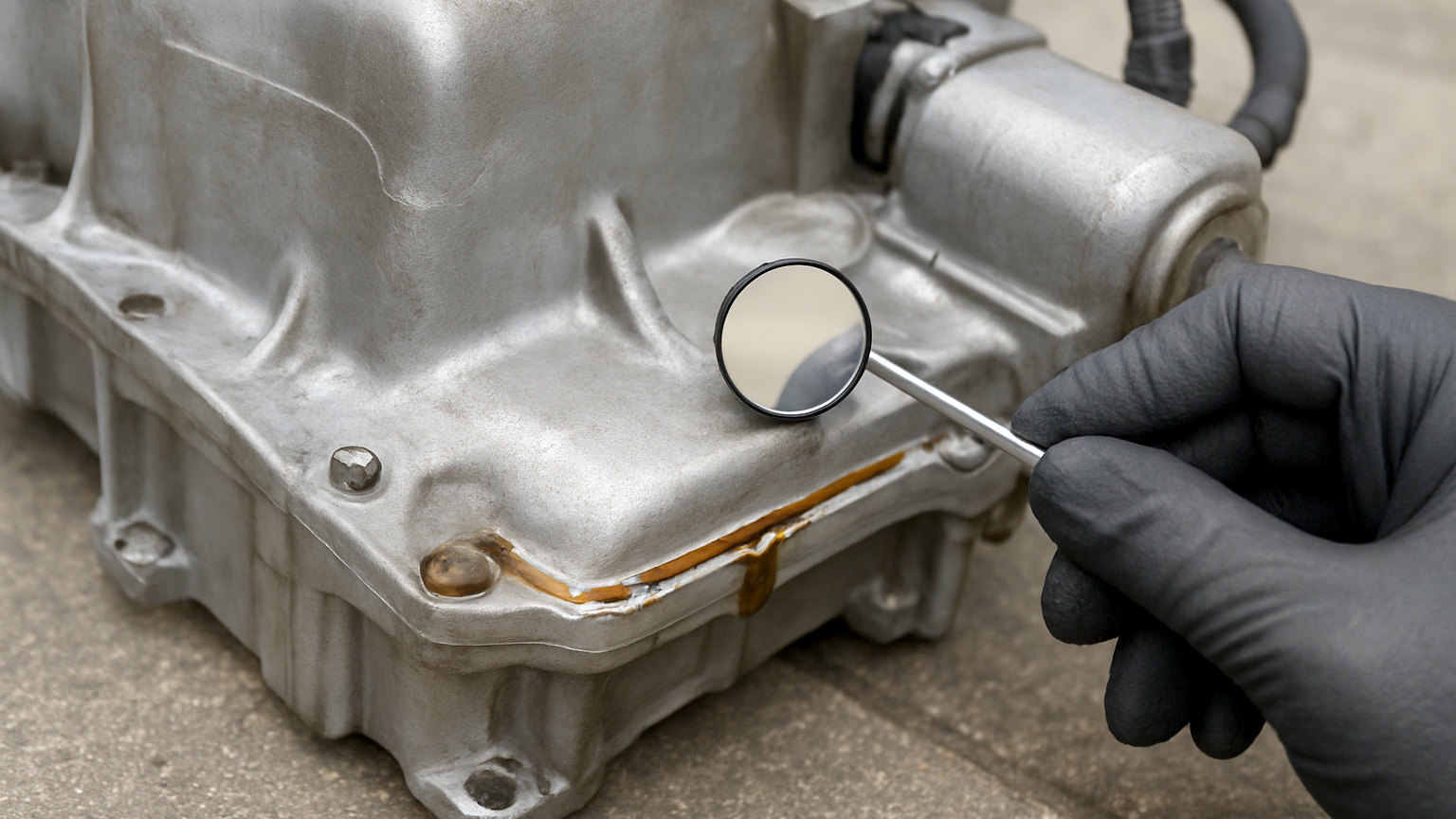
Finding an oil leak is more difficult than it sounds, because oil does not fall straight down. It creeps along seams, runs backwards along the underside of the engine in the airflow, spreads across the gearbox casing and eventually drips from the lowest point it reaches, which can be a long way from where it escaped. The puddle tells you there is a leak; it almost never tells you where.
Where do most oil leaks start?
The rocker cover gasket at the top of the engine is the most common, because it is a large gasket under constant heat cycling and it hardens with age. Oil escaping there runs down the back or side of the block and appears to come from much lower down. The sump gasket or plug is the next, followed by the oil filter housing and its seal, the crankshaft seals at either end of the engine, and the camshaft seals behind the timing cover.
How do you narrow it down?
Clean first. Degrease the engine and the underside thoroughly, dry it, then drive for a few days and look again. A fresh leak on a clean engine is far easier to trace to its highest wet point, and the highest point where oil appears is almost always the source. Looking at a decade of accumulated grime tells you nothing at all, which is why so many leaks are misdiagnosed on the first inspection.
What does the position of the drip tell you?
Something, but less than you would hope. Oil at the front of the engine can be the crankshaft front seal, the timing cover or the rocker cover running forwards. Oil at the back can be the rear crankshaft seal or the rocker cover running backwards, and that distinction matters because the rear seal usually requires the gearbox to be removed. Oil towards one side often suggests the filter housing or a pressure switch. Take a photograph of where the drip lands, since it is a useful reference.
Is it definitely engine oil?
Worth confirming, because several fluids leak. Engine oil is light brown when new and black when used, and it feels slippery between the fingers. Gearbox and power steering fluid is usually red or pink and smells different. Brake fluid is clear to pale yellow and will strip paint. Coolant is brightly coloured and sweet smelling. Diesel is oily but smells unmistakable. Putting a sheet of clean cardboard under the car overnight gives you a clear sample and a position at the same time.
What is a UV dye test?
The professional method for stubborn leaks. A fluorescent dye is added to the oil, the car is driven for a few days, and the engine is then inspected with an ultraviolet lamp in a darkened workshop. The dye glows brightly at the exact point of escape, which cuts through years of accumulated grime and finds leaks that visual inspection cannot. It is inexpensive relative to the labour of dismantling the wrong component.
Could pressure be the underlying cause?
Frequently, and it is missed constantly. A blocked crankcase breather system raises pressure inside the engine and forces oil past seals and gaskets that would otherwise be perfectly serviceable. Replacing the gasket then produces a new leak somewhere else within months. If several seals are leaking at once, or a new gasket has failed quickly, check the breather system before assuming the components were at fault.
Which leaks matter most?
Anything dripping onto the exhaust manifold or turbocharger, because that is a fire risk rather than a housekeeping issue. Anything losing enough oil to affect the level between checks. And any leak near the auxiliary belt, since oil on a belt causes slip and can shred it. A slight weep that leaves a mark on the driveway once a week on an older car sits at the other end of the scale and is a judgement call rather than an emergency.


