
Oil pressure is widely assumed to be a measure of how much oil is in the engine, and it is not. It is a measure of the resistance the oil meets as it is forced through the engine bearing clearances, which is a completely different thing. Understanding that distinction explains why an engine with a full sump can still be destroying itself, and why the pressure warning outranks every other light on the dashboard.
How does the oiling system work?
A pump driven by the engine draws oil from the sump through a strainer, pushes it through the filter, and delivers it under pressure to galleries drilled through the block and head. From there it reaches the crankshaft main bearings, the big end bearings, the camshafts and the valve gear. At each bearing the oil escapes through a deliberately small clearance, and it is that restriction which creates the pressure. Oil then drains back to the sump and the cycle repeats continuously.
Why does pressure matter so much?
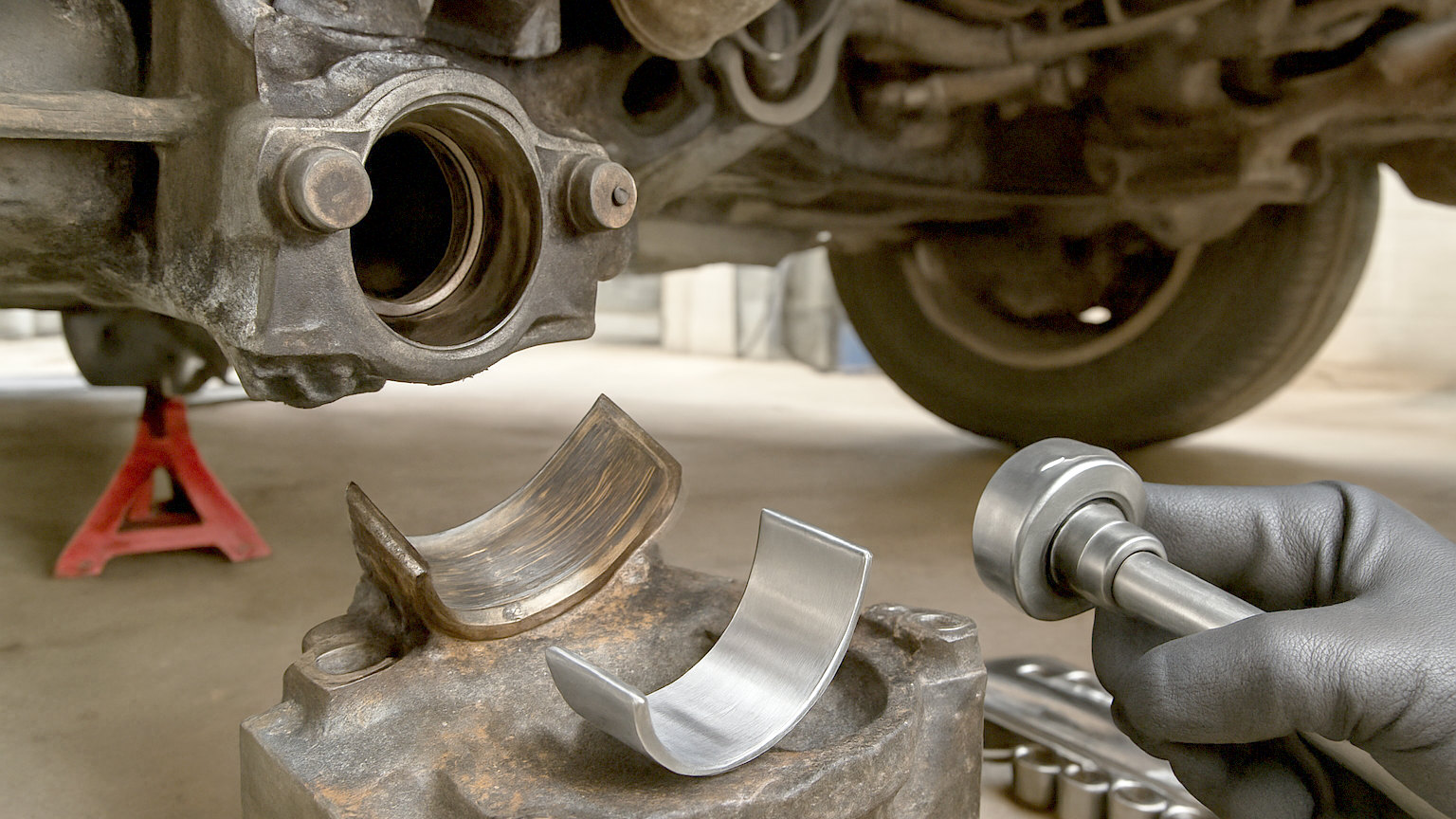
Because the bearings are not designed to touch. The crankshaft floats on a wedge of pressurised oil a fraction of a millimetre thick, and that film carries the enormous loads of combustion without any metal contact at all. When pressure falls, the film collapses and the surfaces meet, generating heat and wear that spreads through the whole engine in a very short time. This is why a red pressure light is a stop instruction rather than a booking instruction.
What causes pressure to fall?
Low oil level is the most common and the easiest to fix, since the pump eventually draws air instead of oil. A blocked pickup strainer in the sump, usually silted with sludge from long service intervals, starves the pump. A worn pump cannot generate the flow required. Bearings that have worn allow oil to escape too freely, so the resistance that creates pressure disappears. Oil that is too thin, degraded or diluted with fuel cannot maintain the film.
Why is worn bearing pressure loss a vicious circle?
Because the two problems feed each other. Worn bearings leak oil pressure, and low pressure accelerates bearing wear, so a marginal condition deteriorates rather than stabilising. This is why an engine that shows a flickering pressure light at idle rarely stays the same for long, and why the knocking noise so often follows a few weeks later. Catching it at the flicker stage gives you options; catching it at the knock stage usually does not.
Does oil viscosity affect pressure?
Directly. A thicker oil produces higher pressure readings because it flows less easily, which is why people sometimes use a heavier grade to make a pressure problem disappear. That masks the symptom while making cold starting worse, since thick oil takes longer to reach the top of the engine at the moment of greatest vulnerability. Modern engines specify thin oils deliberately, partly for economy and partly because variable valve timing systems depend on rapid flow through narrow passages.
How is it measured properly?
With a mechanical gauge fitted in place of the pressure switch, read at idle and at raised revs with the engine at operating temperature. The dashboard light is a simple switch that closes below a threshold, so it tells you only that pressure has fallen below one value. A gauge tells you what the pressure actually is across the range, which is what distinguishes a failing switch from a failing pump from worn bearings.
What should you do about a warning?
Stop, check the level, and if the level is correct do not drive the car until pressure has been measured. Have the oil and filter changed as part of the investigation, since degraded oil and a blocked filter are both plausible causes and the fresh oil makes any subsequent measurement meaningful. Anything beyond that is a mechanical repair rather than a maintenance task, and it is worth asking for the measured figures rather than a verdict, since the numbers indicate how much margin the engine has left.


