
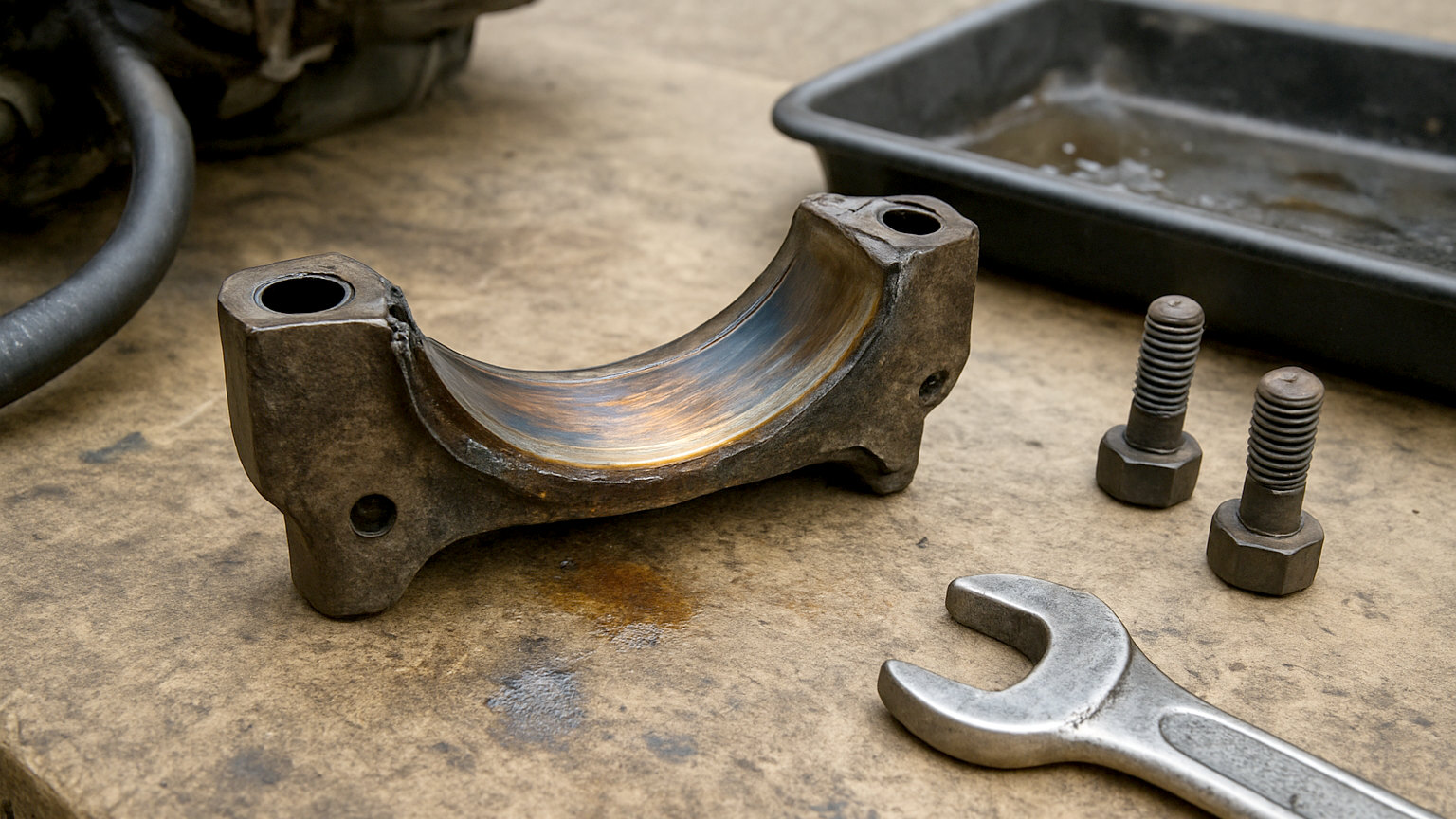
Running an engine low on oil is one of the few genuinely avoidable ways to destroy a car, and it happens constantly, usually because nobody checked. What makes it particularly unforgiving is that the warning light is a pressure switch rather than a level gauge, so by the time it illuminates the engine is already in trouble. Understanding what happens in what order explains why checking the dipstick is the highest value habit an owner has.
What does the oil actually do?
Four things at once. It creates a pressurised film that keeps bearing surfaces from touching, it carries heat away from the hottest parts of the engine, it holds combustion by-products in suspension so they can be filtered out, and it protects surfaces from corrosion. Reduce the volume and all four functions degrade simultaneously, which is why low oil damage escalates so quickly rather than developing gradually.
What fails first?
Cooling capacity, before anything mechanical. A smaller volume of oil circulating means each litre absorbs more heat, so oil temperature rises, viscosity falls and the film becomes thinner. The engine may show nothing at this stage, though a temperature gauge reading slightly higher than usual can be an early hint. This is the point at which the damage is still entirely preventable and almost nobody notices it.
What happens next?
As the level falls further, the pump begins to draw air along with oil, particularly under cornering, braking and acceleration when the oil moves away from the pickup. Aerated oil cannot maintain pressure, so the film collapses momentarily at the bearings and metal makes contact. Each of those brief contacts removes a small amount of bearing material, and the debris circulates. This is where the pressure light finally appears, and it is already too late for it to be a warning.
What is the end result?
A knocking bottom end, and eventually a seized engine. Big end bearings fail first because they carry the highest loads, producing the deep rhythmic knock that keeps time with engine speed. If driving continues, the bearing material is destroyed entirely, the connecting rod contacts the crankshaft directly, and either the crank is scored beyond repair or the rod fails and breaks through the block. At that point the engine is scrap rather than repairable.
Does the turbocharger suffer too?
Considerably, and often first on a turbo car. The turbo bearings run at extraordinary speeds and depend entirely on a continuous flow of oil for both lubrication and cooling. Oil starvation for even a few seconds can damage them, and the failure that follows sends oil into the intake and sometimes debris into the engine. On any turbocharged car, oil level discipline matters more than on a naturally aspirated one.
Can an engine recover?
Sometimes, and it depends entirely on how far it went. An engine that was slightly low, showed no light and no noise, and was topped up promptly is very likely fine. An engine where the light came on and was switched off within seconds may have suffered minor wear that never becomes apparent. An engine that ran with the light on for miles, or that developed a knock, will not recover, and no oil change or additive will restore what has been worn away.
How do you avoid it entirely?
Check the dipstick every few weeks, on level ground with a cold engine, and before any long journey. It takes a minute and it is the only reliable way to know, since the dashboard will not tell you until the situation is serious. Keep a container of the correct oil in the boot. And treat any engine known to use oil as one that needs checking weekly rather than monthly, because consumption rates rise as engines age, and a car that used nothing last year may well be using half a litre between services this year without anything being obviously wrong.


