
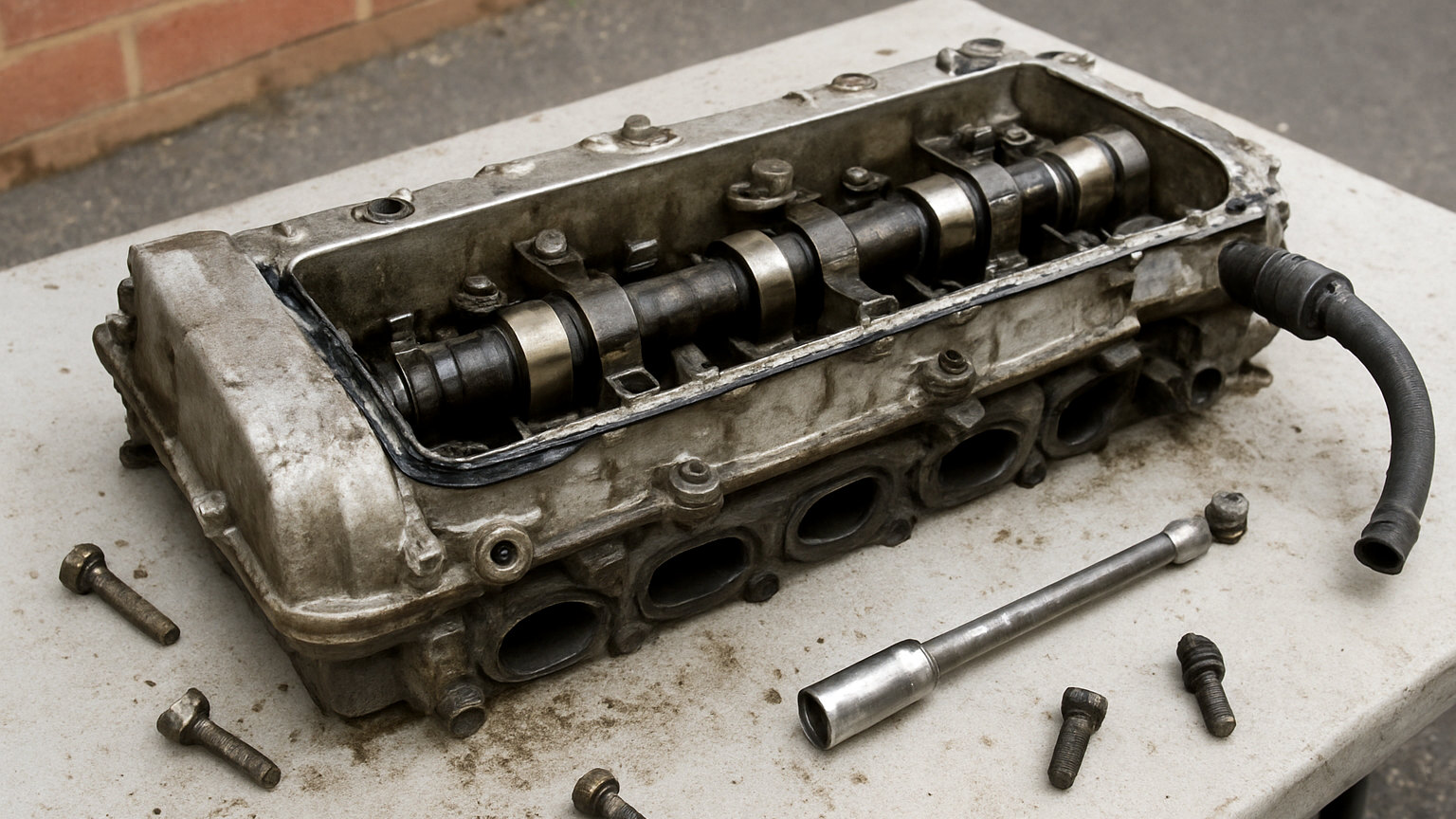
The rocker cover, sometimes called the cam cover or valve cover, sits on top of the cylinder head and keeps oil inside the valve gear. Its gasket is long, thin, subjected to constant heat cycling, and it is the most common source of oil leaks on almost any engine after a certain age. It is also, unusually for oil leaks, a repair that is often accessible and reasonably priced.
Why does the gasket fail?
Heat cycling, principally. The rubber or cork compresses when bolted down and then goes through tens of thousands of cycles from ambient to well over one hundred degrees, gradually hardening and losing its ability to spring back. Once it has taken a permanent set, it no longer fills the gap as the metal expands and contracts, and oil begins to weep out at the low points. It is a wear item rather than a failure.
What are the symptoms?
A smell of burning oil after driving, particularly noticeable when you stop and open the door, caused by oil dripping onto the hot exhaust manifold. Visible oily residue down the side or back of the engine. Smoke rising from the engine bay when the car is stationary. On engines where the spark plugs sit in wells within the cover, oil can collect around the plugs and cause misfires, which is a more serious consequence than the leak itself.
Why does oil in the spark plug wells matter?
Because the plug wells have their own seals within the rocker cover gasket assembly, and when those fail the wells fill with oil. That oil surrounds the coil pack and the plug boot, degrades the insulation, and causes a misfire that looks electrical. Replacing coil packs on a car with oil-filled plug wells is a very common wasted repair, so if a misfire has appeared alongside a rocker cover leak, mention both together.
Is it a fire risk?
A slow weep that leaves residue is not, but a steady drip onto an exhaust manifold or turbocharger is, and it should not be left. The smell of burning oil is the warning. If there is visible smoke from the engine bay while the car is stationary, or oil actively running rather than seeping, that moves the repair from a scheduled job to a prompt one.
Could crankcase pressure be the real cause?
Frequently, and it is the reason some replacements fail again quickly. The crankcase breather system vents pressure that builds inside the engine, and when it blocks, that pressure pushes oil past the nearest seal, which is often the rocker cover. Fitting a new gasket without checking the breather simply gives the pressure something fresh to defeat. If a gasket has been replaced and leaked again within a year, the breather is the first thing to look at.
What does replacement involve?
On many engines, removing the plastic engine cover, the ignition coils or leads, any pipework across the top, and then the cover bolts. The mating surfaces must be cleaned back to bare metal, the new gasket fitted dry unless the manufacturer specifies sealant at particular corners, and the bolts tightened to the correct torque in the correct sequence. That last point matters more than people expect, since overtightening distorts the cover and causes an immediate leak.
Is it a job worth doing yourself?
It is one of the more approachable oil leak repairs, provided you have a torque wrench and the correct sequence and figures. The parts are inexpensive. The main risks are dropping something into an open cylinder head, damaging a plastic cover by overtightening, and disturbing brittle plastic pipework alongside. If the engine has plug wells full of oil, plan on cleaning those thoroughly and inspecting the coils at the same time, since fitting a new gasket over contaminated coils simply leaves a misfire behind after the leak has gone, and the coils are already out of the way at that point in the job.


