
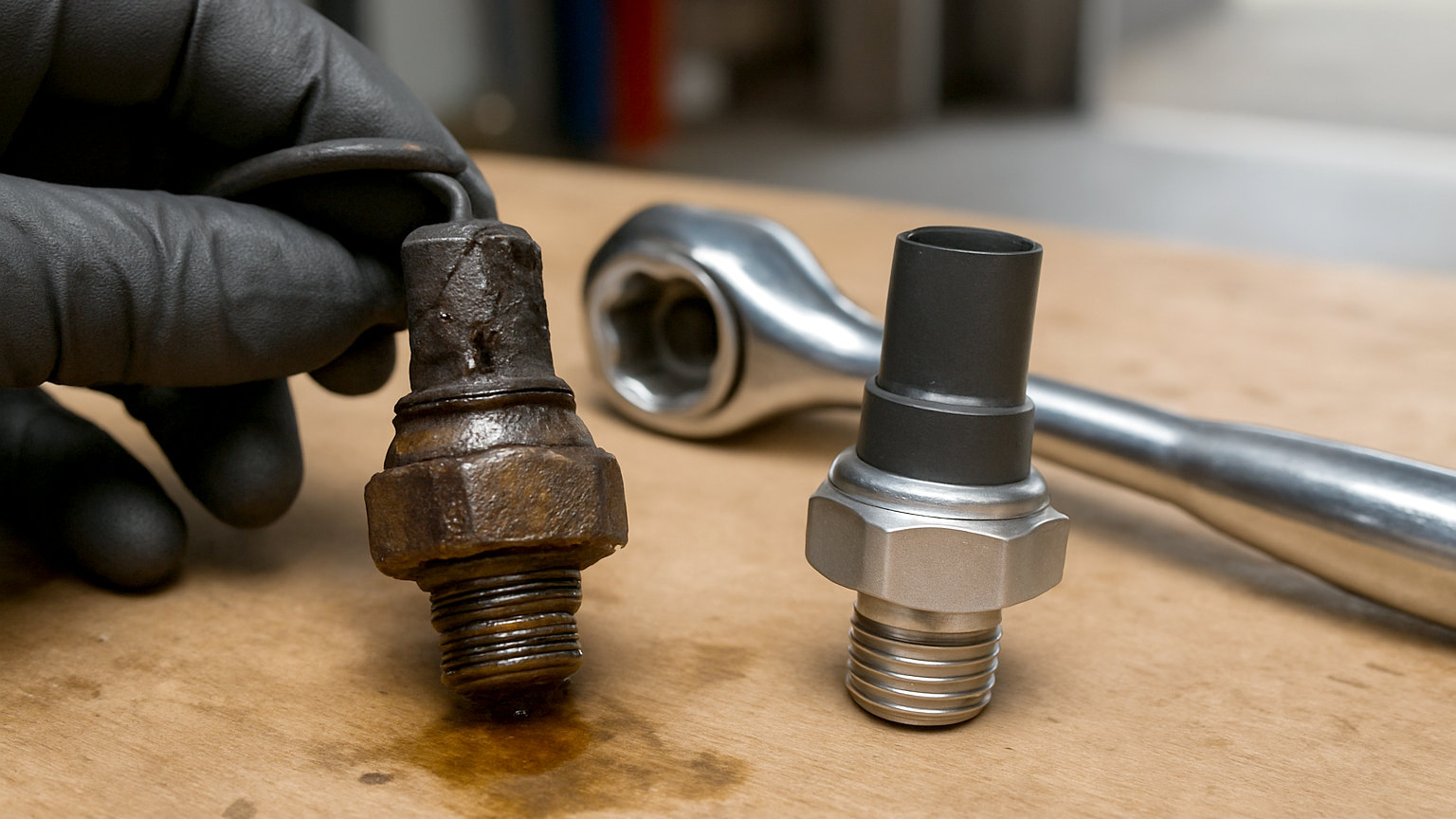
The oil warning light is the single most important thing on a dashboard, and it is also the most widely misunderstood. Most drivers assume it means the oil is low, which is sometimes true and sometimes catastrophically wrong. On most cars there are two separate warnings that look broadly similar, and telling them apart in the first few seconds decides whether this is an inconvenience or a new engine.
What is the difference between the two warnings?
The red light, usually shaped like an old fashioned oil can, is a pressure warning. It means oil is not being delivered to the bearings at the pressure they require, and the engine can destroy itself within a minute in that condition. Many cars also have an amber or yellow warning, sometimes with a wavy line underneath or a text message, which is a level warning. That one means top up soon. The red one means stop now.
What should you do when the red light comes on?
Pull over as soon as it is safe and switch the engine off. Not at the next junction, not once you reach the services, but at the first safe opportunity, because every revolution without oil pressure is causing wear at the bearings. Once stopped, wait a few minutes and check the oil level on the dipstick. If it is low, top up and see whether the light stays out when restarted. If the level is correct and the light returns, do not drive the car.
Why is low pressure so much worse than low level?
Because the bearings that support the crankshaft and connecting rods do not touch metal to metal. They ride on a pressurised film of oil, and that film is what keeps the surfaces apart. Remove the pressure and the metal makes contact immediately, generating heat and wear that spreads quickly through the engine. A low level eventually causes low pressure, which is why the two are related, but pressure can also be lost with a perfectly full sump.
What causes low pressure with the correct oil level?
A failing oil pump, a blocked pickup strainer in the sump, worn bearings that have opened up their clearances and can no longer hold pressure, oil that is too thin for the engine or too degraded to maintain a film, or a blocked oil filter with a failed bypass. A faulty pressure switch or wiring fault will also illuminate the light without any real problem existing, but that possibility should be confirmed by measurement rather than assumed.
Can the light be wrong?
It can, and pressure switches do fail. The difficulty is that you cannot tell from the driving seat, and the cost of assuming a false alarm and being wrong is an engine. The correct approach is to treat every red oil light as genuine, stop, and have the actual pressure measured with a mechanical gauge before the car is driven again. That test takes a mechanic under an hour and settles the question definitively.
What about a light that comes on only at idle?
A red light that appears when the engine drops to idle and goes out as soon as you raise the revs is a genuine warning that pressure is marginal. It usually means worn bearings, a tired pump or oil that has thinned too much. It is an early stage of a serious problem rather than a quirk, and it commonly appears shortly before a knocking noise develops. Have it measured rather than driven around.
What should you avoid doing?
Restarting the engine repeatedly to see whether the light stays off, driving a short distance to a garage instead of arranging recovery, and adding a thicker oil to raise the pressure reading. All three are common responses and all three make the outcome worse. Recovery costs a small fraction of the bearing damage that a few more miles will cause, and it is the cheapest decision available at that moment.


