
An oil pressure light that flickers when the engine drops to idle and goes out the moment you raise the revs is one of the most under-reacted-to symptoms in motoring. It looks minor, because the light spends most of its time off and the car drives normally. What it actually indicates is that oil pressure at idle has fallen to the threshold at which the warning switch operates, and that is a warning worth taking at face value.
Why does it happen at idle specifically?
Because the oil pump is driven by the engine, so its output is lowest when engine speed is lowest. At idle the pump produces the least flow while the oil is at its hottest and thinnest, which is the worst combination for maintaining pressure. Any weakness in the system shows up under those conditions first and disappears as soon as the revs rise and the pump speeds up. The flicker is therefore the earliest visible stage of a pressure problem.
What causes marginal pressure?
Worn bearings are the most common on a high mileage engine, because the clearances have opened up and oil escapes too easily to build resistance. A tiring oil pump produces less flow than it should. A partially blocked pickup strainer restricts supply. Oil that is too thin, either the wrong grade or diluted with fuel, cannot maintain the film. Old degraded oil that has lost its viscosity does the same. In most cases more than one of these applies at once.
Could it just be the switch?
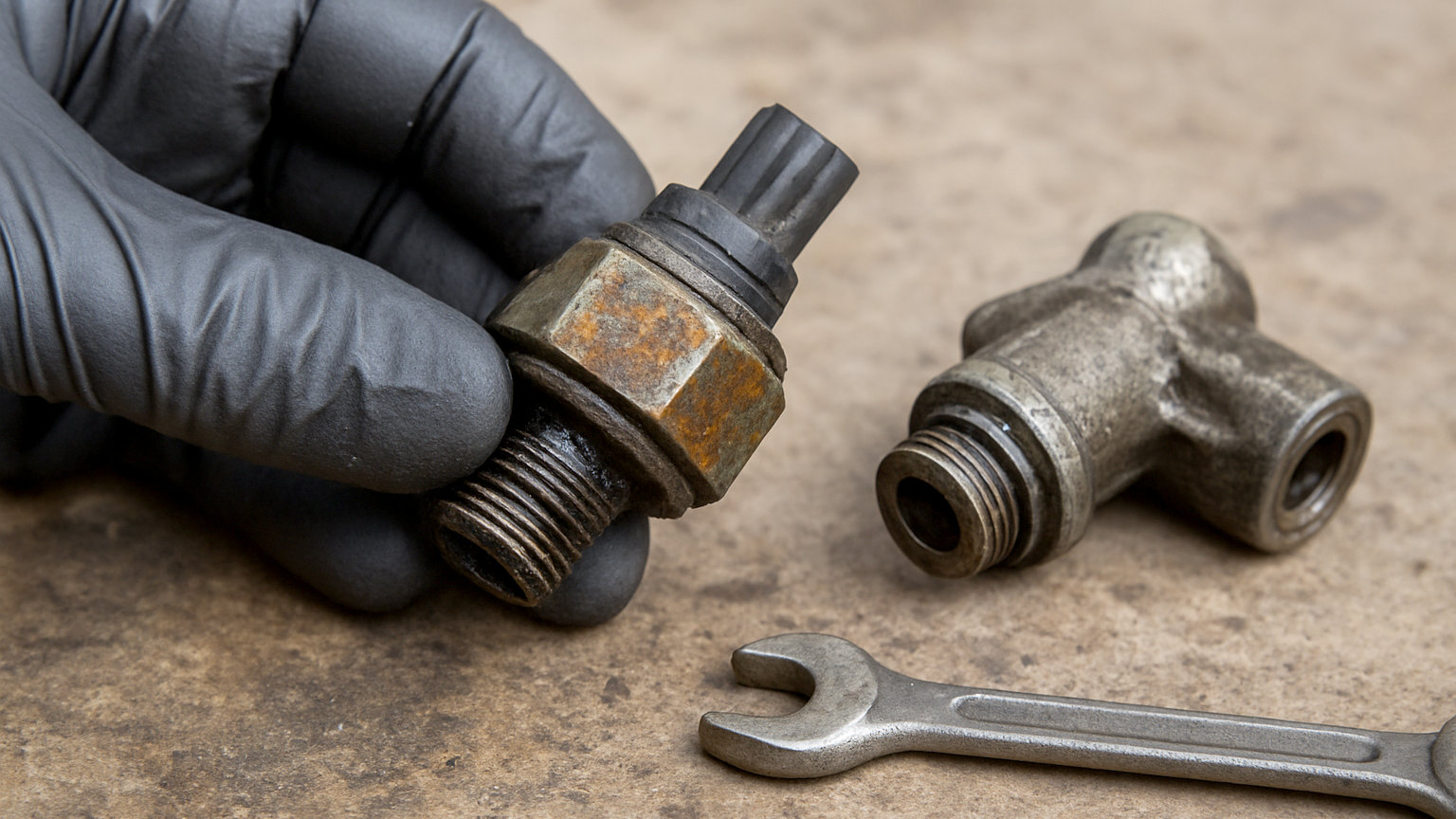
It could. Pressure switches fail, and they fail more often in the direction of showing a fault than hiding one. Wiring and connectors corrode. But the switch is a cheap part in a position that is easy to test, and the consequence of assuming a false alarm and being wrong is an engine. The only sensible way to settle it is to fit a mechanical gauge and measure the actual pressure at idle and at raised revs when hot.
Why is this the moment that matters?
Because the flicker stage is where you still have options. Fresh oil of the correct grade, a new filter and a pump or pickup inspection may resolve it entirely if the bearings are still sound. Left alone, marginal pressure accelerates bearing wear, which further reduces pressure, and the two feed each other. The deep rhythmic knock that follows is the same fault a few thousand miles later, and by then the repair is a rebuild.
What should you check first?
The oil level and its condition, since a low level or oil that has been in for far too long is the cheapest and most likely contributor. Smell it for fuel dilution, which is common on modern diesels and thins the oil substantially. Confirm the grade in use matches the handbook specification, because a much thinner oil than specified will produce exactly this symptom on an engine that would otherwise be fine.
Is it safe to drive?
Not really, and certainly not for long. Every period at idle is a period of metal contact at the bearings. If you must move the car, keep the revs above idle when stationary, avoid traffic queues, and go directly to a garage rather than continuing your normal routine. If the light stays on above idle at any point, stop immediately and arrange recovery.
What will a garage do?
Fit a mechanical gauge and compare the readings against the manufacturer figures, hot, at idle and at a specified higher speed. That single test distinguishes a faulty switch from genuinely low pressure, and the pressure figures indicate whether the problem is likely to be the pump, the pickup or the bearings. Ask for the actual numbers rather than a verdict, since they tell you how much margin remains and inform every decision that follows, including whether the car is worth keeping at all.


