
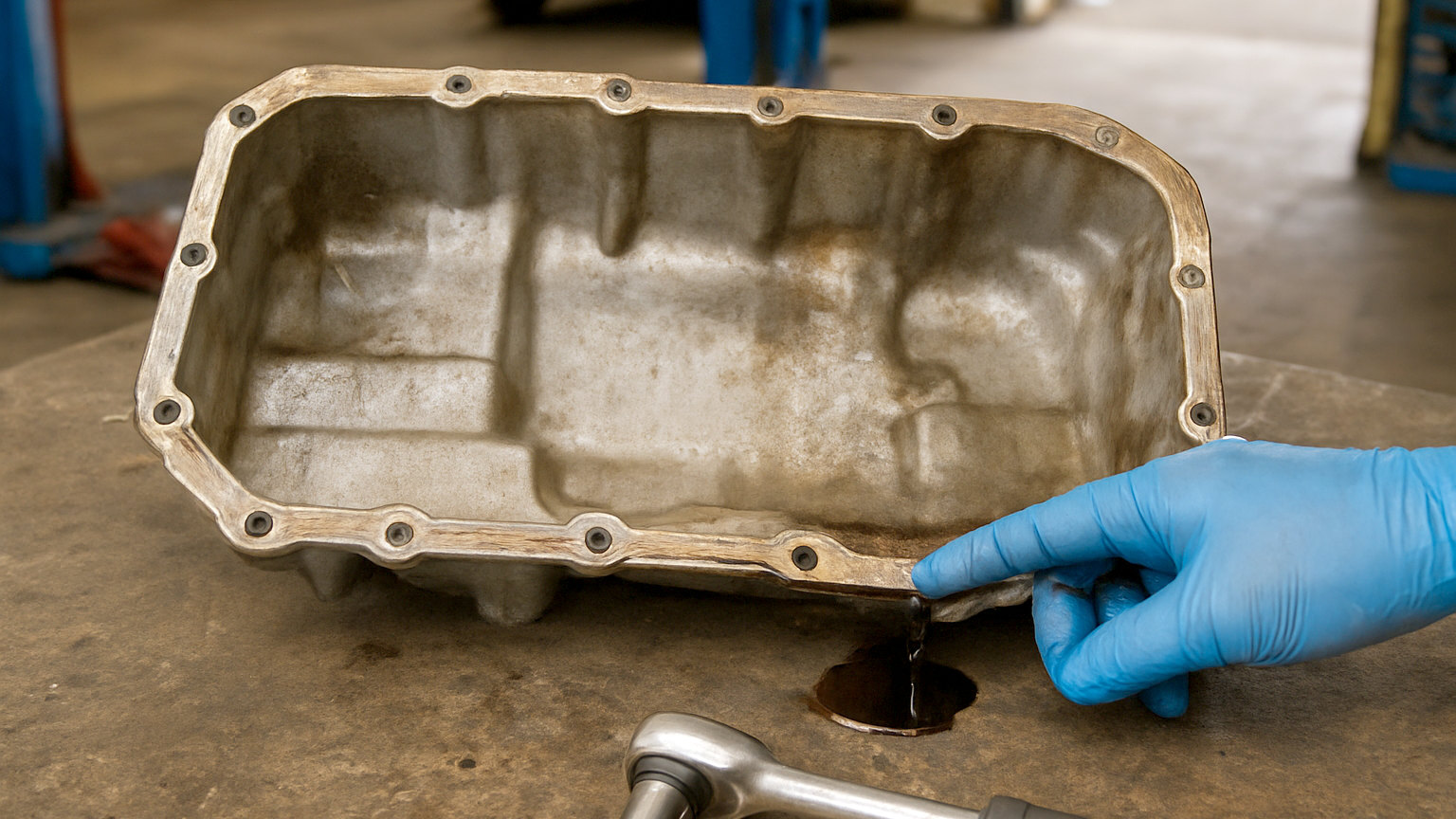
Some cars leave a spot on the driveway every morning and show no sign of a leak while running, and others do exactly the reverse. That difference is not random. A running engine has oil circulating under pressure and being flung around inside the casings, while a parked engine has all its oil sitting quietly in the sump under nothing but gravity. Those are two different conditions and they reveal two different sets of faults.
What makes a leak show only when parked?
Gravity, and time. When the engine stops, oil drains from the upper parts back down through the block, which means the level in the sump rises to its maximum and any seal at or below that line is under a small but constant head of oil for hours. A seal or gasket that is marginal will weep slowly under that steady pressure and produce a drip by morning, while during running the oil is circulating elsewhere and never sits against it long enough.
Which components leak this way?
The sump gasket and the sump drain plug and its washer are the classic examples, since both sit at the lowest point where oil collects. Oil filter housings and their seals leak this way if not properly tightened or if the seal has hardened. Older engines with rear crankshaft seals sometimes seep overnight. Anything low on the engine that is asked to hold back a static column of oil is a candidate.
What leaks only while running instead?
The reverse pattern points at pressurised or high mounted components. Rocker cover gaskets leak while running because oil is being splashed around the cylinder head, and often dry out overnight. Oil pressure switches and sender units weep only under pressure. Turbo oil feed pipes leak when the system is pressurised. If your driveway is clean but the engine bay is oily, that is the pattern you have.
Does the amount matter?
It does. A spot the size of a coin once a week on an older car is a seep rather than a leak, and many owners reasonably monitor it and top up occasionally rather than paying to chase it. A patch the size of a dinner plate every night is losing enough oil to threaten the level between checks and needs attention. The practical test is whether the dipstick reading falls noticeably between weekly checks.
How do you locate it?
Degrease the underside of the engine and gearbox thoroughly, then park over clean cardboard overnight. The position of the drip on the cardboard, combined with a clean engine, narrows things considerably, and the highest wet point on the engine the next morning is usually the source. Repeating this over several nights builds a much clearer picture than a single inspection of a grimy engine ever will.
Could it be something other than engine oil?
Frequently, and it is worth confirming before any work is quoted. Gearbox and power steering fluid is usually red or pink. Brake fluid is clear to pale yellow and strips paint. Coolant is brightly coloured and sweet. Diesel is unmistakable by smell. A drip that only appears overnight and turns out to be gearbox oil from a driveshaft seal is a completely different repair from a sump gasket.
Is it worth fixing?
A sump plug washer or a filter seal costs almost nothing and should simply be done. A sump gasket usually means dropping the sump, which on many cars involves removing the subframe or the exhaust and is a meaningful labour cost. Weigh that against the value of the car, how much oil is actually being lost, and whether the drip is landing anywhere it should not, such as on a driveway you care about or on the exhaust.
Whatever you decide, keep checking the level weekly, because a leak that has been stable for a year can change without warning once a gasket finally gives up.


