
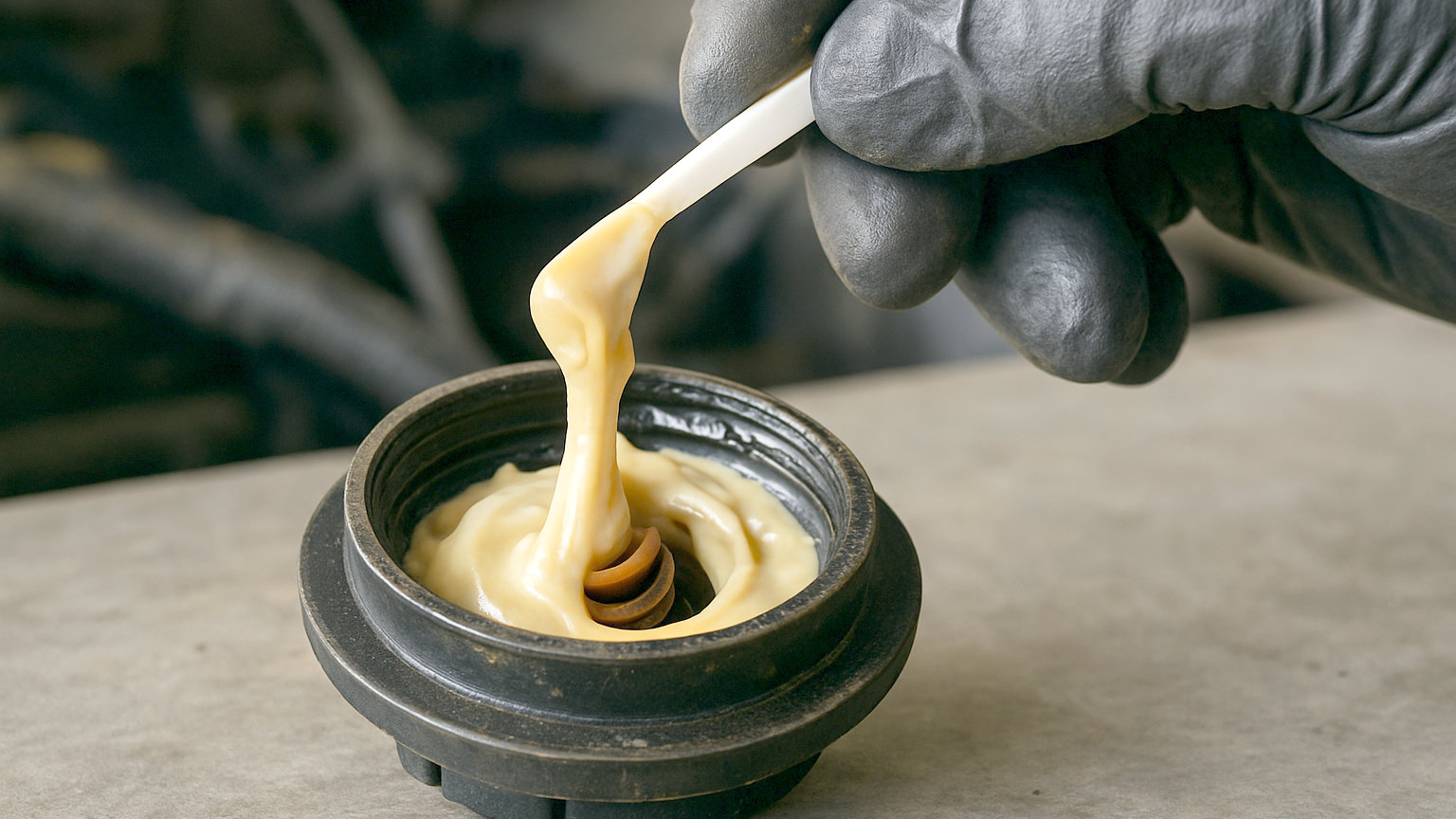
Few discoveries under a bonnet cause as much alarm as a creamy beige deposit on the underside of the oil filler cap. The internet answer is invariably a head gasket, and in most cases that is completely wrong. The deposit is an emulsion of oil and water, and the question is only where that water came from. There are two possible sources with very different implications.
Where does the water come from?
Combustion produces water as a by-product, and a small amount of it inevitably passes the piston rings into the crankcase along with combustion gases. On a properly warmed engine that moisture evaporates and is carried away by the breather system. On an engine that never gets fully hot, it condenses instead, and the crankcase breather and filler cap are the coolest metal parts nearby, so that is where it collects and mixes with oil vapour.
How do you tell condensation from coolant?
By location and quantity, which is the crucial distinction. Condensation produces a thin film confined to the underside of the filler cap and perhaps the top of the rocker cover, with the oil on the dipstick looking completely normal. Coolant entering the oil produces a thick creamy emulsion throughout the whole system, visible on the dipstick, often with the oil level rising rather than falling. If the dipstick is clean, you are almost certainly looking at condensation.
What other signs accompany a head gasket?
A head gasket failure rarely arrives alone. Expect a coolant level that keeps falling with no external leak, an expansion tank that becomes hard and pressurised within minutes of a cold start, bubbles rising in the tank while the engine idles, white sweet-smelling exhaust smoke that persists once warm, and often overheating. A creamy filler cap with none of those, on a car that does short winter journeys, is not a head gasket.
Why do short journeys cause it?
Because oil needs to reach around ninety degrees and stay there for a sustained period to drive off accumulated moisture, and a fifteen minute commute does not get close. Every cold start adds water and the journey removes none of it, so it accumulates through the winter. Cars used exclusively for school runs and short shopping trips are the classic examples, and the deposit typically appears in November and disappears after the first long drive in spring.
Is it harmful?
The deposit itself is not, but what it represents is worth taking seriously. Water in oil reduces its ability to lubricate and forms acids that corrode bearing surfaces over time, and moisture accelerates sludge formation. It is a sign that the oil is not being given the conditions it needs, which also shortens its useful life considerably. An engine living this way benefits from shorter oil change intervals than the book suggests.
What is the fix?
Longer journeys, genuinely. A run of thirty minutes or more at sustained speed once a week gets the oil fully hot and drives the moisture out, and it also helps the exhaust, the battery and, on a diesel, the particulate filter. Wiping the cap clean does nothing useful except remove your ability to monitor it. If the deposit returns after a proper long drive and a fresh oil change, that changes the picture and warrants investigation.
When should you have it checked?
If the deposit is on the dipstick as well as the cap, if the oil level is rising, if coolant is disappearing, or if there is any overheating or persistent white exhaust smoke. In that case ask for a combustion gas test, which is quick, inexpensive and definitive. Otherwise take the car for a decent run, change the oil if it is anywhere near due, and check again in a fortnight. A deposit that has disappeared after a long drive has answered the question definitively and needs nothing further beyond a habit of longer journeys through the winter months.


