
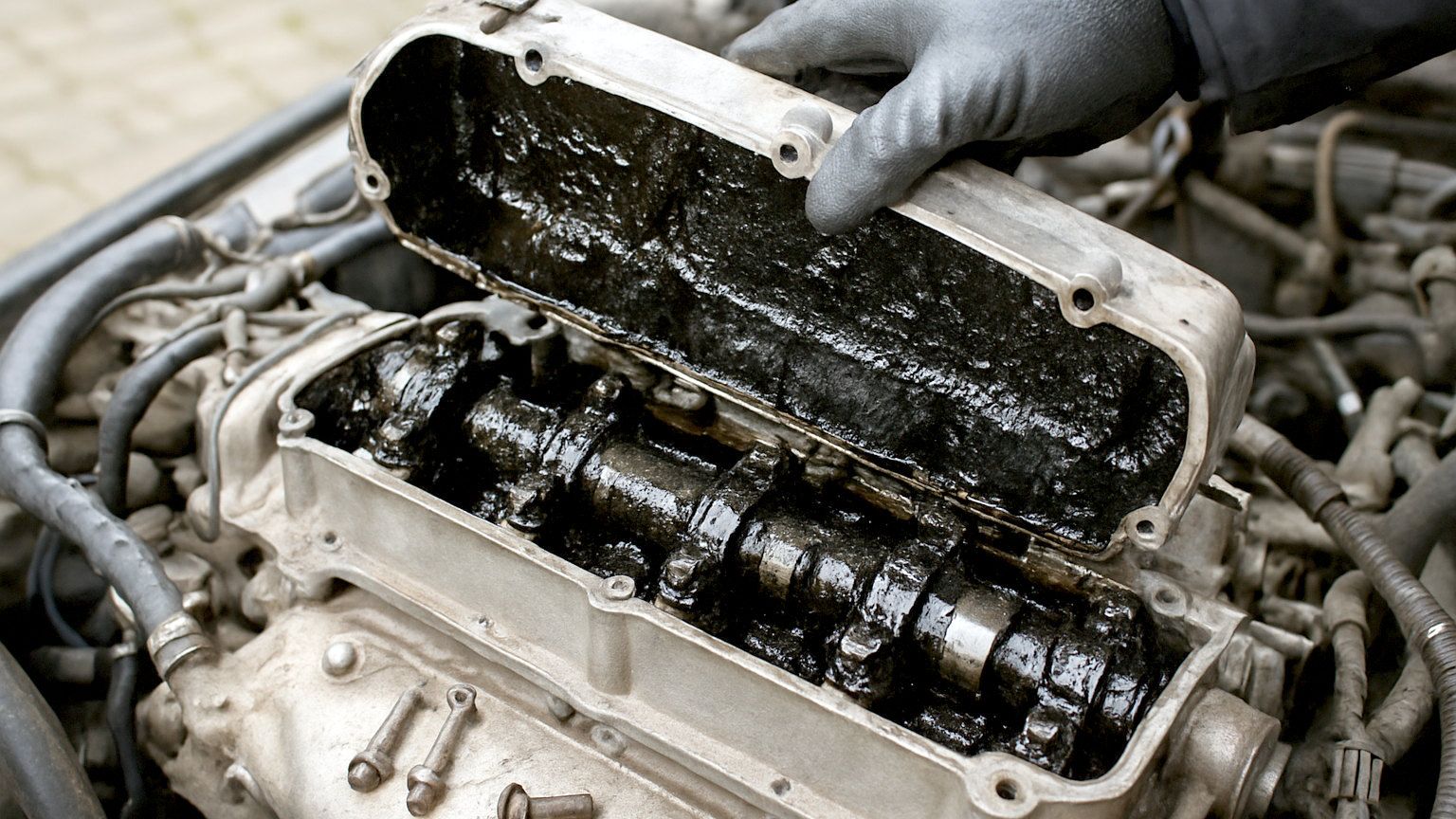
Engine sludge is the thick tar-like deposit that forms when oil is left in an engine far beyond its useful life or subjected to sustained overheating. It is one of the few engine problems that is entirely a consequence of how a car has been treated rather than how it was built, and it is also one of the most useful things to look for when assessing a used car, because it reveals a service history that paperwork can easily disguise.
How does sludge form?
Oil holds combustion by-products, soot, water and acids in suspension using its detergent and dispersant additives. Those additives are consumed over time, and once they are exhausted the contaminants can no longer be held apart. They begin to combine and settle out onto internal surfaces as a soft black deposit that hardens over time. Heat accelerates the process by oxidising the base oil, and moisture from short journeys contributes heavily.
What damage does it cause?
The most serious consequence is a blocked pickup strainer in the sump, which starves the oil pump and causes low pressure regardless of how much oil is in the engine. Sludge also blocks narrow galleries, restricting supply to the top of the engine and to variable valve timing actuators, and it insulates surfaces so that heat is not carried away properly. Turbocharger oil feed pipes are particularly vulnerable, and a coked feed pipe destroys turbos.
How do you know if an engine has it?
Remove the oil filler cap and look inside with a torch. Clean metal or a light honey coloured film is what you want. Black tarry deposits coating the visible parts of the cylinder head, or a filler neck partially closed with hardened material, indicate sludge throughout the engine. This check takes thirty seconds, needs no tools, and is by far the most informative thing you can do when viewing a used car.
Which engines are most prone?
Those with long recommended service intervals combined with owners who took them literally, turbocharged engines where oil is exposed to very high bearing temperatures, and engines used exclusively for short journeys where oil never gets hot enough to drive off moisture. Some specific engine designs have well documented reputations for it, so the make, model and engine code are worth searching before buying.
Can sludge be removed?
Partially, and with care. On a mildly affected engine, a series of short interval oil changes with good quality oil will gradually clean it, and this is the safest approach. Aggressive chemical flushes on a heavily sludged engine can dislodge large deposits that then block the pickup strainer or a gallery, causing immediate oil starvation. In severe cases the only thorough option is removing the sump and rocker cover and cleaning manually, which is a substantial job.
What does oil analysis add?
A laboratory sample measures wear metals, fuel and coolant contamination, viscosity and remaining additive life. Elevated iron, aluminium or copper indicates which components are wearing, and the presence of coolant or fuel identifies specific faults. It is inexpensive and it is the only way to know what is actually happening inside an engine without opening it, which makes it worthwhile before buying an expensive car or when investigating an unexplained problem.
How do you prevent it?
Change the oil more often than the schedule demands if your driving is mostly short journeys, use the correct specification every time, always change the filter alongside, and take the car for a proper run at sustained speed at least weekly. None of that is expensive, and it is the difference between an engine that reaches two hundred thousand miles and one that develops low oil pressure at ninety.
If you are buying rather than maintaining, treat a sludged filler cap as a reason to walk away rather than a bargaining point, since the damage it represents is already done and is not visible from the outside.


