
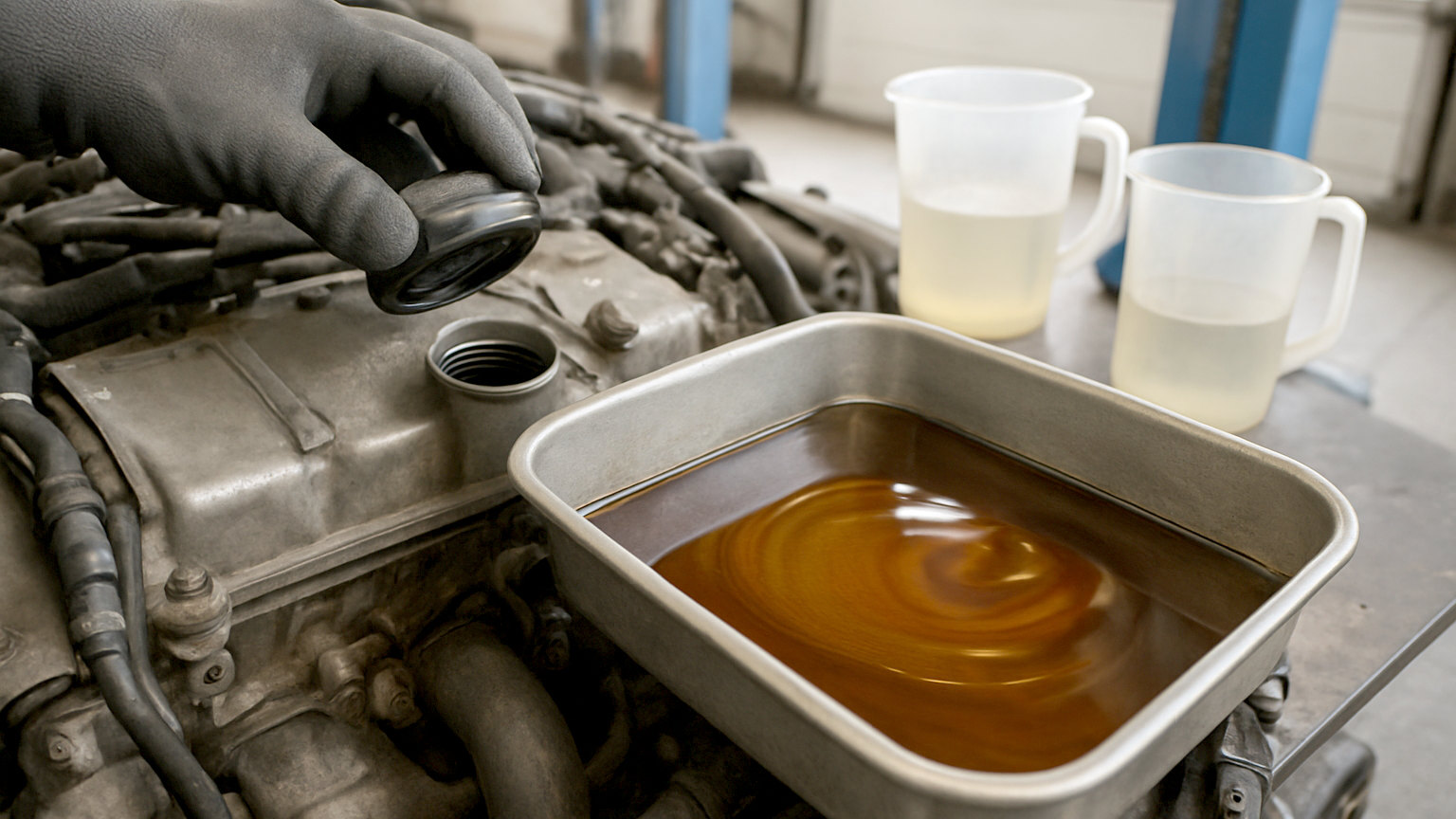
The question usually arrives at a petrol station at nine in the evening, with a low oil warning and a shelf offering nothing that matches the handbook. The short answer is that mixing oils is almost always safer than running the engine low, and that it is not something to do casually or leave in place for the next twelve thousand miles. Both halves of that sentence matter.
What actually happens when oils are mixed?
Engine oils are all based on similar base stocks with additive packages layered on top, and they are formulated to be miscible, meaning they blend rather than separate. What you get is an average of the two, weighted by quantity. Adding one litre of a different grade to a four litre sump moves the properties slightly. Filling half the sump with something quite different moves them considerably. Nothing curdles, separates or reacts dangerously.
Does mixing viscosity grades matter?
Less than most people fear, in small quantities. Adding a litre of 5W-40 to an engine specified for 5W-30 produces a blend marginally thicker than intended, which is unlikely to cause any problem in the short term. The concern is with much larger differences, since a substantially thicker oil slows cold circulation and can upset variable valve timing systems that rely on oil flow through narrow passages, sometimes producing rattles and fault codes.
Is mixing synthetic and mineral acceptable?
Yes, in the sense that they blend without harm. The result is effectively a semi-synthetic with properties somewhere between the two, which means you lose some of the cold flow and thermal stability that made the synthetic worth buying. It will not damage anything, but topping a fully synthetic engine up with mineral oil dilutes the very qualities the engine was specified to have, so the oil should be changed reasonably soon afterwards.
Where does it genuinely matter?
Specification rather than viscosity, and particularly on cars with diesel particulate filters. Those require low ash oils, and ordinary oil leaves ash deposits that cannot be burned off during regeneration and permanently reduce the filter capacity. Adding a litre of the wrong oil once will not ruin a filter, but doing it repeatedly, or topping up a filter-equipped diesel with standard oil as a matter of routine, has a cumulative effect that ends in an expensive replacement.
What about engines with special requirements?
Some manufacturers specify oils with particular approvals for good reason, including engines with wet timing belts, certain variable valve timing designs, and long life service regimes. On those, the approval is doing real work and a substitute is a compromise rather than an equivalent. This is where the handbook specification code matters far more than a general viscosity grade, and where the sensible response to an emergency top up is a full change soon afterwards.
What should you do in an emergency?
Buy the closest match you can find, preferring correct specification over correct viscosity if you have to choose, add only enough to bring the level back into the safe range rather than filling to maximum, and note what you added and how much. Then have the oil and filter changed sooner than planned. Running an engine low to avoid mixing is the one genuinely bad option, since oil starvation damages bearings within minutes.
How do you avoid the situation?
Keep a litre of the correct oil in the boot, particularly on any engine known to use some. It costs very little, it removes the decision entirely, and it means a low level found on a Sunday can be corrected immediately rather than driven on. Check the level every few weeks so that a top up is never urgent, which is the underlying answer to most oil questions.
If you do end up mixing, note the date, the mileage and what went in, because that information is useful to whoever changes the oil next and removes any doubt about what is currently in the sump.


