
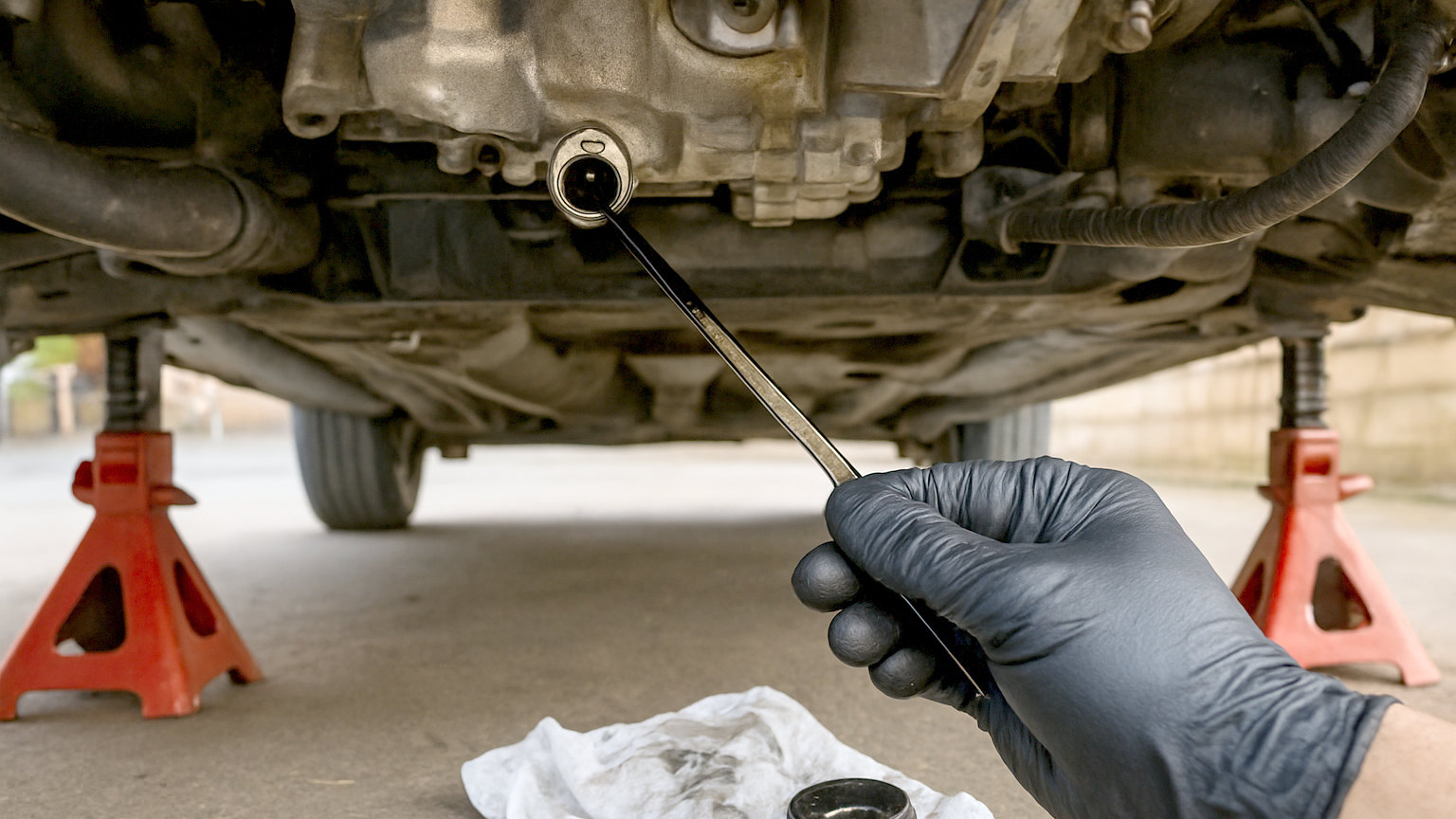
Oil turning black is one of the most common reasons people book an unscheduled oil change, and in most cases it is a sign the oil is working properly rather than a sign it has failed. Colour on its own is a poor indicator, particularly on a diesel, and knowing what actually matters saves both unnecessary changes and, more importantly, false reassurance from oil that still looks acceptable.
Why does oil go black?
Detergent and dispersant additives are designed to lift soot and combustion deposits off internal surfaces and hold them suspended in the oil so they can be removed with the filter and the next drain. Suspended soot is what makes oil dark. Oil that stays golden for thousands of miles is arguably doing less to keep the engine clean than oil that turns dark quickly, which is the opposite of most people intuition.
How quickly should it darken?
On a diesel, often within a few hundred miles, because diesels produce far more soot and their oils carry heavier detergent packages to cope. On a petrol engine it usually takes longer, darkening gradually over several thousand miles. Neither pattern indicates a problem on its own. What would be unusual is a diesel whose oil remained pale after a few thousand miles, which might suggest a very recent change or an oil that is not doing its job.
What actually indicates oil needs changing?
Mileage and time since the last change, which is the honest answer. Beyond that, look for texture rather than colour. Oil that feels gritty between finger and thumb contains particles the filter has not caught. Oil that has become noticeably thicker, tarry or varnish-like has oxidised. Oil that smells strongly of fuel has been diluted. Oil that has turned creamy contains water or coolant. Any of those matter far more than the shade.
What does sludge look like?
Sludge is thick black deposits that build up when oil is left far too long or subjected to sustained overheating and cannot hold its contaminants any longer. It appears as tar-like coating inside the rocker cover or around the filler neck, and in severe cases it blocks the oil pickup strainer in the sump, which starves the pump and causes low pressure. Sludge is one of the few genuine engine killers that comes purely from neglect, and it is entirely preventable.
Should you use an engine flush?
With caution. On an engine with a good service history, a gentle flush before draining does little harm and can help. On a badly neglected engine with heavy sludge, a strong flush can dislodge deposits that then block narrow galleries or the pickup strainer, which turns a slow problem into an immediate one. The safer approach on an unknown engine is two shorter interval oil changes in succession, letting fresh oil do the cleaning gradually.
How should you check oil properly?
On level ground with the engine cold, or at least twenty minutes after switching off, so the oil has drained back to the sump. Pull the dipstick, wipe it, reinsert it fully, and read it again. Look at the level first, then rub a little between your fingers to assess texture, then smell it. That takes under a minute and tells you far more than glancing at the colour ever will.
Is there a way to know for certain?
Oil analysis, where a sample is sent to a laboratory and tested for viscosity, contamination, fuel dilution, coolant, wear metals and remaining additive life. It is inexpensive and it is the only method that gives a real answer rather than an impression. It is overkill for most drivers, but for anyone running a high value engine, extending intervals deliberately, or investigating a suspected problem, it is genuinely worth the modest cost. It is also the only way to settle an argument about whether an engine has been properly serviced, which makes it useful when buying a car whose history looks better on paper than under the filler cap.


