
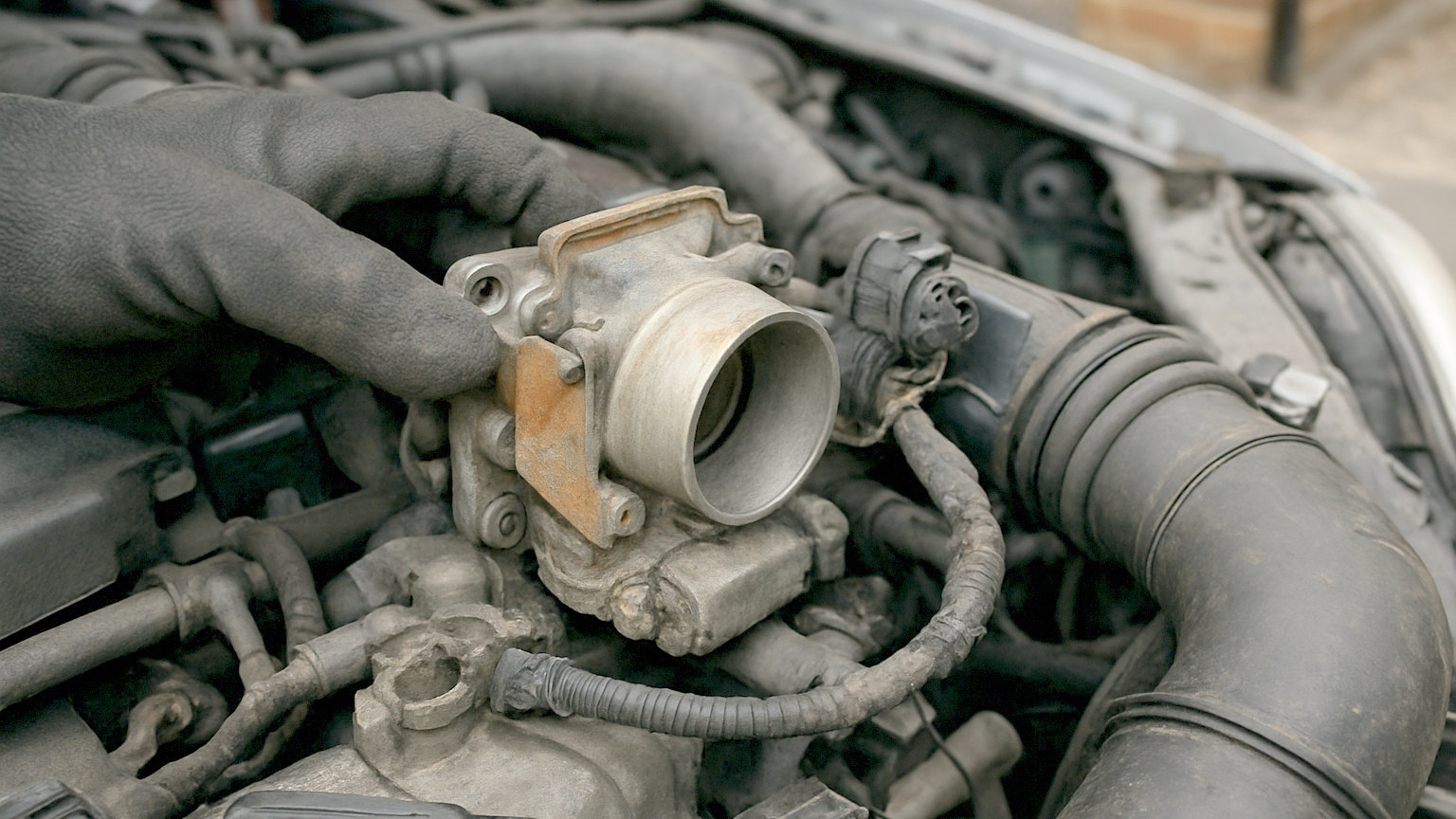
Limp mode, sometimes called limp home mode or reduced power mode, is a protective state the engine management enters when it detects a fault serious enough that continuing at full power could cause damage. It is not a malfunction in itself, it is the car making a decision, and understanding that changes how you respond to it. The important consequence is that there is always a recorded reason, and that reason can be read.
How do you know you are in limp mode?
The symptoms are consistent and hard to miss. Power is sharply reduced, the engine will often not rev beyond around three thousand, the car may be locked into a single gear if it is an automatic, and the engine management light is usually illuminated. Some cars display a specific message about reduced engine power. The car will still drive, deliberately, so that you can get off a motorway or reach somewhere safe rather than stopping in a live lane.
What triggers it?
A signal outside the range the management expects. Common triggers include boost pressure that is too high or too low, a mass airflow reading inconsistent with throttle position, a turbo actuator that is not responding, a blocked particulate filter, a throttle body or accelerator pedal sensor disagreement, a serious misfire, transmission faults on automatics, and overheating. In each case the computer has compared what it asked for with what it measured and found a discrepancy it cannot work around.
Will switching the engine off clear it?
Often, temporarily. Many cars will return to normal after being switched off for a minute and restarted, particularly where the trigger was a transient reading. That does not mean the fault has gone; it means the car has agreed to try again. If the underlying condition is still present, limp mode will return, sometimes within a few miles. Using a restart to get home is reasonable. Using it repeatedly for weeks is how a cheap sensor becomes an expensive turbo.
Should you drive in limp mode?
To somewhere safe, yes, which is the entire purpose. Be careful about joining fast roads, since a car limited to a fraction of its normal power is genuinely difficult to merge with traffic, and use hazard lights if you are travelling significantly below the speed of the traffic around you. If limp mode arrived with overheating, heavy smoke, a knocking noise or a flashing management light, treat it as a stop rather than a limp, since those combinations suggest damage is already happening.
How is the cause identified?
By reading the stored fault codes, which is quick and inexpensive and should always be the first step. The code identifies the circuit involved rather than the failed component, so a code naming boost pressure could point to a split hose, a sticking turbo actuator, a blocked filter or the sensor itself. That distinction matters, because parts fitted on the strength of a code alone are frequently the wrong ones. A garage will use live data to see what the system is actually measuring while the engine runs.
What are the most common causes in practice?
On diesels, a blocked diesel particulate filter and a sticking variable geometry turbo mechanism account for a large share, particularly on cars that mainly do short journeys. Split intercooler pipes and loose clamps are common on any turbocharged car and are cheap to fix once found. Dirty or failing mass airflow sensors appear frequently. On automatics, gearbox faults and low fluid levels can trigger the same protection. None of these improve on their own, and most get worse and more expensive the longer they are driven around.
What should you do first?
Get the codes read before anything else, note exactly what the car was doing when it happened, and check the obvious mechanical possibilities such as intercooler pipework and the air filter. That combination usually points at the answer, and it prevents the expensive habit of replacing parts in the order they are mentioned online.


