
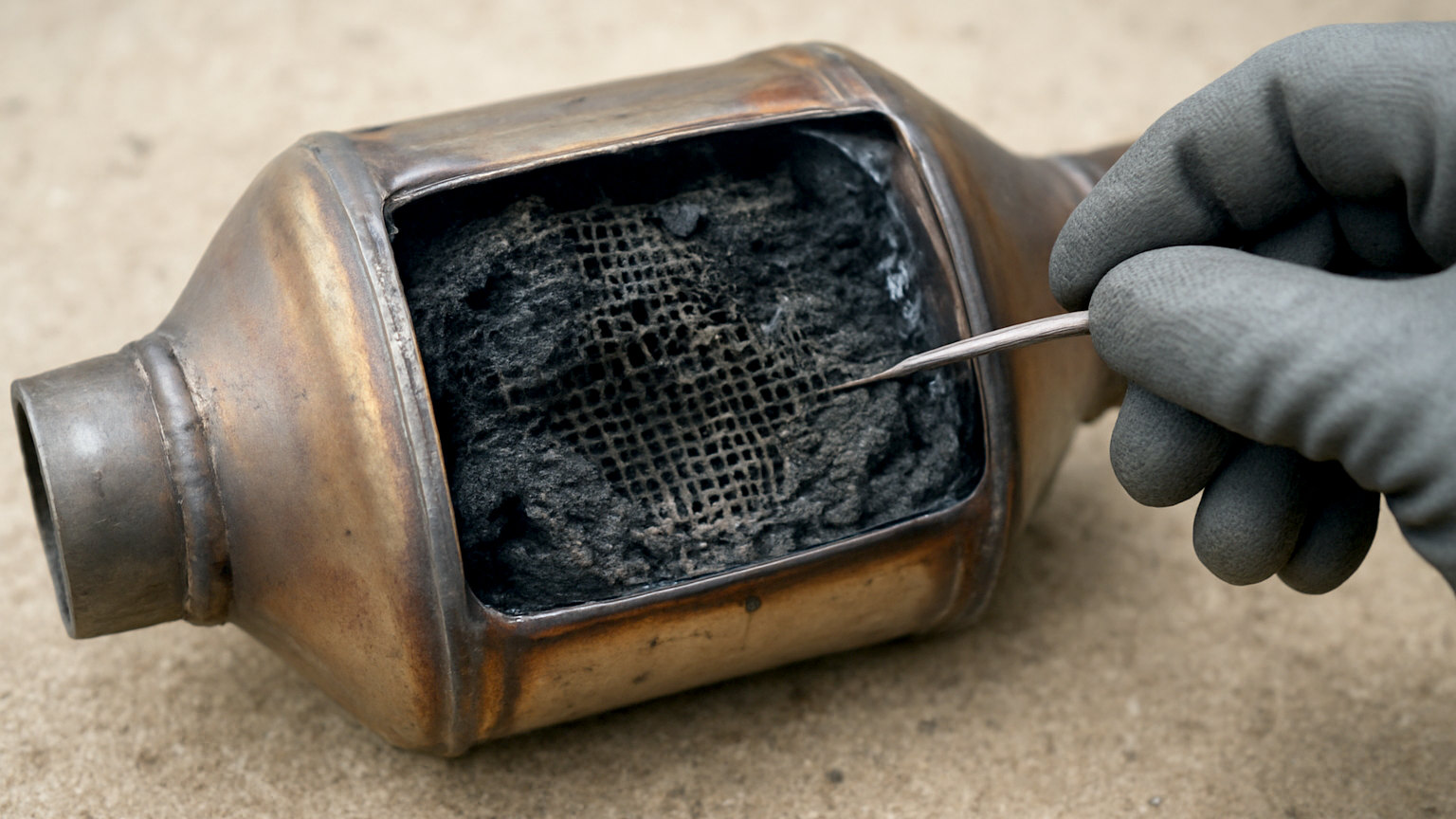
Drivers reasonably assume that a car with a fault will illuminate a warning light, and for a great many electronic problems that is true. What the system cannot detect is anything that happens slowly, anything mechanical that no sensor is watching, and anything where every measured value remains within its expected range even though the car is clearly not performing. Power loss with a clean dashboard falls squarely into that territory.
Why does the system miss some faults?
Engine management monitors specific parameters against expected ranges and stores a code when a reading falls outside them. A restriction that develops gradually often stays within range at every point, because the system adapts as it goes and never sees a sudden discrepancy. A mechanical wear problem may not be monitored at all. And some faults produce readings that look perfectly normal precisely because the sensor is measuring a system that has quietly agreed to deliver less.
Which mechanical faults typically go undetected?
A partially blocked exhaust, a clogged air filter, a fuel filter reaching the end of its life, a slipping clutch, worn injectors delivering a poor spray pattern, and low compression from worn rings or valves. None of these necessarily triggers a code, and all of them produce a car that feels progressively less willing. Brakes that are binding, a seized caliper or a wheel bearing dragging will also make a car feel gutless while having nothing to do with the engine at all.
How do you tell an engine problem from a drag problem?
Find a quiet level road, get up to a moderate speed and then coast in neutral. A car that slows down far more quickly than you would expect is dragging somewhere, and the culprit is usually a brake or a bearing. Check whether one wheel is noticeably hotter than the others after a drive, being careful because they can be extremely hot. This is a genuinely common cause of a car feeling slow and is missed constantly because attention goes straight to the engine.
Could it be the clutch?
A slipping clutch produces exactly the sensation of lost power, and it is entirely invisible to the engine management. The test is to select fourth or fifth gear at a low speed and accelerate firmly: if the rev counter climbs faster than the speedometer, the clutch is slipping. The biting point often rises as a clutch wears, and there may be a faint burning smell after a hard climb. This is a transmission repair rather than an engine one.
What about compression?
An engine that has genuinely worn will have lost compression, and although a severe loss usually causes a misfire code, a gradual even loss across all cylinders may not. A compression test is inexpensive and definitive, and it is worth requesting on a high mileage car that has slowly become less willing. Low compression across the board points at wear, while low compression on one cylinder points at a valve or a gasket.
Is it really the car at all?
Sometimes not. A car carrying four passengers and luggage in hot weather genuinely accelerates more slowly. Underinflated tyres increase rolling resistance measurably. A roof box costs a surprising amount of performance and economy. Fuel from an unfamiliar forecourt occasionally makes a real difference. It is worth ruling these out honestly before booking diagnostic work, since none of them are faults and all of them are frequently reported as ones.
What should you ask a garage for?
Rather than a code read, which will come back clean, ask for a back pressure test to check the exhaust, a compression test, and a check of the fuel pressure under load. Mention that there is no warning light, because that immediately tells a competent mechanic to look at mechanical restrictions rather than at the electronics, and it saves everybody a wasted appointment chasing faults that were never recorded in the first place.


