
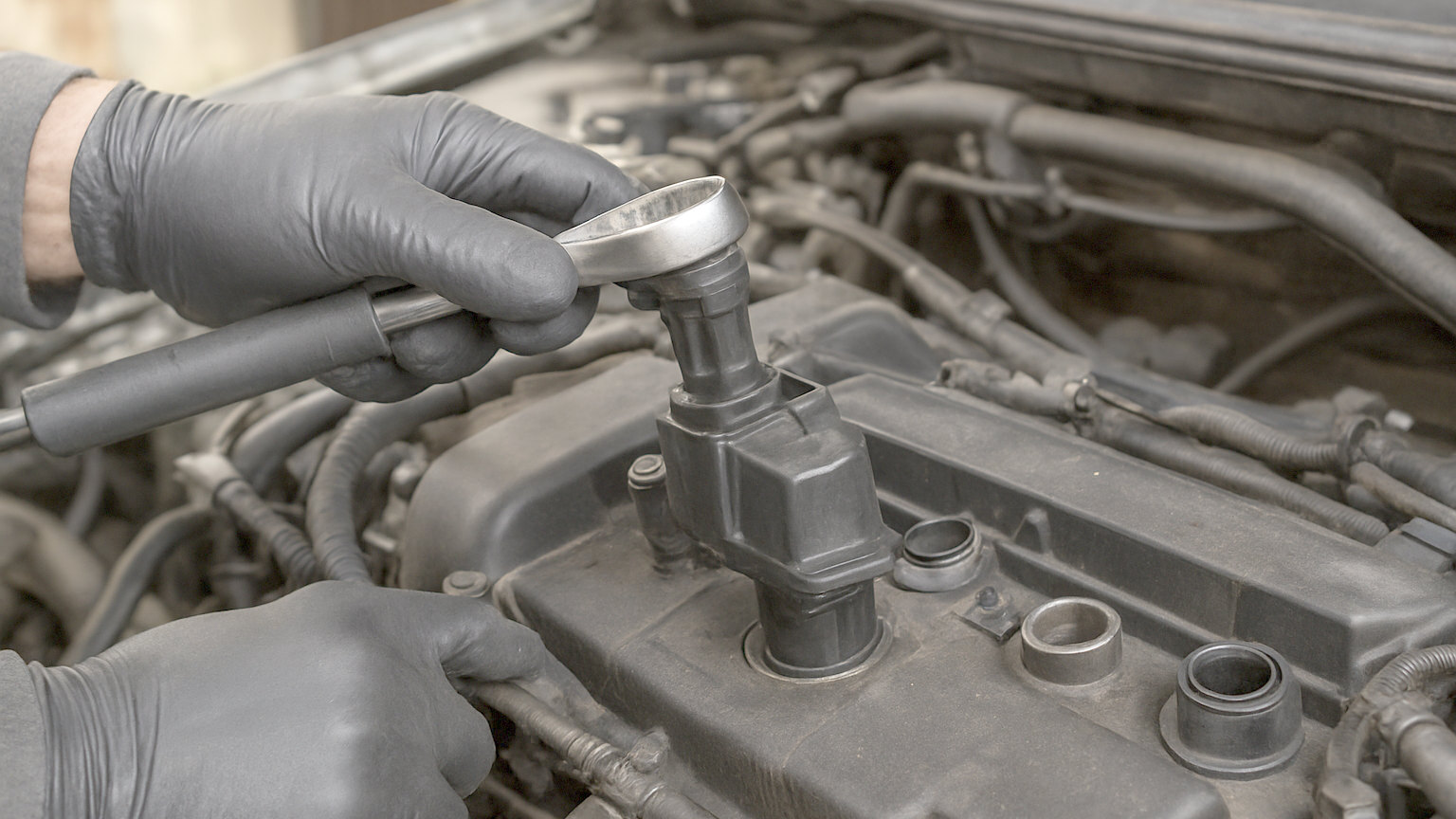
A misfire is exactly what the word suggests: one or more cylinders failing to burn their charge properly. The immediate consequence is arithmetic, since a four cylinder engine losing one cylinder loses roughly a quarter of its output, and the car feels not just slower but rough, shaky and unwilling. The less obvious consequence is that unburnt fuel is being pushed into the exhaust, and that is where a moderate repair becomes an expensive one.
What does a misfire feel like?
A vibration or shudder that is worst at idle and under light load, an engine note that sounds uneven or lumpy, obvious loss of power, and often a smell of unburnt fuel. It may be intermittent at first, appearing only when cold, only when damp, or only under acceleration. The engine management light usually appears, and the stored code will normally identify which cylinder is affected, which is the single most useful piece of information in the whole diagnosis.
Why does a flashing warning light matter so much?
A steady engine management light means a fault has been recorded. A flashing one means a misfire severe enough to damage the catalytic converter is happening right now. Unburnt fuel reaching the converter ignites inside it and produces temperatures the substrate cannot survive, so a flashing light is an instruction to reduce power and stop as soon as it is safe. Continuing to drive on a flashing light frequently adds the cost of a converter to the cost of the original fault.
What are the common causes?
Ignition faults lead the list on petrol engines, particularly worn spark plugs and failing coil packs, and on older cars perished HT leads. Fuel side causes include a blocked or leaking injector. Air leaks near one cylinder cause a lean misfire. Mechanical causes include a burnt valve or a failed head gasket, which show up as low compression on the affected cylinder. Because these overlap in symptoms, a compression test is what separates the cheap causes from the expensive ones.
How is the faulty cylinder identified?
The fault code usually names it directly, and a diagnostic tool can display misfire counts per cylinder in live data, which is more useful still because it shows whether the problem is worsening. A traditional approach is to swap the coil pack from the misfiring cylinder with one from a healthy cylinder and see whether the fault follows the part. If it does, the coil is at fault. If it stays put, the problem is the plug, the injector or the cylinder itself.
Why do misfires appear in damp weather?
Because moisture provides an easier path for high voltage to escape to earth than the spark plug gap does. Cracked HT leads, a hairline crack in a coil pack body or a distributor cap with tracking marks all allow the spark to leak away when humidity is high. A car that misfires on wet mornings and runs perfectly on dry ones is describing an insulation failure, and inspecting the ignition components in the dark with the engine running will sometimes reveal visible arcing.
Can a misfire be intermittent and still matter?
Yes, and intermittent misfires deserve as much attention as constant ones because the damage they do to the catalytic converter is cumulative. They are also harder to diagnose, which is why stored freeze frame data recording the conditions at the time is worth asking for. Note whether it happens cold, hot, under load or at idle, since that pattern often points at the cause more reliably than any single test.
What should you do first?
Have the codes read, check when the spark plugs were last changed, and stop driving immediately if the light is flashing. Plugs and coils are relatively inexpensive and account for a large share of misfires on petrol engines, so those are the sensible first checks. What is not sensible is ignoring a misfire while the car still drives, because the converter damage happening in the background usually costs more than the original fault ever would have.


